
What Are 3-Ball and 2-Ball Bets in Golf? (2026 Guide)

Andy Molitor

39 minutes ago

A 3-ball bet in golf is a one-round wager on which of three golfers in the same group posts the lowest score. A 2-ball is the same idea with two golfers. Neither cares about the leaderboard. And round matchups are the cheapest bet on a golf board: DraftKings’ round-one matchups for the 2026 World Wide Technology Championship carried about a 7 percent margin on Wednesday, November 4, against 41 to 49 percent on Monday’s winner market.
The catch is the tie rule. It decides more of your result than most people realize, so it gets its own section below.
What is a 3-ball bet in golf?
A 3-ball bet picks the lowest 18-hole score among three golfers in one round. Books build 3-balls from the real tee-time groups, so the three golfers are playing together, and that is why they show up in rounds 1 and 2 of most full-field events, when the field goes out in threesomes. Three golfers split the chances, so it is common for all three to be priced at plus money.
Nothing outside the group matters. Your golfer can shoot 74, sit 60th on the leaderboard, and still cash because the other two shot 75.
What is a 2-ball bet in golf?
A 2-ball is a head-to-head over one round. In the strict sense it pairs two golfers who are playing together, which is how BetMGM describes it, and that is why classic 2-balls arrive on the weekend, when most full-field events send players out in twosomes. In the US the word gets stretched to cover any single-round matchup, including pairings the sportsbook builds itself.

DraftKings’ round-one board for the 2026 World Wide Technology Championship shows the difference. On Wednesday, November 4, Johnny Keefer was in three separate round-one matchups, against Rico Hoey, Sami Valimaki, and Matthieu Pavon. In a threesome he only has two playing partners, so at least one of those was a book-made pairing, not a 2-ball in the strict sense.
The bet settles the same way either way. What changes is the weather. Two golfers in the same group play the same holes in the same wind at the same time. A book-made matchup can put a 7 a.m. starter against a 1 p.m. starter, and on a windy afternoon that tee time is half the bet.
How much does the sportsbook take on 2-balls and matchups?
Very little, by golf standards. Every price hides a probability, and on a fair market the two sides of a matchup would add up to exactly 100 percent. Whatever sits above 100 is the book’s cut. On the 2026 World Wide Technology Championship board, that cut ran about 6 to 7 percent on matchups, which is a fraction of what the same books charge on the outright winner.
Built-in sportsbook margin on 2026 World Wide Technology Championship matchups, from every two-sided price DraftKings and FanDuel had posted when the board was pulled on Wednesday, November 4, 2026, at 1:24 p.m. Central, next to Monday morning’s winner market.
| Market | Sportsbook | Matchups priced | Average margin | Range |
|---|---|---|---|---|
| Round-one matchups | DraftKings | 38 | 6.9% | 6.3% to 7.4% |
| 72-hole matchups | DraftKings | 6 | 6.6% | 6.4% to 6.8% |
| 72-hole matchups | FanDuel | 3 | 6.0% | 5.6% to 6.9% |
| Outright winner (Monday, 8:56 a.m. Central) | DraftKings and FanDuel | Full field | 41% and 49% | Not applicable |
That gap is the strongest argument for round matchups. A winner bet has to overcome a margin six to eight times bigger before your read on the golf even starts to count. Our guide on how to bet on golf breaks down the winner and top-20 margins in full.
How to read a 2-ball price
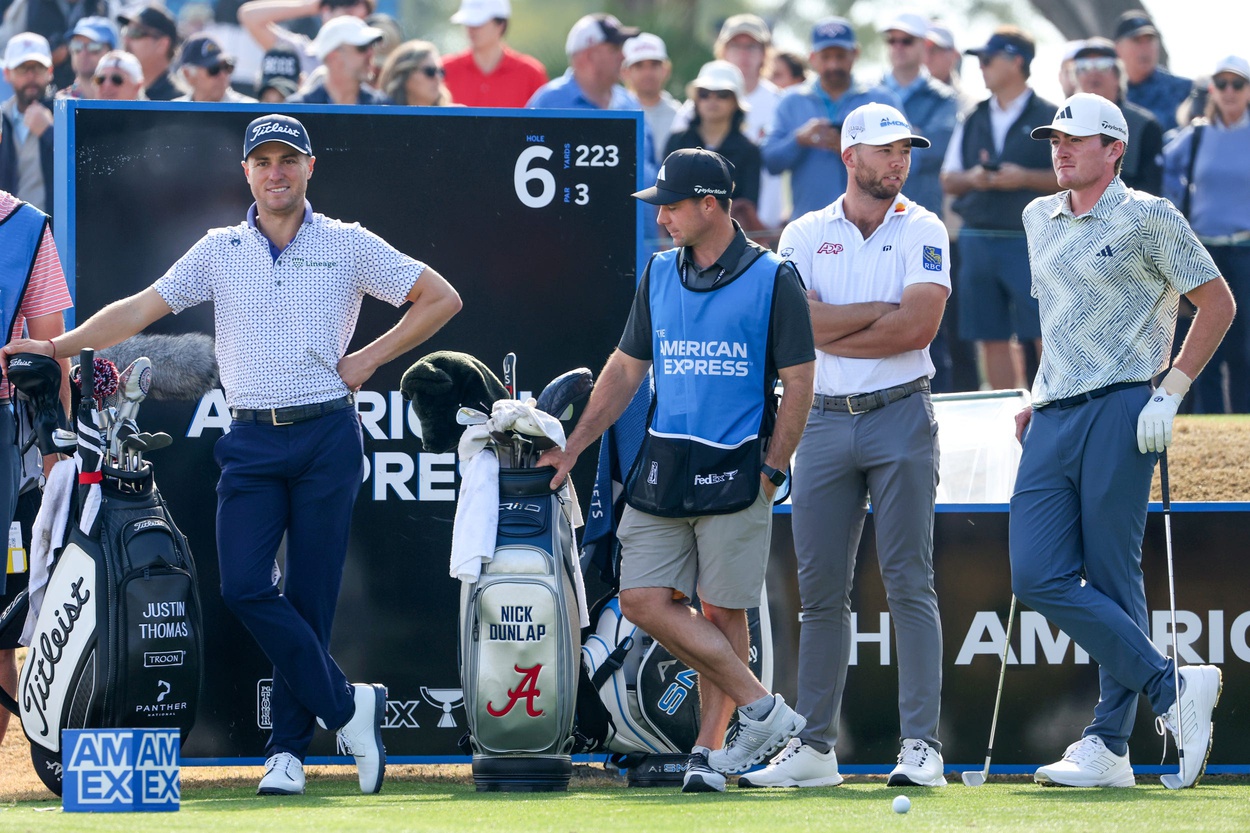
Take one real line. DraftKings had Max Greyserman at -180 against Nick Dunlap at +136 for round one of the 2026 World Wide Technology Championship, quoted Wednesday, November 4, at 11:27 a.m. Central.
How DraftKings’ round-one price on Max Greyserman versus Nick Dunlap breaks down, quoted Wednesday, November 4, 2026, at 11:27 a.m. Central.
| Line | Max Greyserman | Nick Dunlap |
|---|---|---|
| DraftKings price | -180 | +136 |
| Win rate needed to break even | 64.3% | 42.4% |
| Win chance with the margin removed | 60.3% | 39.7% |
| Fair price with no margin | -152 | +152 |
The two break-even numbers add up to 106.7 percent, so the margin on this one matchup was 6.7 percent. Backing Greyserman at -180 means he has to win about 64 rounds in 100 just for you to break even, while the price with the margin stripped out says 60. That four-point gap is what you have to beat. If your numbers say he wins this matchup 66 percent of the time, it is a bet. If they say 61, it is not, even though he is the favorite.
What happens if a 2-ball or 3-ball ends in a tie?
It depends on which version of the market you bet, and this is where most new golf bettors get burned. A two-way 2-ball usually treats a tie as a push and refunds your stake. A three-way 2-ball lists the tie as its own result, so a bet on either golfer loses if they tie. A 3-ball tie for the low score is usually settled under dead heat rules, which cut your stake by the number of golfers tied.
theScore Bet’s golf help page, for one, says its 3-ball bets can be graded with dead heat rules. DraftKings posted its round-one World Wide Technology Championship matchups as two-sided prices with no tie option on our board, but the house rules are the final word on any book, so read the golf section before your first bet.
What a 10-dollar bet pays back, in dollars, when the round ends in a tie, under the common settlement rules. The prices here are examples to show the math, not quotes from a sportsbook.
| Bet | Your golfer wins the round | Two-way tie for low | Three-way tie for low |
|---|---|---|---|
| 2-ball, tie voids the bet, golfer at -115 | 18.70 | 10.00 (stake back) | Not possible |
| 2-ball with a tie option, golfer at -105 | 19.52 | 0.00 | Not possible |
| 3-ball under dead heat rules, golfer at +150 | 25.00 | 12.50 | 8.33 |
| 3-ball under dead heat rules, golfer at +120 | 22.00 | 11.00 | 7.33 |
Look at the last row. Your golfer did not lose the round, he tied for the low score with both of his playing partners, and the 10-dollar bet came back as 7.33. A short-priced 3-ball favorite that ties can cost you money. The golf betting glossary covers the rest of the lingo if a term on the betting slip trips you up.
When are 3-balls and 2-balls offered?
Round-one matchups usually go up before the tournament starts, and new single-round pairings follow after each round. At most full-field PGA Tour events that means 3-balls for rounds 1 and 2 and 2-balls for the weekend, matching how the field is grouped.
Availability is not guaranteed. The odds we track from the big US sportsbooks had 2026 World Wide Technology Championship round-one matchups priced by late Wednesday morning, November 4, but no 3-ball market at all through Thursday morning, November 5. If you want 3-balls, check the app on Tuesday or Wednesday of tournament week rather than assuming they will be there.
Are 2-balls and 3-balls a good bet?
For learning golf betting, a two-way round matchup is the best seat on the board. The margin is small, the result comes back the same day, and you only need your golfer to beat one other golfer. The downside is noise. One round is a tiny sample, a single bad bounce can swing it, and tee-time waves matter more than people admit.
The edge in a one-round bet comes from knowing which golfer’s game fits that course better than the price says. That usually starts with strokes gained, then course fit and recent form, which is exactly what The Rabbit Hole lets you weight for yourself before you price a matchup.
Before they tee off, get your free access. New depositors at ReBet who add code BSG on a first 10 dollar purchase earn a 100 percent match up to 100 dollars and a free Betsperts Golf subscription.
Frequently asked questions
Are 2-balls and 3-balls the same as tournament matchups?
No. A tournament matchup, also called a 72-hole matchup, settles on the whole event, so the golfer with the better total after four rounds wins. On Wednesday, November 4, 2026, DraftKings had six and FanDuel three of those priced for the World Wide Technology Championship, next to the single-round lines. Read the house rules for how each book settles one when a golfer misses the cut.
What happens to a 2-ball or 3-ball if a golfer withdraws?
It usually comes down to whether he has teed off, and books do not all word it the same way. Our guide to what happens to your golf bet when a player withdraws lays out the settlement rules book by book.
21+. Gambling problem? Call 1-800-GAMBLER. Responsible Gaming Resources