
Research and Key Stat Model: RBC Heritage

Pat James

4 years ago
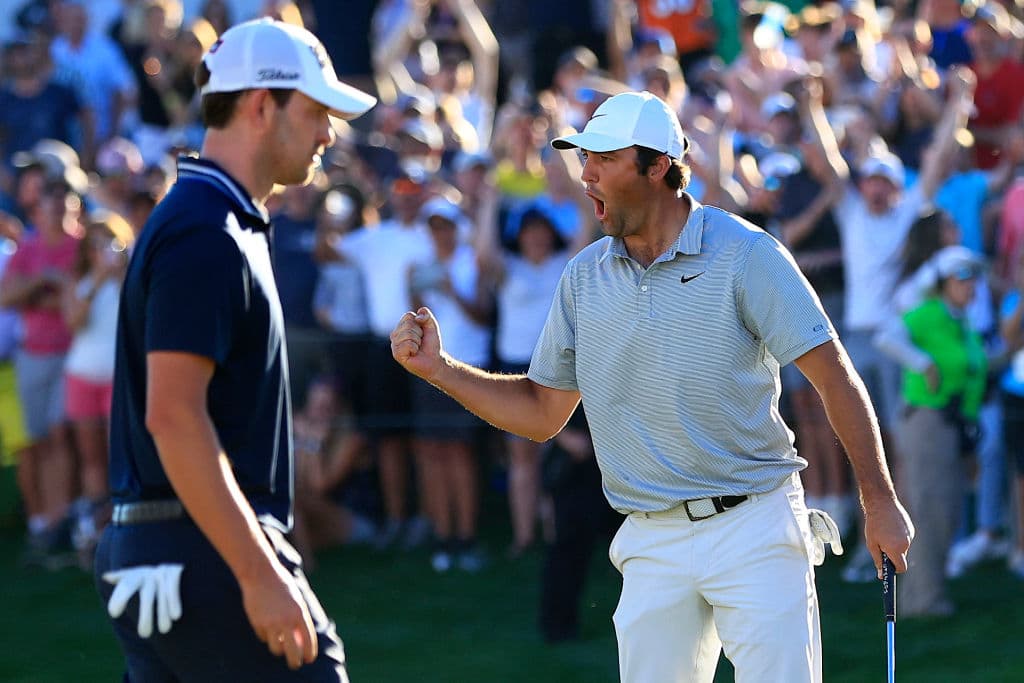
My approach to golf betting and daily fantasy is deeply rooted in statistical modeling. It’s not the only way to go about handicapping a golf tournament, but I think it’s the best way. It helps me eliminate biases and identify golfers purely based on whether they are in good form and if their game syncs up with the course they are about to play.
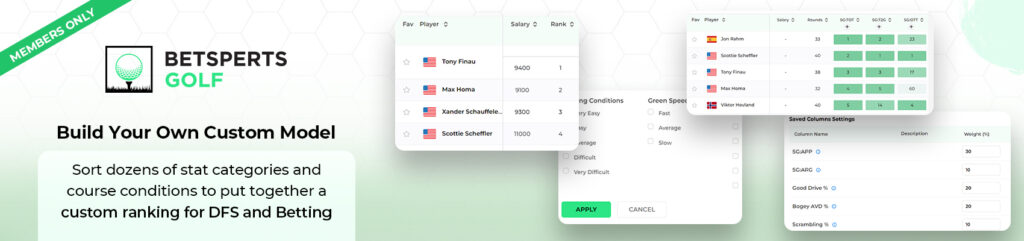
In this article, I will put together a weighted statistical model specific to the course and tournament. The statistics are chosen and weighted based on historical data from previous tournaments. In addition to course specific data, I will also look at recent form and any other potential relevant angle. The model accounts for the last 50 measured rounds, with the more recent rounds receiving increasingly more weight.
Key Stats Considered
The statistical model will always include the main four strokes gained statistics of off-the-tee, approach, around the green, and putting. It’s safe to assume, even if those stats aren’t elaborated on in this section that they are baked into each player’s ranking when all is said and done. The model will also include secondary stats that are specific to success on the current week’s course. Because these secondary stats change week-to-week, they will make up the bulk of those delved into in this article. This will include stats such as driving distance, driving accuracy, good drives, proximity from a certain yardage, eagle rate, birdie rate, putting on a particular grass type, and specific course types like “short par 70s” or “difficult courses over 7400 yards”.

This Week’s Stats
SG: Approach — Approach shots are the bread and butter of every statistical model. The greens at Harbour Town are some of the smallest on tour, so the players who are the most accurate on their second shot have a decided advantage.
- Tom Hoge
- Max Homa
- Tony Finau
- Scottie Scheffler
- Collin Morikawa
- Rickie Fowler
- Jon Rahm
- Wyndham Clark
- Xander Schauffele
- Sepp Straka
Opportunities Gained — This stat measures birdie opportunities within 15 feet from the hole plus any greens hit in under regulation (on the green with an eagle putt or better). Given the small greens, sticking it within 15 feet will be crucial
- Cameron Young
- Rory McIlroy
- Wyndham Clark
- Scottie Scheffler
- Corey Conners
- Jon Rahm
- Tony Finau
- Davis Riley
- Rickie Fowler
- Tyrrell Hatton
Prox: 175-200 — Nearly 25% of the approach shots at Harbour Town come from 175-200 yards. Despite the course not being overly long in terms of yardage, many holes require less-than-driver to navigate angles and tight fairways. As a result, approach shots tend to be a bit longer here than other short courses. The 25% shot rate from 175-200 is about 7% more than tour average.
- Taylor Pendrith
- Chez Reavie
- Trey Mullinax
- Collin Morikawa
- Rory McIlroy
- Jon Rahm
- Nate Lashley
- Christiaan Bezuidenhout
- Robbie Shelton
- Keegan Bradley
Good Drives Gained — Good drives gained is my go to stat for courses that put an emphasis on placement off the tee. At Harbour Town it’s about angles and being in the correct spot off the tee. This stat counts fairways hit plus drives from the rough that still result in a green in regulation.
- Tyrrell Hatton
- Collin Morikawa
- Tyler Duncan
- Ben Martin
- Scottie Scheffler
- Justin Rose
- Hayden Buckley
- Russell Henley
- Jason Day
- Luke List
SG: Putting – I don’t tend to put a ton of emphasis on putting in a statistical model, but I like to add a bit of putting based on grass type to give players who pop on certain greens a bit of a boost.
- Ben Taylor
- Brian Gay
- Andrew Putnam
- Taylor Montgomery
- Maverick McNealy
- Sam Ryder
- Sam Burns
- Tyrrell Hatton
- Richie Werenski
- Ben Griffin
Recent Form — Professional golfers can play well at any given tournament, however when it’s always important to give an added boost to guys who are in a groove with their swing and have been playing well leading up to a tournament.
- Jon Rahm
- Scottie Scheffler
- Jason Day
- Collin Morikawa
- Sam Stevens
- Chris Kirk
- Patrick Cantlay
- Xander Schauffele
- Tony Finau
- Max Homa
Par 4 Scoring 400-450 and 450-500 — While I don’t think hole distances are overly important, I do like to add it to the model at a small percentage. Half the holes on this course fit into this range.
- Tony Finau
- Jon Rahm
- Collin Morikawa
- Scottie Scheffler
- Max Homa
- Jordan Spieth
- Jason Day
- Taylor Montgomery
- Chris Kirk
- Justin Suh
- Maverick McNealy
- Patrick Cantlay
- Max Homa
- Scottie Scheffler
- Justin Thomas
- Nick Taylor
- Sam Ryder
- Viktor Hovland
- Taylor Pendrith
- Hayden Buckley

Course History — Harbour Town is unique in that it is demanding and tight off the tee, has very small greens, and includes some of the Pete Dye quirks. It definitely doesn’t suit everyone’s game. Here are the players who’ve gained the most strokes at this course over the years. The one caveat is that this field is unlike any Harbour Town has seen outside of the COVID re-start year. So take these course form rankings with a grain of salt given how many extra studs are in this field than normal.
- Patrick Cantlay
- Matt Kuchar
- Webb Simpson
- JT Poston
- Shane Lowry
- Jordan Speith
- Cam Davis
- Jason Day
- Alex Noren
- Matt Fitzpatrick
Pete Dye Specialists — As I mentioned previously, Pete Dye creates some very unique golf courses. Some of the characteristics Dye is known for include: long fairway bunkers which require precise tee shots, dogleg Par 5s, and visually intimidating shots. There are a select few individuals like Si Woo Kim who are considered Pete Dye specialists after routinely performing well at his courses. When sorting by golfers who score well on Pete Dye designed courses, here is who pops.
- Brian Harman
- Patrick Cantlay
- Scottie Scheffler
- Shane Lowry
- Tommy Fleetwood
- Sungjae Im
- Jon Rahm
- Viktor Hovland
- Keegan Bradley
- Adam Scott
Peaking and Fading – One of the flaws that I often come across in modeling is focusing on a fixed range of time or rounds and taking a wider view to determining if a player is peaking or fading leading up to an event. For instance, a player’s high rating in a model that only focuses on the last 50 rounds could be a result of playing well four months ago. In this section, I will lay out the players who have improved or faded statistically over the course of their last 50 rounds.
Peaking
- Viktor Hovland
- Cam Young
- Matt Kuchar
- Stephen Jaeger
- Denny McCarthy
Fading
- Tom Hoge
- Tom Kim
- CT Pan
- Hayden Buckley
- David Lipsky
Statistical Model Top 50 Rankings
| 1. Tyrrell Hatton | I watched Hatton curse out a bunker in person at Augusta, but it’s tough to ignore that he’s been playing well. He rates out third in short term course fit, 12th in long term course fit, eighth in putting, 15th in current form, 12th in course form, and 18th on Dye designs. |
| 2. Jon Rahm | Rahm is obviously first in form, seventh in Dye designs, 11th in recent course fit and 6th in long term course fit. Rahm gets edged out by Hatton here because his Harbour Town history isn’t great. There is also the potential of a hangover |
| 3. Tony Finau | Finau fits this course immaculately, rating out first in course fit over the last 50 rounds. He hasn’t played exceptionally well here, but he’s 21st on Dye courses, 15th in putting, and 9th in overall form. |
| 4. Patrick Cantlay | I immediately think Patrick Cantlay when we are at a Dye course, he rates out second on PB courses. He also rates out third in putting, 2nd in short term course fit, and first on Harbour Town specifically. |
| 5. Scottie Scheffler | Scheffler is a first timer at Harbour Town, but he’s third in Dye designs, first in short term course fit, fourth in long term course fit, and second in overall form. He comes up short on putting which is pretty important this week. |
| 6. Max Homa | Homa stuggled a bit at Augusta but is top 16 in all ranges of course fit. He fits the course well enough that he lands sixth overall despite ranking outside the top 50 in course history and Dye form. |
| 7. Collin Morikawa | Morikawa fits the course better than almost anyone rating out no worse than seventh from any round range, but he’s nearly dead last in putting and 30th or worse on both Dye courses and Harbourtown specifically. |
| 8. Viktor Hovland | Hovland is 5th in recent course fit and eighth in Dye form. |
| 9. Rory McIlroy | WD |
| 10. Matt Kuchar | Kuch is super interesting his course fit has gotten better the more recent you filter, and he’s second in course history, 17th in putting and 14th on Dye courses |
| 11. Justin Rose | Rose is one of my favorite non-studs this week. He’s playing well, rating out 19th. He’s inside the top 25 in Dye form, putting, and most course fit ranges. |
| 12. Sungjae Im | Im is in good form and rates out 6th on Dye designs. He doesn’t fit the course particularly well, but he solid enough in recent form that he lands in the top 12 |
| 13. Ben Martin | One of the only non-studs in the top 15, Martin rates out well in course fit and form, but falls short in course form and putting. |
| 14. Xander Schauffele | Schauffele rates out well in course fit ranking 12th from 24 rounds and 10th from 40 rounds. He’s 12th in overall form and 26th in Dye form. |
| 15. Shane Lowry | Top 5 in both Harbour Town form and Dye form. |
| 16. Justin Thomas | |
| 17. Corey Conners | |
| 18. Sepp Straka | |
| 19. Tom Hoge | |
| 20. Si Woo Kim | |
| 21. Cam Young | |
| 22. Will Zalatoris | |
| 23. Tommy Fleetwood | |
| 24. Sam Stevens | |
| 25. Keegan Bradley | |
| 26. Wyndham Clark | |
| 27. Justin Suh | |
| 28. Denny McCarthy | |
| 29. Kurt Kitayama | |
| 30. Sam Ryder | |
| 31. Jordan Speith | |
| 32. Keith Mitchell | |
| 33. Taylor Moore | |
| 34. Jason Day | |
| 35. Rickie Fowler | |
| 36. JT Poston | |
| 37. Tyler Duncan | |
| 38. Thomas Detry | |
| 39. Davis Riley | |
| 40. Chris Kirk | |
| 41. Seamus Power | |
| 42. Matt Wallace | |
| 43. Gary Woodland | |
| 44. Tom Kim | |
| 45. Brendon Todd | |
| 46. Adam Svensson | |
| 47. Nick Taylor | |
| 48. Stephen Jaeger | |
| 49. Chase Hadley | |
| 50. Satoshi Kodaira |