
2026 Rocket Classic at Detroit Golf Club – Preview

Ron Klos

3 months ago
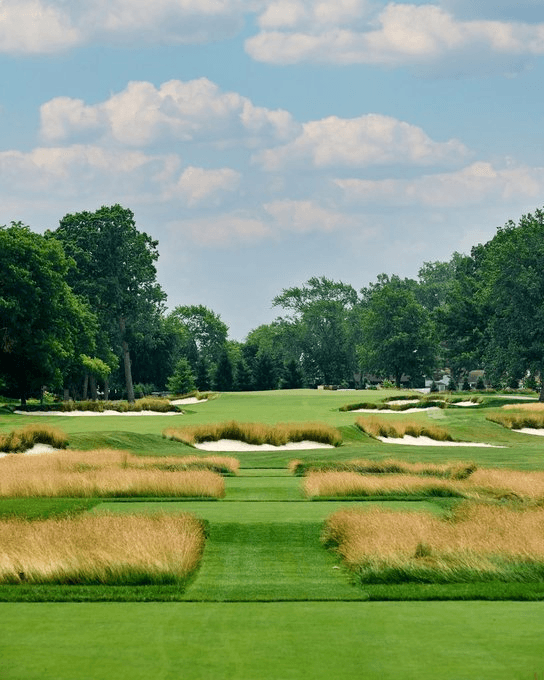
The PGA Tour rolls on to the Motor City and the final Rocket Classic tournament at Detroit Golf Club. Rocket Mortgage drew the world’s top golf circuit back to Michigan in 2019, replacing the Quicken Loans National. It gave the state a PGA Tour stop for the first time since Tiger Woods won the 2009 Buick Open at Warwick Hills. With the PGA moving to a new model for 2028 with two tracks of tournaments, including one with elevated events that will have larger purses for the better players, the Detroit-based mortgage company isn’t interested in paying for a second-tier event.
The finality of the event isn’t the only newsworthy item leading into tournament week. The Donald Ross course underwent a complete restoration with many of the aesthetics changing so dramatically that it barely looks like the same venue. Led by Tyler Rae, the restoration returned Detroit Golf Club’s North Course much closer to Ross’s original vision while modernizing it for today’s game. The project rebuilt and expanded the greens to recover lost pin locations and contour, repositioned and restored bunkers, reshaped fairways to reintroduce Ross’s intended strategic angles, and installed entirely new drainage ditches and irrigation systems to create firmer, faster playing conditions.
Perhaps the biggest change to the tournament itself is on the scorecard, where par moves from 72 with four par 5 holes to a par 70 with only two par 5s. The 7th and 17th holes have been transformed from short par 5s to long par 4s. They have played as the easiest holes every year and might now play as the toughest. Detroit GC will now have four par 4s that play 500+ yards, along with the closing 18th increasing to 470 yards. At 7,328 yards, it will now play as one of the longest par 70 tracks on the PGA TOUR.
Detroit GC ranked among the easiest scoring venues on TOUR during its first seven Rocket Classics, averaging -1.80 per round. However, the restoration, combined with the conversion to a par 70, is expected to make the course a much sterner test. While the routing and classic tree-lined character remain largely unchanged, restored bunkering, firmer conditions, and more strategic green complexes should place a greater premium on precision than in previous years.
Length will still provide an advantage, particularly for players who can carry the new fairway bunkers and leave shorter approaches into the greens. At the same time, the rebuilt Ross greens feature more contour and additional pin locations, making approach accuracy and putting on the predominantly back-to-front sloping surfaces significantly more demanding than before.
The Field

One thing is for sure, The Rocket Classic is going out with a bang. The 147-player field is the strongest by far in its 8-year history with four of the top 10 and eight of the top 20 ranked players in the world in attendance, including Cameron Young, Russell Henley, Chris Gotterup, Wyndham Clark, J.J. Spaun, Xander Schauffele, Si Woo Kim, and Ben Griffin.
The depth of the field is also stunningly good with 28 of the world’s top 60 players in attendance. Other notables include, Hideki Matsuyama, Brooks Koepka, Jordan Spieth, Patrick Cantlay, Keegan Bradley, and 2023 Rocket Classic winner Rickie Fowler. Young phenoms Michael Thorbjornsen, Jackson Koivun, and Ben James also return, and YouTube star Brad Dalke will make his first PGA start since the 2017 U.S. Open. Schauffele, Koepka, and Spieth are making their Rocket Classic debut.
There are 10 previous major winners in the field, along with three other previous winners in Detroit: 2025’s champion, Aldrich Potgieter, is back to defend his crown, while Cam Davis (2024 and 2021) and Tony Finau (2022) will join him. The Rocket Classic is the penultimate event of the regular season before the FedEx Cup Playoffs begin after next week’s Wyndham Championship.
Finish Position and Strokes Gained History at Detroit Golf Club (2019-2025)
This includes the average finish position and Strokes Gained per round. Players are sorted by SG: Total. Considering the renovations at Detroit GC, this course history data contains very little predictive value.


Course Features

With completely new greens, bunkers, and even fairway angles on some holes, the remainder of this preview will focus on the changes made to the course. Last year’s preview is here: https://betspertsgolf.com/golf-betting/2025-rocket-classic-at-detroit-golf-club-preview.
Scoring
In its final year hosting the Rocket Classic, Detroit Golf Club will look and play completely different after the Donald Ross design underwent a complete restoration led by Tyler Rae. The goal was to restore Ross’s original scale, strategy and character, while updating the course for modern play.
Exactly how much tougher Detroit GC will play under tournament conditions remains one of the biggest storylines of the week, but the days of a pure birdie fest appear to be over. Birdies should still be available, particularly for players who drive the ball well, but the restoration and revised scorecard are expected to produce a far more balanced test than the course offered during its first seven Rocket Classics.
One of the most dramatic changes is to the scorecard where it will play as a par 70 (7,328 yds), down from the par 72 that it played for the first seven years. During that span, the winning score ranged from -18 to Tony Finau‘s tournament record -26 in 2022. Aldrich Potgieter claimed last year’s title at -22 under after a playoff. Instead of four par 5s, now there are only two. The largest scoring shift comes on the former par 5 seventh and 17th holes. They ranked as the two easiest holes on the course in 2025, with the seventh averaging just 4.39 strokes and the 17th 4.42. Both have now been converted into lengthy par 4s, with the seventh measuring approximately 505 yards and the 17th stretching to roughly 537 yards.
Rather than offering routine birdie opportunities, both holes now project among the toughest on the course. The seventh has been transformed most dramatically, with the removal of the large tree near the green, a completely relocated green site well to the right of the original, and a new bailout area occupying the former green location. Together, those changes fundamentally alter the strategy and are likely to swing multiple strokes across the field over the course of the week.
The added length is evident throughout the scorecard. Detroit Golf Club now features four par 4s measuring at least 500 yards, while the closing 18th has been extended to approximately 470 yards after previously playing around 455. The increased length, combined with firmer conditions and more demanding green complexes, should place a greater emphasis on long iron play than in previous editions of the Rocket Classic.
The holes used for the Rocket Classic are a composite routing with 17 holes coming from the North Course and one from the South Course. The par 3s continue to provide excellent variety. The fifth plays just 156 yards and the 15th 163 yards, presenting two realistic birdie opportunities. In contrast, the ninth stretches to 205 yards and the 11th to a daunting 246 yards, creating two of the toughest one shot holes on the course and placing a premium on long iron and hybrid play.

Strategic Angles
While the fairways have been rebuilt as part of the restoration, the more significant change is the return of Donald Ross’s intended strategic angles. Instead of bombing away off the tee as in the past, actual strategy comes into play. Previously, all of the bunkers have been on the periphery of the holes. Repositioned bunkers and ditches now pinch many landing areas and even split some fairways, forcing players to choose between challenging carries for a shorter approach or a more conservative line from farther back.
Selective tree removal was also part of the restoration, reopening several of Donald Ross’s original sightlines and strategic angles while maintaining the tree-lined character that has long defined Detroit GC. The only water hazard on the course – the large pond in front of the green on the 14th – has been removed and filled in with fescue, which is now an ever-present feature throughout the course. The 14th green is also much smaller and elevated, potentially becoming a tougher par 5.

Bunkers & Ditches
The bunkering has undergone one of the most dramatic transformations on the course. The total number of bunkers increased from 84 to 91, but the biggest change is their scale and presence. They are significantly larger, deeper, and more penal than before, with many framed by heather grass along the outer edges to enhance both their visual appeal and strategic influence. Rae described the finished bunkers as “grander … sexier.”
Rae also called the rebuilt bunkers “works of art,” noting that they differ from the flat bottomed, steep grass faced bunkers most commonly associated with Donald Ross. Instead, Ross originally built high flashed sand bunkers at Detroit GC because the property was so flat that he wanted players to clearly see the hazards from a distance. Restoring that distinctive style was a central objective of the project, with Rae saying he wanted the bunkers to “jump out of the landscape.”
The restoration has fundamentally changed the way the course looks and feels. Although Detroit GC remains one of the flattest venues on the PGA TOUR with only about eight feet of natural elevation change from its lowest to highest point, the raised bunker edges, some standing nearly five feet above the surrounding terrain, create the illusion of rolling elevation while blending naturally into the landscape.
Ross was a genius at deceiving golfers standing on the tee box with how he layered bunkers to create a false depth perception on their actual location. Said Rae, “There are many layers now where you stand on the tee and see three or four different bunkers and they’re all at different yardages. It looks harder than it is.” It’s a visually striking golf course now. Before the bunkers were smaller and on the periphery. Now, you stand on the tee and it’s visual overload.
Redesigns over the years filled in many of the ditches that Ross created for proper drainage. The ditches that he built in 1916 for irrigation purposes have been reincorporated into their original locations. Each are around 15 feet wide and five feet deep. With high fescue surrounding them, they give the course a completely different aesthetic. Some even border green complexes, creating another challenge for players both off the tee and on their approach shots.

Greens
Every green has been restored to Donald Ross’s original design, dramatically changing both their appearance and how they will play. While the classic back to front slope remains intact, the greens have been rebuilt to their original elevations and expanded from an average of approximately 5,400 square feet to 6,700 square feet. The additional surface area has recovered lost corners, creating a much wider variety of pin positions than players faced during the tournament’s first seven years.
Putting has traditionally been one of the biggest defenses at Detroit GC because of the subtle back to front slopes. With the restoration, that challenge should increase. The rebuilt greens feature more contour, internal movement, and nuanced breaks, demanding greater precision on both approach shots and putts. As Rae explained, “Along with the bunkers, we tried to build the greens back to their original heights so the course doesn’t feel so flat.”
Perhaps the most noticeable visual change is the shape of the greens themselves. The previous greens had become largely circular or oval over time, but the restoration reintroduced Ross’s original irregular outlines, restoring lost edges and creating numerous new and more demanding hole locations.
The bluegrass rough at Detroit Golf Club is listed at 4″ but plays closer to 3-3.5″ and is very patchy in many spots due to the multitude of trees. Greens are a mix of Poa annua and bentgrass and run around 12 on the stimpmeter.
Said Rae, “We put our heart and soul into this, and I hope it shows. We think it’ll really test these players and really put on a show. It will play probably a couple strokes harder.” 2023 Rocket Classic winner Rickie Fowler remarked, “To see some final videos and pictures, and see the progression of everything, the golf course visually looks a lot better. They did a great job of giving it some more character.”

Most Important Stats For Success at Detroit Golf Club
-
- SG: Approach
- SG: Par 70
- SG: Putting (Difficult-Average)
- SG: Par 4
- Driving Distance
- Birdie or Better %
- Proximity: 175+ yards
- 3-Putt %
- Bogey Avoidance
- SG: ARG
Key Rabbit Hole Filters
- Course Region: Midwest
- Course Length: Long
- Par: 70
- Event Season: Summer
- Field Size: Full Field
- Greens Surface: Bent/Poa
- Green Size: Average
- Bunker #: High
- Rough Surface: Bluegrass
- Rough Length: Long
- Architect: Donald Ross
- Gain Putting: Difficult