
2026 Open Championship at Royal Birkdale – Preview

Ron Klos

3 months ago
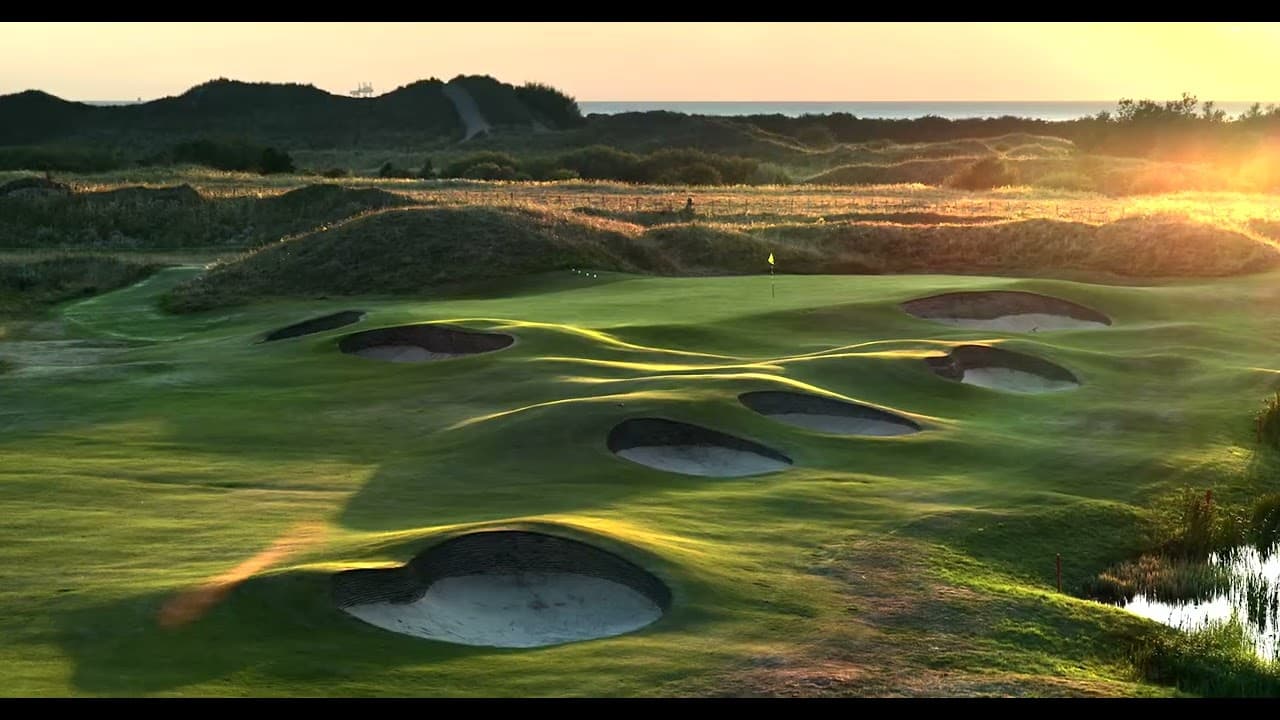
Royal Birkdale returns to the spotlight as host of the 154th Open Championship, welcoming golf’s oldest major back to England’s celebrated Golf Coast for an 11th time. Situated among the towering dunes of Southport on England’s northwest coast, Birkdale has become one of the R&A’s most trusted championship venues, hosting more Open Championships than any course outside of St Andrews in the modern era. Its iconic white Art Deco clubhouse, dramatic dune landscape and unmistakable corridors of play have helped establish a reputation as one of the purest and fairest examinations in championship golf.
Although the club dates to 1889, the championship course took shape following Frederick G. Hawtree’s redesign in the early 1930s, completed with input from five time Open champion J.H. Taylor. Unlike many traditional links that embrace blind shots and unpredictable bounces, Royal Birkdale was intentionally routed through the natural valleys between the dunes, allowing players to see both the challenge and the reward from the tee. That emphasis on strategic clarity has defined the course for nearly a century and remains one of its most distinctive characteristics.
The venue enters a new chapter this year following its most extensive renovation in decades. Tom Mackenzie of Mackenzie & Ebert carefully modernized the course through new teeing grounds, rebuilt bunkers, enhanced green surrounds and several new holes, all while preserving the philosophy that has made Royal Birkdale one of championship golf’s most respected tests. Rather than changing the course’s identity, the work sharpened its strategic options and ensured it remains capable of challenging the modern professional.
Royal Birkdale’s championship pedigree is matched by few venues in the game. Champions here include Peter Thomson, Arnold Palmer, Lee Trevino, Tom Watson, Ian Baker-Finch, Padraig Harrington and Jordan Spieth, a collection of players renowned for their creativity, patience and complete skill sets. The last Open contested at Birkdale produced one of the championship’s most memorable finishes, as Spieth recovered from his infamous miscue on the 13th hole with a breathtaking closing stretch to defeat Matt Kuchar and capture the Claret Jug. This year’s field returns to a noticeably different venue, with defending Champion Golfer of the Year Scottie Scheffler looking to build on his victory at Royal Portrush.
Despite often being described as the fairest course on the Open rota, Royal Birkdale offers very little margin for error. The generous driving corridors encourage confident swings from the tee, but the towering dunes, revetted bunkers and firm fescue turf place a premium on positioning and precision rather than raw power. Once the wind begins to shift off the Irish Sea, every decision becomes more demanding as trajectory, distance control and patience often outweigh aggression. Over four rounds, Royal Birkdale consistently rewards the player who combines disciplined course management with elite ball striking, imaginative shot making and the ability to adapt as conditions evolve, qualities that have long defined champions of The Open.
That balance between fairness and difficulty explains why Royal Birkdale commands such universal respect from the game’s best players. Tommy Fleetwood has called it “one of the best courses in the world,” while Justin Rose perhaps summarized it best when he said, “I think it’s the fairest links golf course we play. It rewards great golf.” Matt Kuchar echoed those sentiments after his runner up finish in 2017, praising the course for consistently rewarding quality shots rather than fortunate breaks. Ultimately, lifting the Claret Jug at Royal Birkdale will require far more than simply handling the weather. It demands disciplined strategy, elite ball striking, imaginative recovery play and the patience to execute over 72 holes on one of championship golf’s most exacting and respected stages.
The Field

The Open Championship annually assembles one of the most diverse fields in professional golf, and the 154th edition is no exception. A field of 156 players will compete at Royal Birkdale, consisting of exempt players from every major professional tour along with amateurs and qualifiers who earned their place through one of golf’s most demanding qualification systems.
Unlike the Masters or PGA Championship, there is no single qualifying pathway into The Open. Exemptions are awarded through past Open victories, recent major champions, high finishes in previous Opens, the Official World Golf Ranking, season-long performances on the PGA TOUR, DP World Tour and LIV Golf, along with leading amateurs and winners of select international events. The remaining places are filled through Regional and Final Qualifying, where hundreds of professionals and amateurs compete for the final spots in the championship. Final Qualifying, contested over 36 holes at four different venues across the United Kingdom, has become one of the most anticipated days on the golf calendar and regularly produces some of the championship’s most compelling stories.
This year’s field once again features virtually every notable player in the world. Defending champion Scottie Scheffler returns looking to successfully defend the Claret Jug, while Rory McIlroy, Jon Rahm, Xander Schauffele, Bryson DeChambeau, Ludvig Aberg, Tommy Fleetwood, Tyrrell Hatton, Shane Lowry, Viktor Hovland, Collin Morikawa and many of the game’s other biggest names headline a championship that includes competitors from the PGA TOUR, DP World Tour, LIV Golf and the amateur ranks.
Following 36 holes, only the low 70 players and ties will advance to the weekend, often creating one of the most dramatic cut lines in major championship golf. Changing weather conditions between Thursday and Friday frequently produce significant scoring differences between the two waves, making draw bias and adaptability important factors even before the championship begins.
Royal Birkdale Golf Club – History
Royal Birkdale began on July 30, 1889, when the newly formed Birkdale Golf Club established a nine hole course in the Shaw Hills near Bedford Park. The club relocated to the Birkdale Hills in 1894 before moving to its present seaside property in 1897, where an 18 hole course designed by George Lowe laid the foundation for what would eventually become one of championship golf’s most celebrated venues.
A defining moment in the club’s history came in the early 1930s when Frederick G. Hawtree and five time Open champion J.H. Taylor were commissioned to redesign the course to championship standards. Rather than routing holes directly over the property’s towering dunes, they threaded fairways through the natural valleys between them, creating broad playing corridors with remarkably few blind shots. Their philosophy was simple: reward well executed golf while minimizing the element of luck so often associated with links golf. The redesign also provided exceptional spectator viewing from the surrounding dunes, a feature that helped establish Royal Birkdale as one of the premier championship venues in the world. The modern course officially opened in 1934 and remains the foundation of the layout players face today, despite thoughtful updates from subsequent generations of the Hawtree family and, most recently, Tom Mackenzie of Mackenzie & Ebert.
Royal Birkdale was originally scheduled to host the 1940 Open Championship before World War II forced its cancellation. The club received Royal status from King George VI in 1951 and welcomed its first Open just three years later, when Peter Thomson captured the first of his five Claret Jugs. Since then, Birkdale has hosted Ryder Cups, Walker Cups, Curtis Cups, Women’s Opens and multiple Amateur Championships, while the 154th Open marks its 11th staging of golf’s oldest major, second only to St Andrews during that span.
2026 Championship Renovation
With the 154th Open Championship on the horizon, Royal Birkdale embarked on its most significant course improvement project in decades. In 2021, the club commissioned Tom Mackenzie of Mackenzie & Ebert to develop a long-term master plan that would prepare the course for modern championship golf while remaining faithful to the design philosophy established by Frederick G. Hawtree. Rather than pursuing a restoration to a specific point in history, the objective was to enhance the strategic challenge for today’s game while preserving the character that has defined Royal Birkdale for nearly a century. Construction was completed in two phases between Autumn 2023 and Spring 2025, allowing the course more than a full growing season to mature before hosting The Open.
Unlike many championship renovations that focus primarily on adding length, the work at Royal Birkdale centered on improving strategic variety and creating a more balanced examination. Every hole received some level of attention through rebuilt tees, renovated bunkers, refined green surrounds, improved drainage and more naturalized walkways, while several holes underwent complete transformations. Historical research also guided the reconstruction of many bunkers, returning them to a more rugged appearance that better reflected the club’s early championship years.
The most significant changes came on the 5th, 7th, 14th and 15th holes. The short par 4 fifth was completely redesigned into a more compelling risk reward hole featuring a raised green surrounded by some of the deepest bunkers on the property. The former 15th was transformed into a much longer and more demanding par 5, while a brand new long par 3 was introduced as the 15th to create greater variety among the one shot holes. The previous 14th hole was removed from the championship routing and converted into a world class short game practice facility. Together, these changes strengthened the middle of the back nine and introduced a wider range of shot values throughout the course.
Perhaps the renovation’s greatest achievement is that it feels evolutionary rather than revolutionary. The towering dunes, distinctive playing corridors and unmistakable identity of Royal Birkdale remain intact, yet the strategic questions asked of today’s professionals are more varied than ever. Players returning from the 2017 Open will immediately recognize the course, but they will also discover a championship venue that has been modernized to challenge the game’s best for decades to come.
Finish Position and Strokes Gained Open Championship/Links History (2016-2025)
Combined Open Championship history since 2016. It includes average finish position and Strokes Gained per round. Players are sorted by SG: Total. Other links course history goes back to 2017 and includes the Scottish Open, Alfred Dunhill Links, Irish Open, 2026 Nexo, 2022 Cazoo Classic, 2021 PGA Championship at Kiawah Island, 2019 Betfred British Masters, and the 2018 and 2025 U.S. Opens at Shinnecock Hills.


Course Features

Royal Birkdale will play as a par 70 measuring 7,223 yards for the 154th Open Championship, 67 yards longer than the 7,156 yard setup used in 2017. By modern PGA TOUR standards, that is a relatively modest number, particularly compared with the many annual venues that now stretch beyond 7,400 yards. The raw yardage is misleading, however, because Birkdale contains only two par 5s and includes four par 4s measuring at least 450 yards, led by the 514 yard 6th, 502 yard 13th and 508 yard closing hole. The four par 3s also range dramatically from 151 to 241 yards, giving the course far more variety than its total length suggests.
The playing surfaces are a traditional links mixture dominated by fescue. Recent championship specifications listed bentgrass, fescue and Poa annua on the greens, with fescue used on the approaches, tees and fairways and native links grasses forming the rough. The greens average approximately 5,500 square feet, slightly smaller than the typical PGA TOUR putting surface, although their effective targets are frequently reduced by slopes, narrow entrances, surrounding bunkers and tightly mown runoffs. The putting surfaces are generally less severe than those found at some other Open venues, but there are important exceptions, including the small and heavily contoured new 7th and the undulating 14th.
Birkdale is often perceived as unusually wide and visually straightforward for a links course. Its fairways occupy relatively level valleys between enormous dunes rather than repeatedly climbing over them, producing flatter lies and fewer blind shots than players encounter at many other Open venues. Data from its most recent Open showed an average fairway width of roughly 32 yards, close to a normal TOUR setup rather than exceptionally generous. The distinction is that the dunes clearly frame the intended lines while the relatively level landing areas reduce some of the random bounces commonly associated with links golf. There is still considerable volatility because firm turf can carry drives through doglegs or into hazards, while balls that miss the fairway may finish in wispy grass, thick rough, gorse, sand or against the face of a dune.
As is the case at most links venues, the bunkers are one of the most persistent defenders of the course. Royal Birkdale currently has around 110 bunkers, many of them revetted pots positioned directly within preferred driving and approach lines. They are not uniformly as deep or visually intimidating as those at certain other rota venues, but their placement makes them highly punitive. A fairway bunker often removes any realistic chance of reaching the green, while several short holes use concentrated bunkering to create large consequences for small errors. The new 7th has the deepest bunkers on the property surrounding its smallest green, the redesigned 14th contains 12 bunkers and the finishing hole presents a wall of sand to players trying to take driver. Beyond the bunkers, out of bounds, drainage ditches, gorse and steep dune faces appear selectively rather than constantly, allowing the course to remain readable without becoming forgiving.
Its greatest defense remains exposure to the elements. Royal Birkdale lies close to the Irish Sea, where wind can change the effective yardage, preferred landing area and required trajectory of almost every hole. The prevailing breeze influences the course unevenly: the 2nd and 6th generally play into it, while holes such as the 8th, new 15th and 17th are more likely to receive assistance. The dunes provide partial shelter in places, but they can also funnel or redirect the wind, making its strength difficult to judge from protected valleys. Dry weather increases the value of low running shots while making fairways harder to hold and green entrances more difficult to access. Rain softens the course and expands the targets, but stronger wind can quickly offset that advantage.
Conditions largely determined the scoring when The Open last visited in 2017. Jordan Spieth won at 12 under par, and the average round played at +1.85. The course was vulnerable when the wind eased, highlighted by Branden Grace’s major championship record 62 during the third round, but Friday’s stronger wind and rain produced a substantially more difficult examination. That range explains Birkdale’s volatility: it can yield birdies when the surfaces are receptive and the breeze manageable, yet quickly become one of the most difficult courses in the rotation when players are forced to control longer clubs through crosswinds.
The early forecast for championship week currently calls for warm, predominantly dry conditions, with afternoon breeze most likely during the opening round. That outlook would allow the course to firm considerably and place more emphasis on controlling rollout than simply carrying the ball to fixed yardages, although coastal forecasts remain capable of changing quickly. Unless stronger wind or rain arrives, the added strategic options around the renovated holes and the relatively receptive scoring conditions could produce a winning total similar to or lower than 2017. If the wind strengthens, the long par 4s, exposed par 3s and heavily bunkered landing areas should prevent the course’s moderate yardage from translating into an easy test.
Course Layout & Hole Preview

Unlike the traditional out and back routing found at many Open Championship venues, Royal Birkdale features returning nines, with both the 9th and 18th greens finishing near the clubhouse. The routing winds through the natural valleys between towering dunes, producing one of the most visually distinctive and easiest to follow layouts on the Open rota. Players rarely lose sight of the hole in front of them, and the routing progresses naturally from one corridor to the next without many blind shots or awkward transitions. That straightforward presentation, however, should not be mistaken for simplicity. Every hole places a premium on finding the proper position, with the challenge coming from strategic bunkering, demanding approach angles and changing wind rather than hidden hazards or unpredictable bounces.
The front nine builds steadily in difficulty and offers very few opportunities to ease into the championship. The opening hole has consistently ranked among the toughest opening holes on the Open rota, while the long par 4 6th and newly redesigned risk reward 5th create two of the most compelling strategic tests on the outward half. The inward nine provides considerably more variety and drama. Three of the final five holes were either substantially redesigned or completely rebuilt for the 2026 championship, culminating in a closing stretch that asks players to alternate between restraint and aggression. Rather than relying on one signature finishing hole, Birkdale presents a sequence of decisions that can quickly produce birdies or bogeys depending on execution.
The four par 3s now provide one of the course’s greatest strengths following the recent renovation. Ranging from just 151 yards at the rebuilt 7th to 241 yards at the new 15th, each demands a distinctly different shot. The short 7th requires precision to a raised green surrounded by some of the deepest bunkers on the property, while the 15th asks players to control a long iron or hybrid into a deep, angled green that becomes increasingly difficult to hold when played downwind. The par 4s remain the backbone of the championship, accounting for 12 of the 18 holes and featuring an outstanding mix of demanding two shot holes and strategic risk reward opportunities. With only two par 5s, neither of which is guaranteed to yield birdies, players cannot rely on easy scoring holes to offset mistakes elsewhere on the course.
Several holes stand out as potential turning points during the championship. The drivable 5th introduces one of the week’s most intriguing strategic decisions, rewarding boldness while severely punishing anything less than complete commitment. The long par 4 13th remains one of the course’s sternest examinations before the redesigned closing stretch begins with the new 15th, followed by the reachable par 5 17th and one of the strongest finishing holes in championship golf at the 18th.
Strokes Gained Analysis
Off the Tee
Royal Birkdale places a premium on driving accuracy. While distance remains an advantage, players who consistently find the right parts of the fairway will have a significant edge over those who rely only on power. The fairways run through relatively level valleys between the dunes and are wide enough to reward confident swings, yet many narrow at the distances reached by modern professionals or are divided by bunkers placed directly along the most desirable lines. Longer hitters can shorten several demanding par 4s and attack both par 5s, but that advantage disappears quickly when additional speed brings the deepest fairway bunkers, doglegs and heavy rough into play. The best drivers for Birkdale are therefore not necessarily the straightest or the longest, but those capable of combining both while adjusting their club selection and trajectory to the wind.
The penalty for missing a fairway depends heavily on the size and direction of the miss. A drive that finishes only a few yards into the wispy first cut may still provide a reasonable lie and a clear route to the green. Wider misses are far more damaging. Beyond the maintained rough are thicker stands of fescue, tangled marram grass, gorse, steep dune faces and occasional out of bounds, where players may struggle to find the ball or advance it more than a short distance. The severity is less about the percentage of fairways hit than avoiding the misses that immediately remove control of the next shot. Historical course data supports that distinction, with Royal Birkdale producing a greater penalty for missed fairways than the average professional venue despite its comparatively readable driving corridors.
The bunkers create another clear division between playable and costly misses. Many sit between 280 and 330 yards from the championship tees, exactly where elite players expect their drives to finish, and the steep revetted faces often force a sideways recovery rather than an attempt toward the green. The 13th is a good example: bunkers begin around 300 yards on the right and 326 yards on the left, meaning a properly placed drive leaves a manageable approach while a small directional error can make par difficult. Similar decisions appear throughout the course, with landing areas that look generous from the tee but become substantially narrower when the ideal angle and bunker positions are considered.
Driver will remain the preferred club on many of Birkdale’s longer holes, but it will not be automatic across the course. On the opening hole, out of bounds runs along the right while the prevailing wind pushes shots in that direction, and many players choose a club that finishes short of the bunker approximately 230 yards from the tee rather than challenging the narrowest portion of the landing area. The shorter par 4s, including the redesigned 5th, can also bring fairway woods, hybrids or long irons into consideration when the wind, hole location or firmness of the turf makes position more valuable than proximity. At the heavily bunkered 18th, players must decide whether driver provides enough reward to justify bringing the full collection of hazards into play.
Ultimately, Birkdale rewards controlled aggression. Length creates opportunities, particularly when the wind is helping and the fairways are soft enough to hold drives, but indiscriminate use of driver introduces unnecessary volatility. Players who can shape shots away from the trouble, vary launch and carry distances, and identify the holes where a longer approach from the fairway is preferable to a shorter one from sand or heavy grass should hold the advantage. Avoiding wide misses will matter considerably more than compiling a high fairway percentage through conservative play alone.
Approach
Approach play has historically been the most demanding aspect of Royal Birkdale and is likely to separate contenders once again. While the driving corridors are more forgiving than many Open venues, Birkdale offers very few straightforward approach shots. Players are constantly challenged to control trajectory, distance and spin while hitting into greens that often sit slightly above the surrounding fairways, are protected by revetted bunkers and become increasingly difficult to access when the wind changes direction. The course does not rely on severe green contours to defend par. Instead, the challenge lies in delivering the golf ball to the proper section of the putting surface while avoiding the tightly guarded edges that repel even slightly misjudged iron shots. As a result, Birkdale has consistently rewarded elite ball strikers, with approach play proving far more predictive of success than putting alone.
The additional length introduced by the recent renovation should shift a greater percentage of approach shots into the middle and long iron ranges compared to 2017. During the last Open, the majority of approaches came from approximately 125 to 175 yards. The redesigned routing adds length to several key holes, most notably the 13th, new 15th and closing stretch, making it likely that 150 to 200+ yards will become the most important range this year. The four par 3s alone now require clubs ranging from a short iron to a hybrid, further increasing the importance of players who excel with their mid and long irons.
Unlike many inland championship venues, Birkdale does not require players to attack every flag through the air. The openness at the front of many greens allows a variety of trajectories, and the preferred shot often depends on the firmness of the turf and the direction of the wind. Into the wind, players may choose to land the ball short and utilize the firm fescue approaches to feed shots onto the putting surface, while downwind conditions frequently demand the opposite, with lower, chasing approaches becoming difficult to stop before running through the green. The newly constructed 15th illustrates this perfectly. Although it measures more than 240 yards, its open entrance provides an option to use the ground, whereas aerial shots can easily release over the back if distance control is imperfect. This flexibility is one of Royal Birkdale’s defining characteristics, rewarding imagination as much as precision.
Perhaps the greatest challenge is that there are very few “free” approach shots. Long par 4s such as the 6th, 13th and 18th frequently require long irons or hybrids into well-defended greens, while even shorter holes place a premium on distance control rather than simply finding the putting surface. Missing in the wrong location often leaves a far more difficult recovery than the green complexes initially suggest, particularly when bunkers or tightly mown collection areas come into play. The combination of demanding approach distances, ever-changing wind and a variety of viable shot trajectories explains why Royal Birkdale has long been regarded as one of the Open rota’s premier second-shot examinations. Over four rounds, few skills will have a greater influence on who ultimately lifts the Claret Jug than elite iron play.
Around the Green
Although Royal Birkdale is widely regarded as a second shot golf course, saving par after a missed green is rarely straightforward. The green complexes are protected by a blend of revetted pot bunkers, tightly mown runoffs and closely cropped fescue that present players with multiple recovery options rather than one obvious play. Unlike many modern championship venues where a lofted pitch is the default choice, Birkdale frequently rewards creativity. Depending on the lie, wind and firmness of the turf, players may elect to putt, bump a low running shot with an iron, or play a lofted pitch, making imagination and sound decision making just as important as technique.
The course’s bunkering presents perhaps the greatest challenge around the greens. Many of the revetted pots are deep enough that advancing the ball onto the putting surface becomes the primary objective, particularly from the newly reconstructed bunkers surrounding the 5th, 7th and 14th holes. Recovery shots from the tightly mown collection areas can be equally demanding, however, as firm links turf places a premium on precise contact and distance control. Even slight mistakes can leave players facing another delicate chip or a lengthy par putt, making scrambling far more difficult than the relatively subtle green contours might initially suggest.
Ultimately, the world’s best short game players separate themselves through versatility rather than relying on one specialty shot. Those who can seamlessly transition between putters, bump and runs, low checking pitches and high soft recoveries will be best equipped to handle the variety of situations Royal Birkdale presents.
Putting
Compared to many Open Championship venues, Royal Birkdale’s greens are relatively straightforward. They lack the dramatic internal contours found at courses such as St Andrews or Royal Troon, instead placing greater emphasis on subtle movement, proper positioning and pace. The greens are expected to run between 10.5 and 11 feet on the Stimpmeter, a speed that allows the R&A to maintain consistent surfaces while ensuring they remain fair under changing wind conditions. Players who consistently position their approach shots below the hole should face makeable birdie opportunities, while those leaving themselves above the cup will quickly discover how difficult it is to control pace on firm fescue surfaces.
The understated nature of the greens often leads players to underestimate their difficulty. Although there are relatively few severe slopes, many putting surfaces feature gentle plateaus, shoulders and falloffs that become increasingly influential on longer putts. Distance control is therefore paramount. Putts from 30 to 50 feet are generally more manageable than at many championship venues because the greens lack excessive movement, allowing players to be more aggressive without fearing dramatic breaks late in the roll. The real challenge comes inside 15 feet, where subtle contours and grain variations can make seemingly straightforward birdie putts surprisingly difficult to read.
Ultimately, Royal Birkdale is unlikely to be won solely with the putter. The relatively modest undulation places greater importance on approach play than elite putting, rewarding those who consistently create opportunities inside 20 feet rather than relying on lengthy putts to save par or make birdies. Players who pair excellent iron play with solid lag putting should separate themselves over four rounds, while avoiding costly three putts and capitalizing on the scoring chances created by precise approaches will ultimately prove more valuable than producing an extraordinary putting performance.
Most Important Stats For Success at Royal Birkdale
*In order of importance
- SG: Approach (Difficult APP)
- Distance From Edge of Fairway/Driving Accuracy (Difficult OTT)
- Scrambling – Short Grass (Difficult ARG/Short Grass)
- Bogey Avoidance (Difficult Scoring)
- SG Total (Very Difficult/Difficult Scoring)
- SG: Open Championship/Links courses
- SG: Putting (Last 50 rds/Slow Greens)
- Total Driving
- Proximity 150-200 yds
- SG: Par 4 (Difficult Par 4s)
Key Rabbit Hole Filters
- Course Region: UK/Ireland, Coastal
- Course Type: Coastal/Links
- Scoring Conditions: Difficult
- Field Strength: Very Strong
- Par: 70
- Event Type: Major
- Green Surface: Native
- Green Speed: Slow
- Green Size: Small
- Bunker #: High
- Missed Fairway Penalty: High
- Rough Surface: Fescue
- Rough Penalty: High
- Gain OTT: Very Difficult
- Gain APP: Very Difficult
- Gain ARG: Difficult
- Scrambling – Short Grass: Difficult
- Gain PUTT: Difficult