The Memorial at Muirfield Village Golf Club – 2026 Preview

Ron Klos

5 months ago
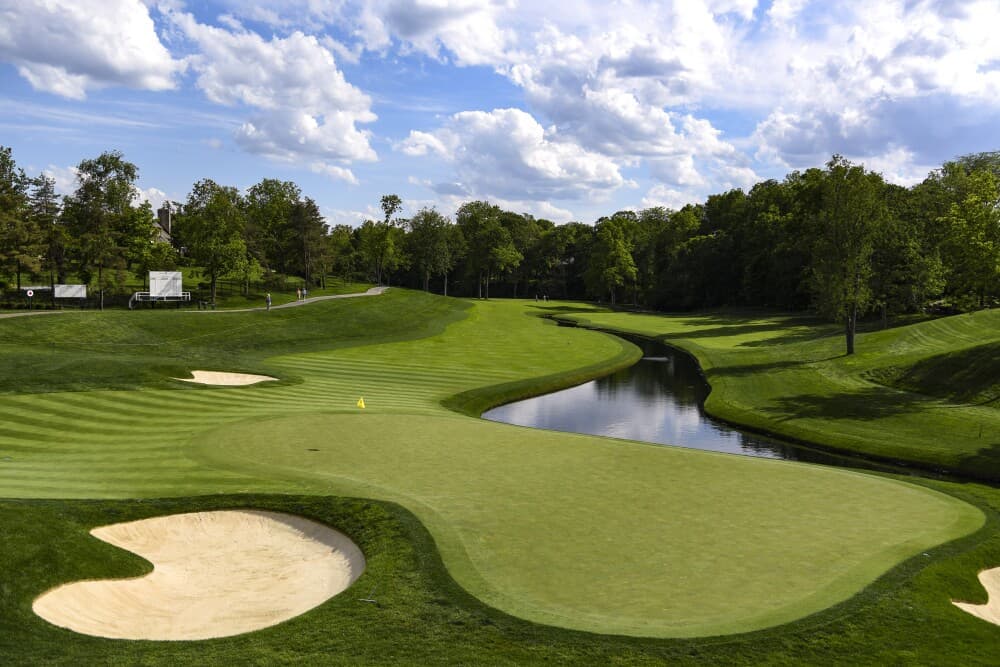
The PGA Tour heads to one of its most prestigious annual stops this week for the 2026 Memorial Tournament at Muirfield Village Golf Club in Dublin, Ohio. Widely regarded as the crown jewel of Jack Nicklaus‘ course design portfolio, Muirfield Village has long stood as one of the most demanding and respected non-major championship venues in professional golf. Affectionately known throughout the golf world as “Jack’s Place,” the course represents Nicklaus’ vision of creating a tournament and venue that would stand alongside the most respected events on TOUR.
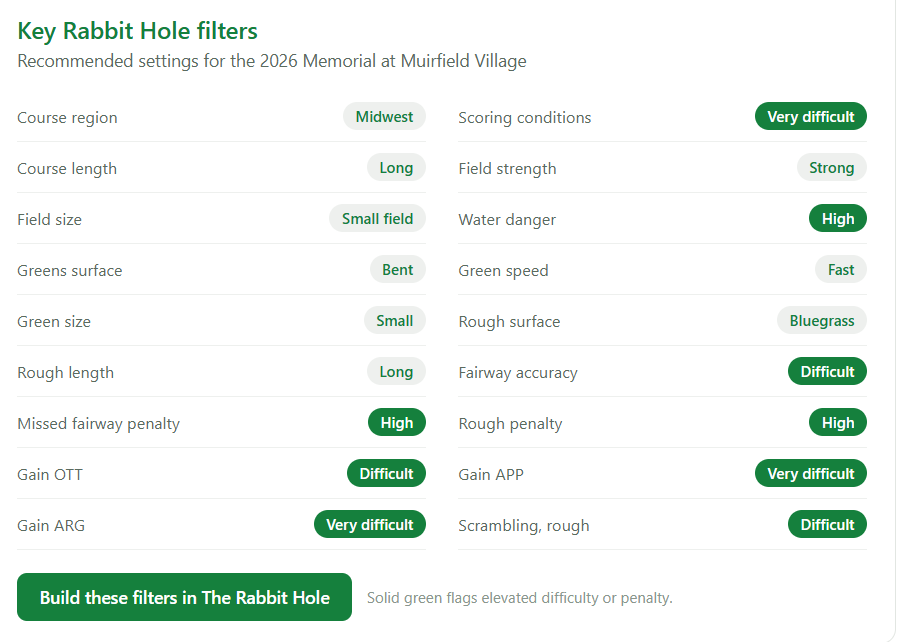
Muirfield Village is a bold, demanding championship test that consistently rewards the most complete tee-to-green performers in the field. Jack Nicklaus‘ design places a premium on precision at every stage, with penal rough, strategically placed hazards, and small, firm, undulating bentgrass greens punishing even slight mistakes. Players who miss fairways or find themselves out of position with their approach shots often face an uphill battle just to save par.
The challenge doesn’t end upon reaching the greens, either. Muirfield Village routinely demands elite scrambling and touch around the putting surfaces, ranking as the second-toughest course on the PGA Tour to gain strokes around the green behind only Augusta National. From driving and iron play to short-game execution, the course leaves little room for weakness and consistently identifies the most complete golfer in the field.
As a Signature Event, the Memorial annually attracts one of the strongest fields in golf and remains one of only three Signature Events that features a 36-hole cut. Unlike most elevated events, players must survive one of the toughest examinations on Tour, with only the top 50 players and ties advancing to the weekend. The combination of an elite field, a demanding cut line, and a championship-caliber golf course creates a tournament atmosphere that feels remarkably similar to a major championship.
After toughening the course in 2020, Nicklaus described his philosophy on the renovation and Muirfield Village in general. “My belief is that tournament golf should be a test to find out who is the best golfer that week. Far too many tournaments have eliminated the rough and firmness of greens, and that is just not my idea of what the game of golf should be. So I’m going to stick with my old-fashioned beliefs about how the game of golf should be played and the way golf courses should be set up. The whole gamut of all shots is what the game of golf is all about. The game should challenge every facet of every club in the bag.”
The Field

For the third straight year, The Memorial is a Signature Event containing only 72 players. It is one of three player-hosted tournaments, along with the Genesis Invitational” and the Arnold Palmer Invitational that feature a 36-hole cut to the top 50 and ties, plus any player within 10 shots of the lead. With a total purse of $20 million, the winner receives $4 million and 700 FedExCup points.
Muirfield Village typically hosts one of the strongest fields on Tour, and this year is no different with only the best players qualifying. Every eligible golfer within the top 40 in the world rankings will be in attendance with the exception of Collin Morikawa and Viktor Hovland. Scottie Scheffler returns to Muirfield Village with a chance to become the first player since Tiger Woods to win the Memorial Tournament in three consecutive appearances. Given his elite ball-striking and proven success on one of the PGA Tour’s most demanding venues, he once again enters the week as the player to beat.
Muirfield Village Golf Club – History
Located just a few miles northwest of Columbus, Ohio, Muirfield Village was founded by golf legend Jack Nicklaus. He named it after Muirfield, Scotland, where he completed his first grand slam in 1966 after winning the British Open. Situated on 220 acres, the club officially opened in May of 1974. As far as why he chose the site, Nicklaus remarked, “It’s a pretty site. When I saw it, I liked the way it flowed through the valleys, and I knew I wanted to create a gallery golf course. The valleys were wide enough to accommodate that goal.”
With Augusta National in mind, Nicklaus built a course that epitomizes his design philosophy. It is a brawny style of modern architecture that favors players with a high ball flight and those with a left-to-right power fade off the tee.
Nicklaus is the type of course designer who is never satisfied and is always looking to modernize his creations. This is nowhere more true than here at Muirfield Village. Since it opened, Nicklaus has remodeled every hole on the course at least once. His main reason for doing so is to keep up with the distance and talent of the current times.
After the 2020 event, Nicklaus oversaw an extensive course renovation that saw new tees added on five holes, a complete reconstruction of the green complexes with bentgrass surfaces, and recontoured bunkers. The 15th hole was also completely rebuilt. This renovation also lengthened the course by close to 100 yards. In 2023, new tees were added on No. 16 and No. 17 which further lengthened the course by around 40 yards.
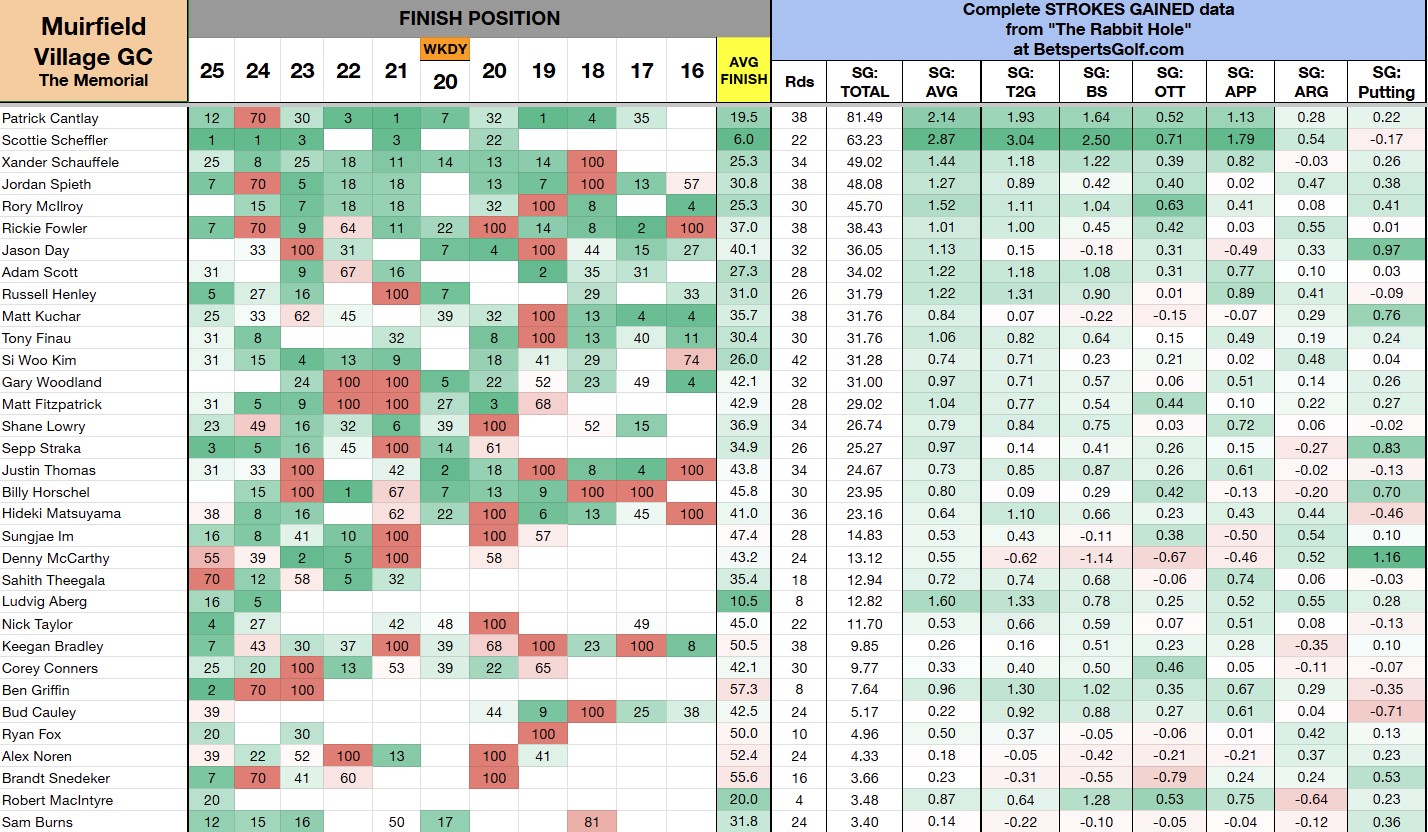
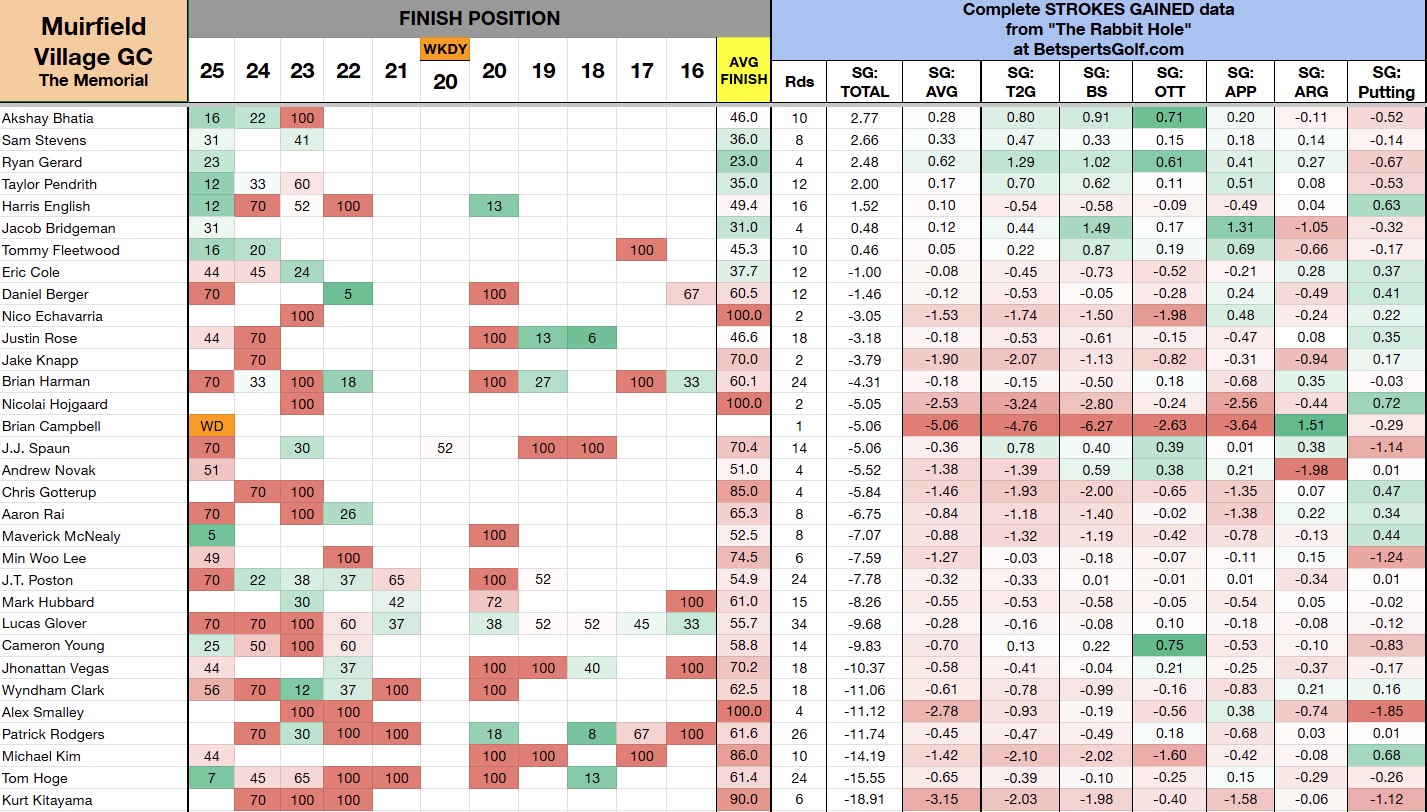
Finish Position and Strokes Gained History at Muirfield Village (2016-2025)
This includes the average finish position and Strokes Gained per round. Players are sorted by SG: Total. Muirfield Village is the 9th most predictive course on the PGA Tour.
Course Features
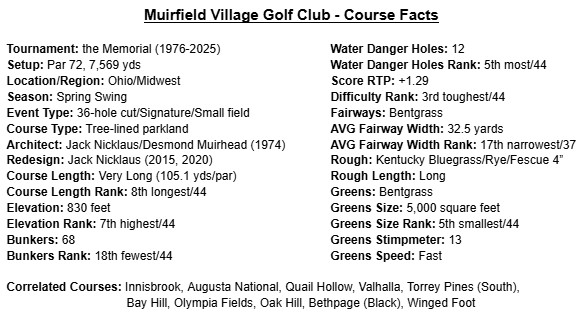
Muirfield Village Golf Club is a par-72 layout that stretches to 7,569 yards, making it the eighth-longest annual stop on the PGA Tour. Jack Nicklaus‘ classical parkland design features significant elevation changes, wide tree-lined fairways, strategically placed bunkers, firm and fast green complexes, penal rough, and water hazards that come into play on 12 holes. The course has multiple layers of defense, requiring players to execute precise shots from tee to green while avoiding costly mistakes.
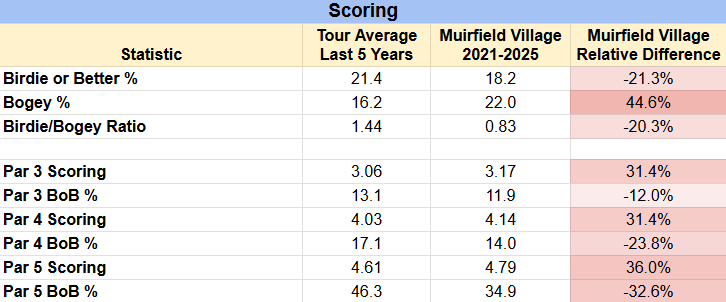
With so many ways for the course to challenge players, the margin for error is extremely small. Even minor misses can quickly escalate into bogeys or worse. From 2016 through 2020, Muirfield Village played to an average score of 0.75 strokes over par, but the course has become considerably more difficult following its 2020 renovation. Over the last five years, it has played to an average of 1.29 strokes over par per round, making it the third-toughest non-major venue on the PGA Tour during that span.
The increased difficulty following the 2020 renovation has been widely praised by players, including 2020 Memorial champion Jon Rahm. After his victory, Rahm said, “It’s a test out there. It’s more how golf should be. I’m glad for once we’re not having a week where it becomes a putting contest and see who shoots 20-plus under par. I do think the redesign has made it a better golf course.” The changes reinforced many of the design principles that have always defined Muirfield Village. Because of the penal rough, players who drive the ball accurately have a much better opportunity to attack pins with their approach shots, while those forced to play from the thick grass often find themselves simply trying to survive.
Muirfield Village is a classic example of one of Jack Nicklaus‘ core architectural philosophies. While the fairways are relatively generous by modern standards, each hole becomes progressively more difficult the farther a player moves from the tee box. Nicklaus has long believed that great golf courses should challenge players with their approach shots and around the greens, rewarding elite iron play and short-game skill rather than simply accuracy off the tee. Similar to the way the Golden Bear himself played the game, Muirfield Village favors players who can hit a powerful fade off the tee and launch high approach shots capable of holding the firm bentgrass greens, which typically become faster and more difficult to attack as the tournament progresses into the weekend.
Tiger Woods has also spoken about the advantage certain shot shapes possess on Nicklaus designs. “So over the course of my career, I’ve done well on Nicklaus courses. And I’ve always felt maybe just the high fade or just high shots in general, because I’ve always hit the ball high has always been advantageous.” That observation aligns perfectly with the demands of Muirfield Village, where players are regularly asked to hit towering approach shots into firm greens while shaping tee shots to ideal angles. The course consistently rewards golfers who can pair power with a high ball flight and elite iron play.
Known for its immaculate conditioning and beautifully manicured grounds, Muirfield Village is also one of the most picturesque venues on the PGA Tour. The fairways and greens are composed of Bentgrass, while the four-inch rough is a penal blend of Kentucky bluegrass, ryegrass, and fescue. The putting surfaces are among the purest and most consistent players will see all season, typically running around 13 on the Stimpmeter. Although they measure just 5,000 square feet on average, making them smaller than the Tour norm, they remain some of the most challenging greens in professional golf. Broad sweeping contours, subtle elevation changes, and numerous pin locations require precise approach play, with the best results often coming from shots that land in the proper quadrant and utilize the slopes to feed toward the hole. Players who repeatedly find the correct sections of these greens gain a significant advantage, while those who miss their targets face difficult two-putts and challenging up-and-down opportunities.
Hole Preview
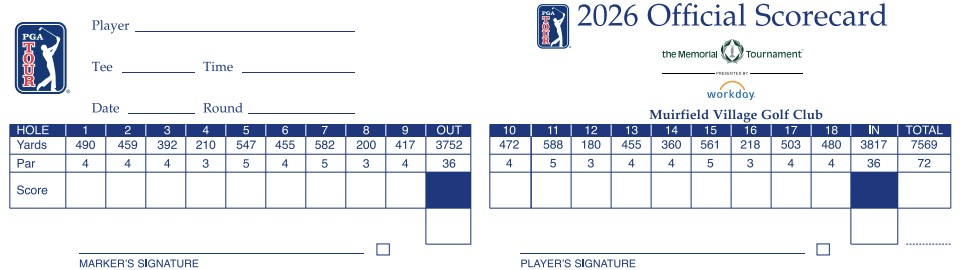
Unlike many championship venues that are defined by a single signature hole, Muirfield Village’s greatness comes from the strength of all 18 holes working together. The course presents a relentless examination from start to finish, with every hole demanding precision, patience, and sound decision-making.
While birdie opportunities are scarce, the four par-5s provide the clearest path to scoring and often play a pivotal role in determining the tournament champion. They are the only four holes that consistently play under par and all measure between 550 and 600 yards. During the 2020 renovation, each par-5 was lengthened to reduce the number of players capable of reaching them in two shots, resulting in the toughest collective group of par-5s on the PGA Tour since the redesign. Excluding the demanding 561-yard 15th hole, the other three remain reachable for longer hitters, making them critical scoring opportunities. In fact, over the last three years, 59 of the top 65 finishers gained strokes on the field on the par-5s, further emphasizing their importance.
The par-3s offer little relief. Three of the four measure over 200 yards and collectively play 0.62 strokes over par, ranking as the third-toughest set of par-3s on Tour. Even the shortest of the group, the 180-yard 12th hole, carries the highest bogey-or-worse rate on the course at 26 percent. With players frequently hitting long irons into small, firm greens, these holes demand both precision and patience.
The par-4s are equally demanding. Not a single par-4 at Muirfield Village plays under par, and only the two shortest holes, both under 400 yards, come close to providing scoring opportunities. Seven of the ten par-4s measure between 450 and 500 yards, creating a steady barrage of long and difficult approach shots. Collectively, they rank as the seventh-toughest group of par-4s on the PGA Tour.
The challenge culminates with one of the most punishing finishing stretches in professional golf. The 16th is a daunting par-3 that plays more than 200 yards over water. The 17th follows as a brute of a par-4 measuring 485 yards with a narrow driving corridor that places a premium on accuracy. Players then face a demanding 480-yard closing hole featuring an uphill dogleg framed by bunkers, water, and thick rough. With trouble lurking on every shot, holes 16 through 18 regularly produce dramatic swings on the leaderboard and ensure that no lead is ever truly safe at Muirfield Village.
Strokes Gained Analysis
Off the Tee
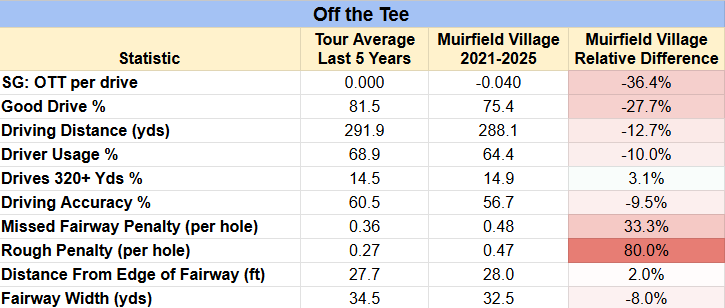
One of the biggest changes resulting from the 2020 renovation has been the increased emphasis on driving. Prior to the redesign, Muirfield Village was routinely one of the easiest courses on the PGA Tour to gain strokes off the tee. Since then, it has ranked among the five most difficult courses in that category thanks to added yardage, repositioned fairway bunkers that now challenge modern landing zones, and subtly tightened driving corridors.
Although the fairways still average a relatively generous 32 yards in width, missing them comes with severe consequences. Water hazards are in play throughout the property, and the four-inch rough is among the most penal players will encounter all season. As a result, Muirfield Village ranks as the toughest course on Tour when playing from the rough or after missing the fairway. Simply finding the short grass creates a significant advantage, making one of our favorite Rabbit Hole metrics, Distance From Edge of Fairway, especially valuable this week. Players who consistently drive the ball deep into the center of fairways gain access to preferred angles and are far better positioned to attack the firm, demanding greens.
Numerous players have emphasized the importance of driving performance at Muirfield Village. Patrick Cantlay noted, “There’s a huge premium on driving the golf ball long in the fairway.” Jordan Spieth echoed that sentiment, saying, “If you get yourself out of position off the tee, and all of a sudden you’re left, you can’t really take much of a chance because then you get above the hole and you’re out of it. So there is a premium on positioning off the tee.”
While accuracy is essential, distance remains a major asset on a course that stretches nearly 7,600 yards. Longer hitters are able to attack with shorter clubs into the greens, creating more birdie opportunities and avoiding some of the long-iron approaches that less powerful players face throughout the week.
Approach
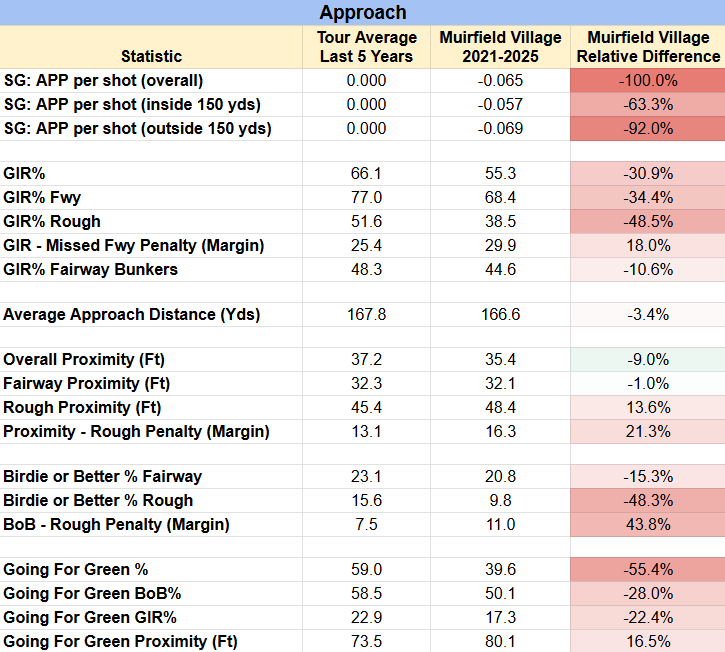
If driving is the foundation for success at Muirfield Village, approach play is what ultimately separates contenders from the rest of the field. Nicklaus designed the course to be the ultimate shot-maker’s test, demanding precision and discipline on nearly every approach shot. While birdie opportunities exist, players must consistently find the correct sections of these complex greens to capitalize. As Rickie Fowler explained, “It’s a second-shot golf course. You have to control your ball coming to these greens, and you have to be able to put yourself on the right side of the hole on the right section of the green.”
The numbers overwhelmingly support that assessment. The top six finishers in both 2021 and 2023 gained an average of 4.8 strokes on approach, while in 2022 every player inside the top 13 gained at least 2.1 strokes with their irons. Scottie Scheffler‘s dominance at Muirfield Village has followed the same blueprint, with 68 percent of his total strokes gained over the past two years coming on approach shots. Long-iron proficiency is especially important this week, as 49 percent of approach shots originate from beyond 175 yards compared to a Tour average of 44 percent.
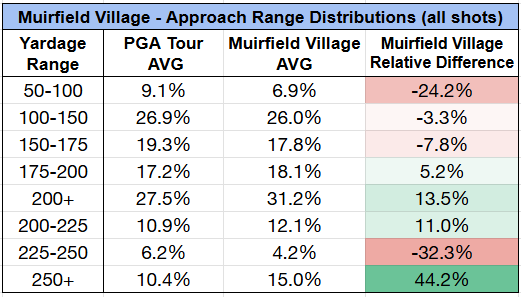
The challenge is amplified by some of the firmest and most demanding greens players will face all season. Water hazards threaten approach shots on 11 holes, and the course produces a greens-in-regulation rate of just 55 percent, highlighting the difficulty of finding and holding these targets. Despite their relatively small size, ranking as the fifth-smallest greens on Tour, Muirfield’s putting surfaces repel even quality shots when players fail to find the proper angle or trajectory. Firm conditions frequently cause balls to bounce through greens or trickle into difficult collection areas, while short-sided misses often leave players facing delicate downhill chips and treacherous putts. It’s no surprise that Muirfield Village consistently ranks as the toughest course on Tour for gaining strokes on approach.
Equally important is where players leave their ball once it reaches the green. The severe contours create dramatic differences between being above or below the hole, a factor that numerous players have discussed over the years. Following his victory in 2017, Jason Dufner noted, “Being underneath the hole is huge out here. When I play good rounds, I seem to be putting uphill all week. I’m struggling from above the hole.”
Because of the pronounced slopes and subtle internal contours, certain sections of the greens can actually feed approach shots toward the hole, while others repel them into difficult positions. Understanding these nuances is often a product of experience, making course history more valuable than usual at Muirfield Village. Knowing where to miss, where not to miss, and how specific pin locations interact with the surrounding contours can save multiple shots over the course of a week. Players who combine elite long-iron play with a high ball flight capable of landing softly on firm greens will be best equipped to generate birdie chances while avoiding the costly mistakes that Muirfield Village is designed to expose.
Around the Green and Putting
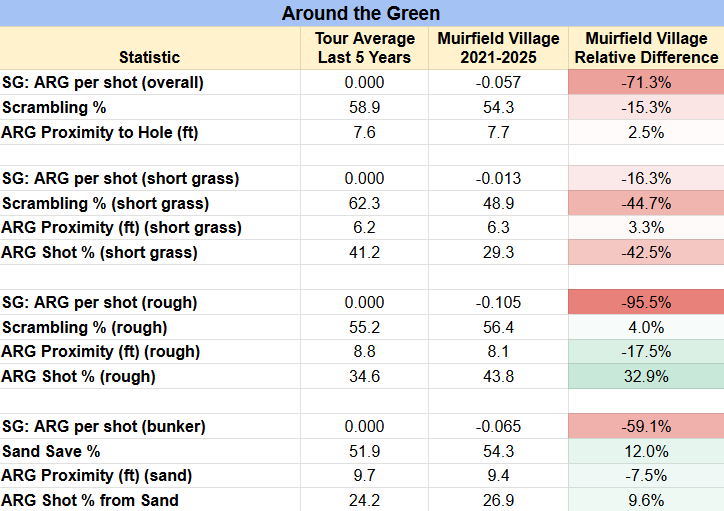
Driving and approach play get most of the headlines at Muirfield Village, but players who can scramble and save par when they miss greens tend to have the most success here. Much of the course’s difficulty stems from its demanding green complexes, which have consistently ranked among the toughest on the PGA Tour. Over the last decade, Muirfield Village has finished inside the top eight in around-the-green difficulty, and with players missing greens nearly half the time, opportunities to save par will be plentiful. As a result, Strokes Gained: Around-the-Green has become one of the most predictive statistics for success at this venue.
The challenge extends far beyond the four-inch rough. Muirfield Village features 68 bunkers, many of them deep, expansive, and strategically positioned around the greens to punish even slight misses. Players routinely face difficult recovery shots from awkward lies, tight collection areas, and steep-faced bunkers. The ability to consistently get up and down, limit bogeys, and turn potential mistakes into pars is a critical skill set at “Jack’s Place.”
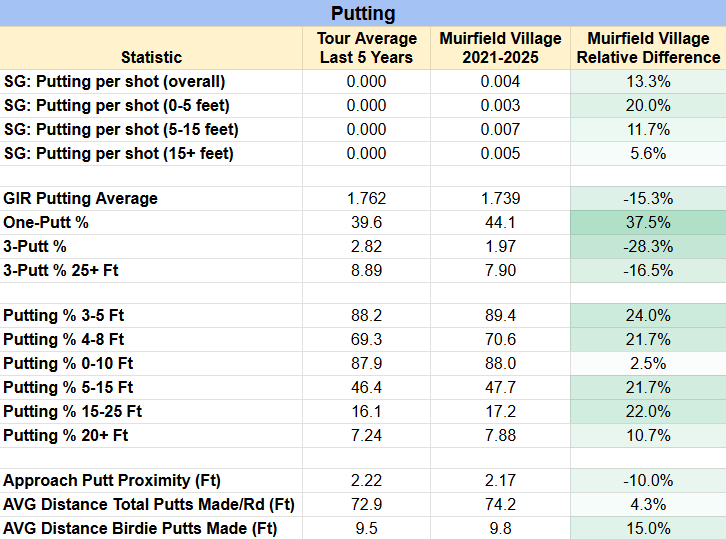
Interestingly, despite possessing some of the fastest and most undulating greens on Tour, Muirfield Village has become a relatively neutral putting test since the 2020 renovation. The last five editions have ranked among the easier putting weeks on Tour, a stark contrast to the pre-renovation setup when the course routinely graded as one of the more difficult putting venues. Much of that shift can be attributed to the defensive mindset the greens demand. Rather than aggressively chasing birdies, players are often focused on avoiding three-putts and leaving themselves stress-free second putts.
Jordan Spieth has spoken extensively about the unique challenge these greens present. “The greens are arguably tied for first or second only to Augusta National as far as speed and how pure they are consistently each year. I love putting on greens where you have to have imagination. You have to play these ridges. Speed control is so vital.”
That emphasis on imagination and speed control is what makes Muirfield Village such a distinctive short-game test. Players must understand how the slopes, ridges, and contours interact with one another, often using portions of the green far away from the hole to feed putts toward their target. Lag putting becomes just as important as making birdie putts, and those who consistently leave themselves below the hole gain a significant advantage.
Most Important Stats For Success at Muirfield Village GC
*In order of importance
- SG: APP
- Scrambling (Rough)
- Good Drive % (Rough)
- SG: Par 5 %
- Proximity 175+ yds
- Bogey Avoidance
- Distance From Edge of Fairway
- SG: Putting (Bentgrass)
- Driving Distance
- SG: Course History + Other Difficult T2G Courses