
The Arnold Palmer Invitational at Bay Hill – 2025 Preview

Ron Klos

2 years ago
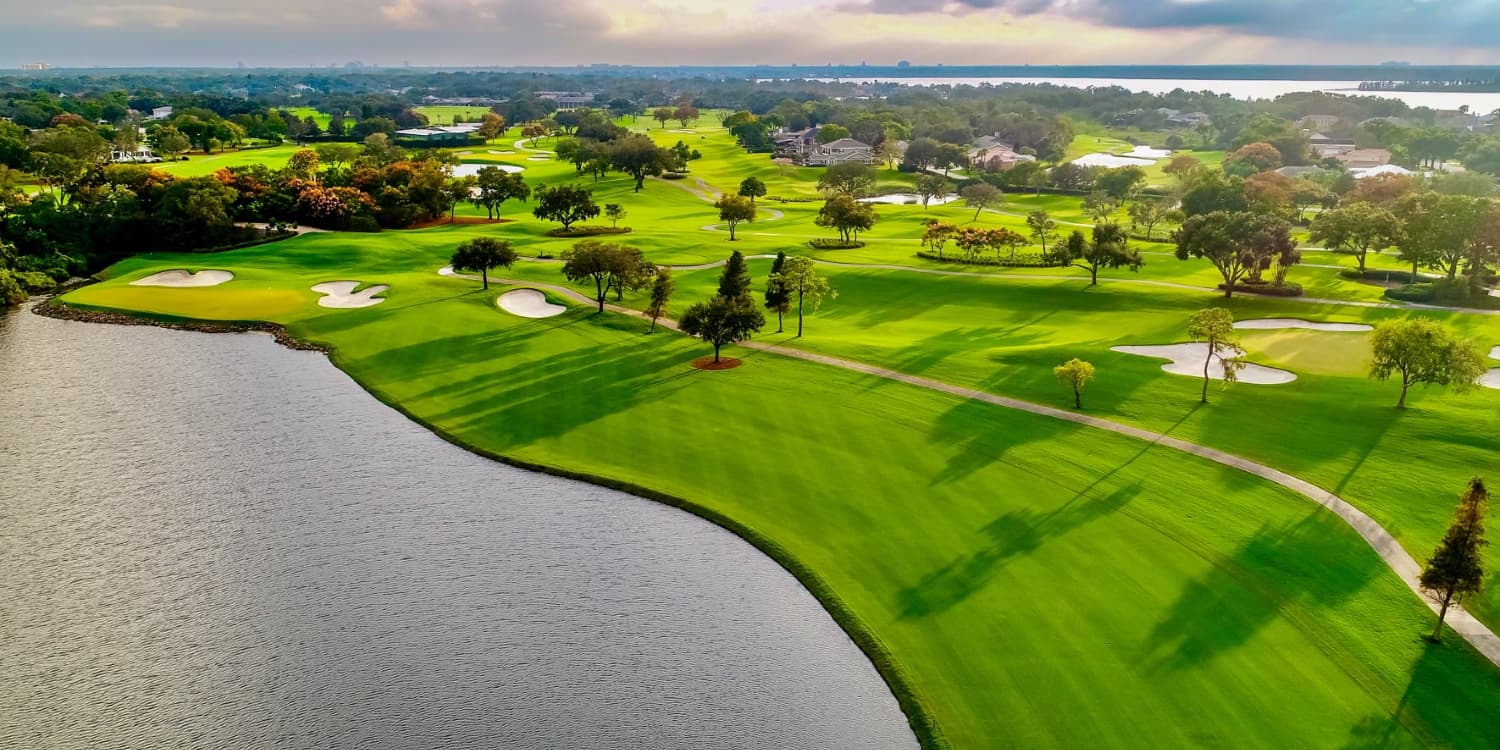
The PGA Tour moves to the second event of the “Florida Swing” with this week’s Arnold Palmer Invitational at the Bay Hill Club and Lodge in Orlando, Florida. Having hosted this event since 1979, it is one of the most respected courses in the Sunshine State. “Arnie’s Tournament” is a limited-field, “Signature” event played on one of the PGA Tour’s most demanding layouts.
Bay Hill is a classical Florida-style golf course characterized by its length, Bermuda grass, thick rough, firm, and fast greens, and numerous bunkers and water hazards. With windy conditions playing a factor, five of the last six winners have finished with a score of 12-under or worse. Par is an acceptable score on a majority of holes on a layout that plays as the second most difficult non-major test of golf on the PGA Tour.
“Tough”, “can’t fake it”, and “mentally challenging” are all phrases players themselves have used to describe Bay Hill. Course knowledge, total driving skills, long-iron accuracy, high ball flight into firm greens, and being able to scramble in thicker rough are all important qualities for success here. Justin Rose summed it up best by saying, “There’s really no way to fake it around Bay Hill. The rough’s pretty thick. Generally, the greens are quite firm which requires pinpoint iron shots. There’s enough trouble out there that mentally it’s a challenge. You have to really commit to shots.”
The Field

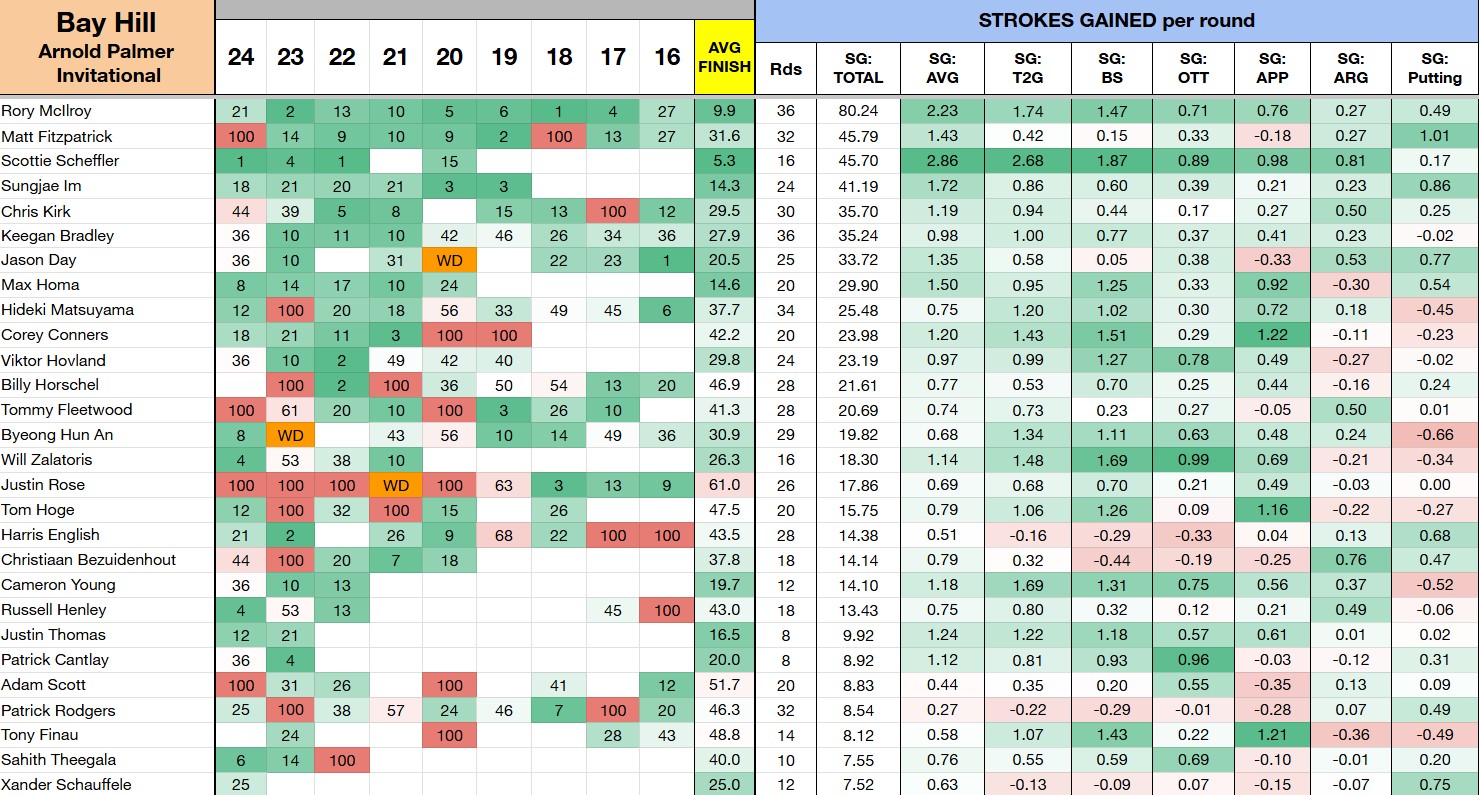
We are only two months into the calendar year and this is already the fourth Signature event. With world No. 2 Xander Schauffele finally returning from injury, all the big guns on the PGA Tour will be in attendance making this the strongest field of the year thus far. Other than Rasmus Hojgaard, every eligible golfer ranked in the OWGR top 50 will tee it up this week. Scottie Scheffler and Rory McIlroy lead the way with McIlroy having perhaps the best long-term course history of anyone at Bay Hill with eight top-13s in his ten career starts here. The defending champion, Scheffler is right on his heels with two wins and has the best actual strokes gained average per round at 2.86.
As one of the most predictive “course history” tracks on Tour, numerous players can boast stellar past performances here including Matt Fitzpatrick (six top-13s), Sungjae Im (six top-21s), Max Homa (four top-17s), and Chris Kirk (six top-16s). Along with Scheffler and McIlroy, Jason Day is the only other past winner in the field this week. The field is currently set at 72 golfers with the cut set at the low 50 and ties, or anyone within 10 shots of the lead.
Bay Hill Club & Lodge – History
Originally the home of an orange grove, and only a few miles southwest of downtown Orlando, a group of investors from Nashville appointed architect Dick Wilson to design the course which opened for play in 1961. Wilson designed two nine-hole tracks, the Champion and Challenger courses. It was the first course in the world to be seeded with Tifway Bermuda grass.
When the owners of the course invited Arnold Palmer to play in an exhibition match to promote the club in 1965, Palmer fell in love with the property. He won the charity event that week and allegedly went home and told his wife Winnie that he wanted to buy the course. Palmer loved the property so much that in 1976 he officially bought the entire property and it remained his winter home until he passed away in 2016. In 1979, the Florida Citrus Open moved across town to Bay Hill, and the current PGA Tour event that we now call “The Bayhill Invitational” was born.
In the decades after buying the course, Palmer and his business partner Ed Seay gradually altered Wilson’s original design. In 2009, Palmer put Bay Hill through its largest renovation yet. Palmer made the course tougher and more like Augusta National. In his own words, he explained: “I’ve introduced firm, fast playing conditions on slopes around greens that run away from the pins. This will take the ball further away from the intended target instead of stopping it like the previous heavy rough did.” After a four-month redesign, Bay Hill also had newly positioned bunkers, re-grassed greens with flatter edges for more pin positions, and new tees which stretched Bay Hill to its current yardage of 7,466.
After the new superintendent, Chris Flynn took over, Bay Hill received a minor facelift in 2015. Fairways were widened and tree numbers were reduced, making the off-the-tee game somewhat easier. On the flip side, the course did get tougher because Flynn shaved off a great deal of rough surrounding the water and bunkers, making it far easier for balls to roll into hazards in the typical firm and fast conditions.
The last big change to the course happened in 2022. Players arrived at Bay Hill and were surprised by the sight. Most of the sloping run-off areas from around the greens had been replaced with thick three-inch rough. Rory McIlroy was disappointed with the development saying, “Historically, it’s been you’d miss a green and the ball would run off and you’d still have the chip off short grass, for example, and now that’s all been filled in with rough. There’s just so many areas that there were runoffs and sort of tight areas, which I think lends itself to the better chippers of the golf ball, and that’s been sort of taken away this year.”
Seven different holes were affected by this alteration which now allows players to be more aggressive in firing at pins knowing that if they miss on approach, the rough will stop the ball and they will have a much more predictable chip shot. Viktor Hovland is a player that comes to mind as someone who may have benefitted from this change. A notorious poor chipper of the ball in his first couple of years on Tour, Hovland finished in second place in 2022 and tenth place last year after finishing 49th, 42nd, and 40th in his three prior appearances.
McIlroy finished his comments on the matter by confirming how much easier around-the-green play now is at Bay Hill. “I prefer the runoffs,” McIlroy said. “I think it separates the good chippers from the bad chippers. I feel like, when you miss a green when the rough is like this, you know, it’s half skill, half guesswork and luck. Whenever you miss greens and there’s runoffs and it gives you options, I think that’s where the guys with the better short games separate themselves, so that’s why I like runoffs. I like that style. You basically miss a green, and you’ve pretty much got just blast it out and try to hole the putt.”
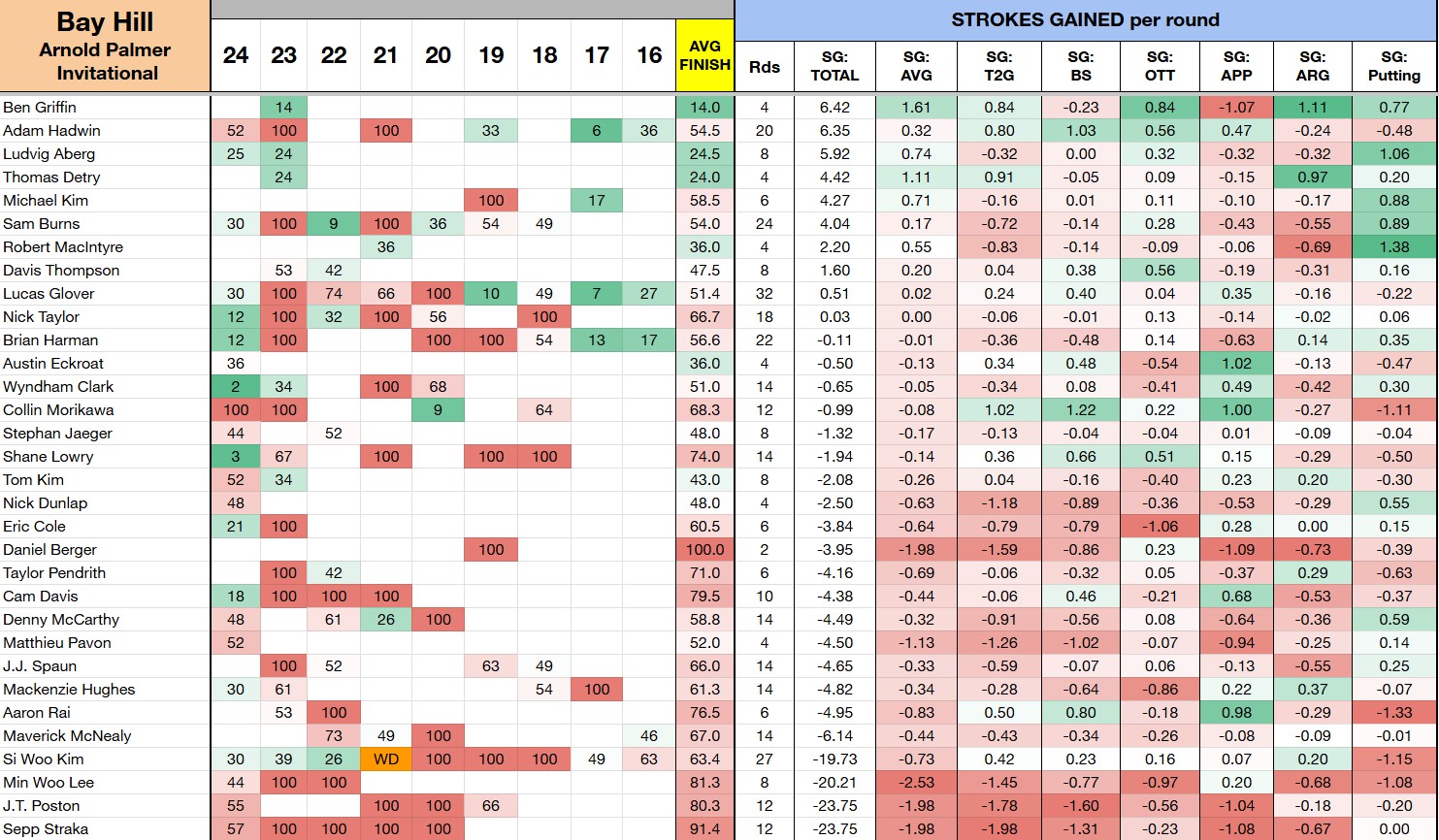
Finish Position and Strokes Gained History at Bay Hill (2016-2024)
This includes the average finish position and Strokes Gained per round since 2016. Players are sorted by SG: Total. Bay Hill is the third-most (out of 44) predictive annual course on Tour.
Course Features
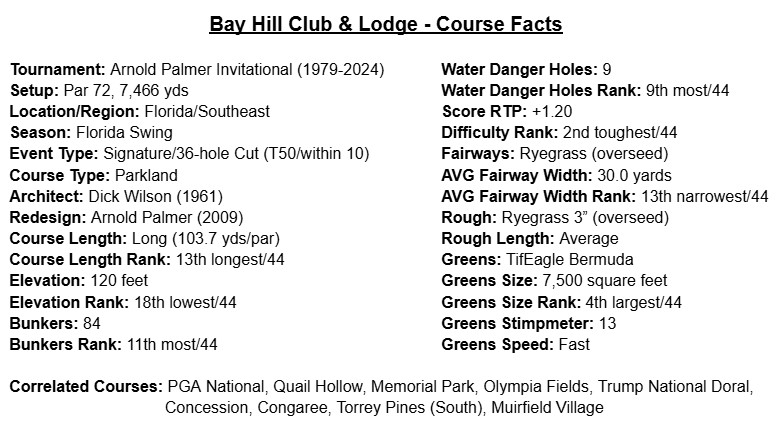
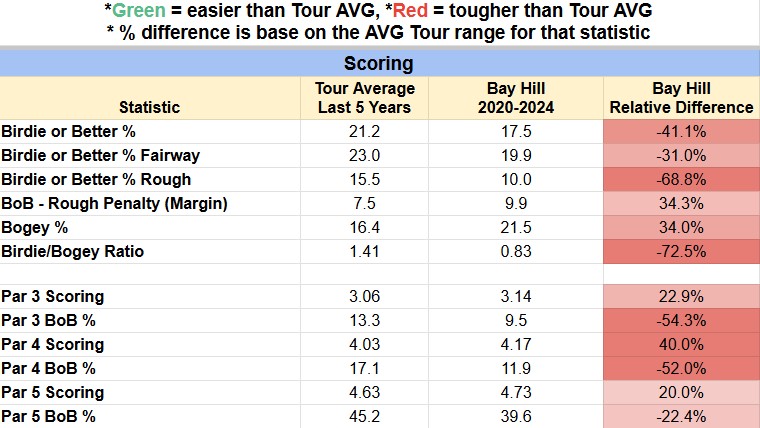
A stock par-72 classical Florida parkland course that stretches out to 7,466 yards, Bay Hill is slightly longer than the Tour average. It’s notorious for being as difficult as a major-style course. With a scoring average the past five years of 1.2 shots over par, it lives up to that reputation as the second-toughest annual course on Tour over the past five years. While most players appreciate the challenges that come with the Bay Hill, the course can be an absolute beast.
As is typical of most Florida courses, Bay Hill has 84 bunkers and nine holes with water danger. The water hazards have contributed to the course having the highest percentage of penalty strokes on Tour over the past five years. It also typically plays very firm and fast. Throw in penal overseeded ryegrass rough and golfers who are missing fairways and greens will consistently be scrambling for pars and bogeys. “The rough is incredibly thick,” Adam Scott said. “It’s a half-shot penalty almost every time you hit it in it.“
Another defense of this course in which Florida is famous is the effects of the wind. The past few years have seen consistent northerly winds between 12-25 MPH, causing both Driving Accuracy and GIR% to decrease by a huge margin. The wind along with the warmer temperatures dries out the course which makes it play even firmer and faster, thus increasing its difficulty. At the start of the week, the Bermuda greens are rolling at a fast 12.5 on the stimpmeter. By Sunday, they can be as fast as a 14 with putts appearing like they are sliding on ice.
There is some elevation built into a few of the holes, but for the most part, the course is largely flat. Most of the course’s scenery is centered around the water holes. With all of the lakes and bunkers in play, there are forced carries on different holes which present risk/reward opportunities for players. Numerous par 4s force players to take less-than-driver to minimize the chances of getting into trouble. Being forced to club down combined with the thicker rough stopping wayward drives in their track makes the course play even longer.
So much of succeeding at Bay Hill comes down to leaving the ball in the correct spot, playing the proper angles, and staying patient. This is why course history matters so much here. The best way to know where to keep the ball in the fairway and on the greens is to have played in these conditions at Bay Hill previously. 16 of the past 19 winners had played in at least three Arnold Palmer Invitationals. As Jordan Spieth said, “It’s a little tricky because it seems like a course where course knowledge can go a long way, given the difficulty of it and especially on and around the greens.”
Hole Preview
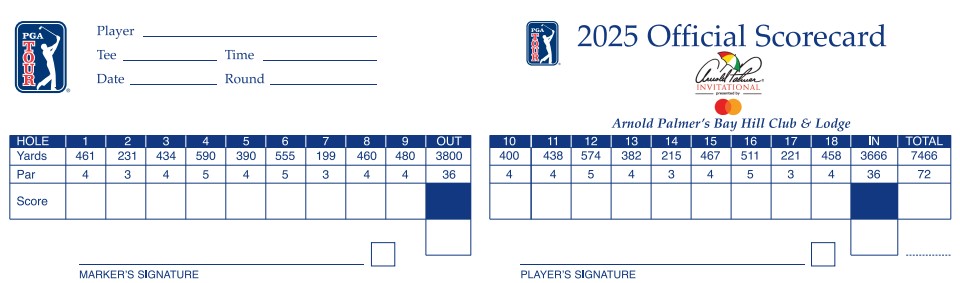
Bay Hill features one of the toughest sets of par-3s and par-4s on Tour. Each of the four Par-3s is over 200 yards long (216-yard average), and in total, averages 0.16 strokes over par. Five of the par-4s are over 450 yards long, and some play even longer because players have to use “less-than-driver” and choose to layup. Seven of these par-4s have bogey-or-worse rates higher than 20%.
With scoring so difficult, especially on the par 3s, the four par 5s take on greater importance this week. They each have a birdie-or-better average of over 38% and are reachable in two shots. They give players (especially the longer hitters) a chance to separate themselves from the field and will play a major role in determining who wins this week.
Rory McIlroy has often spoken about the importance of the par 5s here, even bringing up how taking advantage of them is one of the main reasons why Tiger Woods won eight times here. McIlroy also spoke of length being an advantage saying, “You also need to play the par-5s well. Tiger’s won it plenty of times around here and that’s what he did. He can play conservative for the most part, but if you make birdies on the par-5s, you’re going to be right up there. I feel with my length I can take advantage of those.”
As for featured holes, Bay Hill may have the toughest two-hole closing stretch on Tour. The par 3 17th is a 221-yard tee shot often hit into a stiff north wind over water to a well-bunkered green. Just hitting the green in regulation is a terrific accomplishment as, historically, the hole has a birdie rate of only 8.7%.
The closing hole is a 458-yard par 4 with a nerve-wracking tee shot also hit into the prevailing north wind that brings water into play on the right for the longer hitters and out of bounds into play on the left for shorter hitters. A tee shot that is short and right forces golfers to hit their approach out of the thick rough and over the entirety of the lake that leads to the 18th green. The green is long and curved and sloping from left to right with rocks defending against any short bailout and also protecting the typical Sunday pin position on the far right. Bunkers surround the back and left of the green to punish any players looking for other places to bail out.
Strokes Gained Analysis
Off The Tee
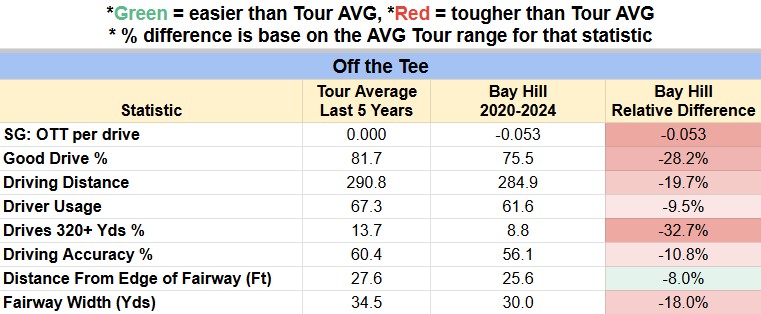
While distance off the tee has shown to be advantageous to success at Bay Hill, the actual driving distance is 16% lower than the average Tour course at only 282.5 yards. As previously mentioned, one reason for this is the firmness of the Bermuda fairways combined with the thick overseeded rye rough which quickly stops any wayward drives. With the rough and water hazards in mind, many golfers also choose to club down to keep the ball in the fairway. That being said there is a major edge to longer hitters who can attack the greens on approach with shorter irons.
Total driving is the key stat off the tee to use this week as players who drive the ball long and straight have an advantage here, and past winners like Tiger Woods and Rory McIlroy prove it. Two years ago, Bryson DeChambeau took this to another level by cutting dog legs and crossing over the hazards with ease. McIlroy highlighted these points by saying, “I saw a stat the other day that this course more than any other one on Tour, has a correlation between strokes gained off the tee and performance that is higher than anywhere else.” At the same time, shorter and more accurate ball-strikers like Tyrrell Hatton and Francesco Molinari have also had success here by keeping drives in the fairway.
The goal of most tee shots at Bay Hill is to avoid the hazards. It is of the utmost importance to keep the ball in front of you. Over the last decade, the field has averaged 1.9 double bogeys or worse which is one of the rates on Tour. Though the rough is penal, it is the sand and water that can rattle the nerves. The fairways are average in width at 30 yards across, but they tend to get pinched in the landing areas.
Approach
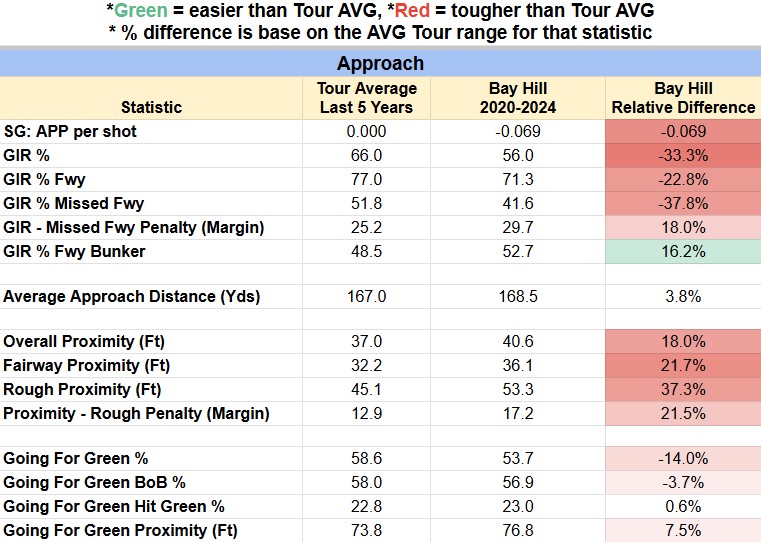
Overall, Bay Hill ranks as the third toughest course in which to gain strokes on approach. Whether in the fairway or the rough, Bay Hill perennially has one of the highest averages in proximity to the hole. Both GIR% and Proximity are among the most difficult on Tour. The greens here are massive, averaging 7,500 square feet. It is not often to see greens this big with a GIR% at only 56.7%. That speaks to the effects of the firm greens and the windy conditions.
With water guarding many holes, some players choose to bail out to the non-water side of the green where the bunkers are usually located. While it is probably the safest option with a long iron, it further limits scoring chances. Another reason for the high proximity to the hole distances is how fast and severely sloped the greens are in certain places. Golfers are often quoted speaking about the need to leave the ball in the right spot. Said Patrick Rodgers, “I love that you have to think your way around the course and you have to manage it and put it in the right spots on the greens.” This is why approach play is paramount this week because only the best ball-strikers will be able to put themselves in a position to have the most makeable putts.
With many golfers playing conservatively off the tee, combined with the long par 3s, four par 5s, and so many shots from the thick rough, the average approach shot distance is one of the highest on Tour at 184 yards. In fact, around 33% of approach shots come from over 200 yards which ranks among the highest rates on Tour. 11 of the last 12 winners in this event ranked in the top 55 on Tour for proximity to the hole from 200+ yards in the year leading up to their victory. Strong long-iron players should be targeted along with those who have a higher ball flight for softer landings on the firm greens. Very few short irons and wedges will be hit this week.
Around the Greens and Putting
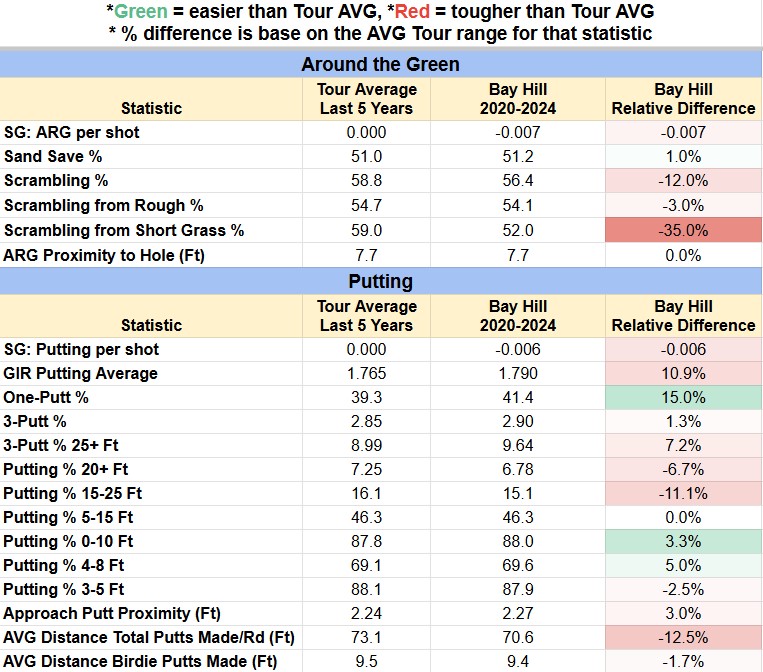
Despite the longer rough, scrambling on the greens at Bay Hill is right at Tour average. As was mentioned previously, it typically takes less skill to pop a ball out of the rough compared to chipping from a tight Bermuda lie. Nevertheless, with so many greens being missed, around-the-green play is not something to completely overlook this week.
Many of the green complexes are formidable thanks to being elevated along with tiered and undulating surfaces. They are also surrounded by significant bunkering. With scrambling for par being so important, a quality short game is required with the variety of shots that are needed to be played.
The greens at Bay Hill are TifEagle Bermuda and run on the fast side starting at around 12.5 on the stimpmeter on Thursday and getting as quick as 14 by Sunday. Greens got so fast last year that Taylor Gooch said, “I don’t know if they can get the greens any firmer or faster without it getting ridiculous. There would be a few players not too happy if that were the case.”
Putting success has been very predictive here as nine of the last ten winners finished in the top-15 for SG: Putting. With the greens being the seventh-largest on Tour at an average of 7,500 square feet, 3-putt avoidance will come into play this week as lag putting is tougher at Bay Hill compared to the average course. Excellent lag putters like Will Zalatoris will have an edge on these huge greens.
Most Important Stats For Success at the Arnold Palmer Invitational
*In order of importance
- Course Region: Florida
- Event Season: Florida Swing
- Scoring Conditions: Very Difficult/Difficult
- Field Strength: Very Strong/Strong
- Course Length: Long
- Event Type: Small Field
- Bunkers: High
- Water Danger: High
- Greens Surface: Bermuda
- Green Speed: Fast
- Rough Surface: Ryegrass
- Rough Penalty: High
- Rough Length: Long
- Gain APP: Difficult (3rd most)
- Gain OTT: Difficult (5th most)
- Scrambling (Rough): Difficult (4th most)
- 3-Putt AVD: Difficult
- Par 3 Scoring: Difficult
- Par 4 Scoring: Difficult
- SG: APP/Proximity 200+ yds
- Total Driving
- Par 5 Scoring
- SG: Putting (Bermuda)
- BoB%
- SG: ARG/Scrambling
- Bogey Avoidance
- Par 4 Scoring
- Course History
- Driving Distance
Key Rabbit Hole Filters
- Course Region: Florida
- Event Season: Florida Swing
- Scoring Conditions: Very Difficult/Difficult
- Field Strength: Very Strong/Strong
- Course Length: Long
- Event Type: Small Field
- Bunkers: High
- Water Danger: High
- Greens Surface: Bermuda
- Green Speed: Fast
- Rough Surface: Ryegrass
- Rough Penalty: High
- Rough Length: Long
- Gain APP: Difficult (3rd most)
- Gain OTT: Difficult (5th most)
- Scrambling (Rough): Difficult (4th most)
- 3-Putt AVD: Difficult
- Par 3 Scoring: Difficult
- Par 4 Scoring: Difficult