
PGA One and Done Strategy: A Guide to Winning Picks & Tactics

Andy Molitor

2 years ago

It’s that time of year again, and whether you like to just play one with your buddies or invest thousands of dollars in high-stakes pools, PGA one-and-done is always a good time.
I’d love to just lay out a road map for you and then pat each other on the back come August, but there are so many factors to consider if you want to be successful this season. PGA One and Done pools are fun BECAUSE they’re hard.
Understand the Rules
I was in a contest once that let you “double stamp” a player once per year and get twice the points. Thinking about the best use of unique rules like this (this was pre-signature events, so the optimal strategy was to use it at the Players or a Major), is super important to your long-term success. Most of the big contests are simple: “Pick a player once,” and that’s it, but be sure to understand the rules regardless.
Also, for the season-long aspect of how you should be approaching things later in the year, how are the payouts structured? If the pool is a winner-take-all vs. something like the top 20 get paid, the strategy is certainly going to be quite a bit different from a risk perspective later on in the year. You need to know if you’re having to “go for it”.
Know Your Pool
The size of the pool is one of the most important factors as well.
A large pool is going to require you to pick 5+ winners over the course of the season, while a smaller pool with a handful of your buddies may be won with much less luck. A small pool requires you to be much less risky on your picks, as just continuing to cash every week and trying to get top 5/top 10 money will certainly have you near the top of the standings. You’ll also be much more likely to just “cancel out” obvious picks later in the season if you have a lead and know the field has certain golfers available to them.
Sketch Out a Season Long Plan
It doesn’t have to be exact, but something I like to do is try to find the “pool of players” I’m willing to use. You don’t want to get too cute and end up with five top-10 players left with four golf tournaments remaining, so understanding how many golfers you actually need to use in your pool and selecting a list that’s roughly 150% of that size is something I’ve always done. This isn’t to say you can’t deviate from the list, but it’s just helpful to understand roughly how far down the list you’ll need to go.
click here for the full PGA schedule
The first wrinkle in this plan is the weaker fields we’ll run into at some of the events. This is one of the more important parts of planning, in my opinion. Again, you don’t want to be sitting on a bunch of good names late in the season only to realize you can’t play any of them this week because not a single one is heading to the 3M or the Wyndham or the Rocket Mortgage (you get the idea). There are spots where you’ll have to go deeper down the list and honestly, this should push you even harder to be using bigger names more often at the signature events and Majors.
Most pools are going to have 14 big purses: the majors, the signature events, and the playoffs. Often times I’ll start with that, taking my top 20-25 names and trying to build out a plan for these, giving each event three names in ranked order and seeing where I’m at. There’s no right way to do this, but I will say that if you don’t do well in the big money events, you’re not likely to cash.
The LIV/Majors question complicates things a bit as well, but again, that’s a decision you’ll have to make based on how big the pool is, your standings come April, and what you think other entries will be doing. With four majors and a half dozen viable golfers on the LIV to use, it’s probably more of a game theory problem when you finally have to cross that bridge. I think a majority tend to use the LIV golfers since it’s the only time they can, but if you are chasing the leaders late in the year, it may not be the worst idea to throw out some unique names in the summer months. If you’re right and the crowd is wrong, it’s a massive leverage play.
Be Flexible
Sketching out a season-long plan is fine and good until the golf actually starts. Golfers can slump, get injured, skip tournaments etc. New names will emerge as actual threats to win events and hell, some guys may even leave the tour (happening much less frequently now, but still). This is why I like to have more of a loose plan rather than trying to map out exactly who to use each week months ahead of time.
One and Done Player Selection
Once you have a plan, a road map and an idea on your risk profile for each pool, you’ve reached the hard part.
There are a million ways to look at stats and data (I’d recommend the Rabbit Hole). As always, you need to determine what you need from your golfer that week, but with the events with smaller purses and somewhat middling fields, I’m always looking for a balance between “a guy who CAN win” and a “guy who isn’t going to flame out.
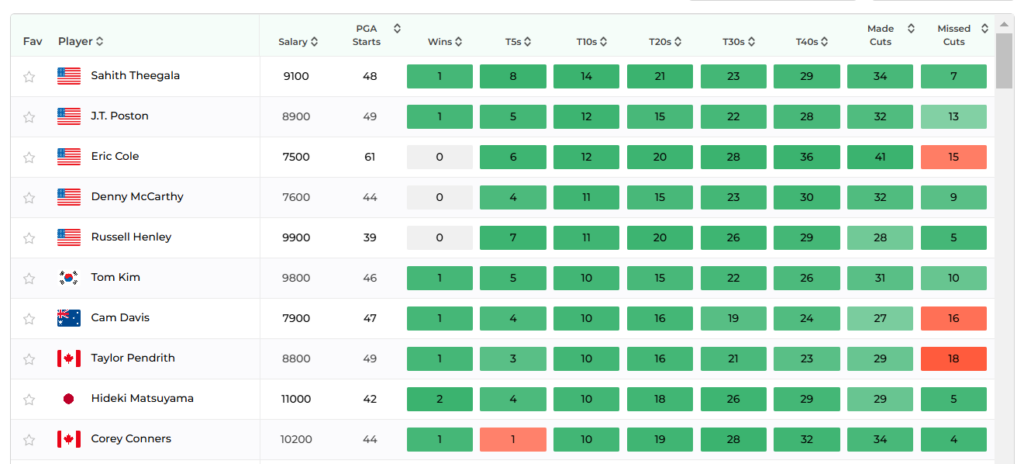
Here’s a snapshot of the Finish Position menu of the Rabbit Hole tool, where you can sort out which golfers have made the cut the most, finished in the top 10 the most, etc. This screenshot is the last 18 months, with a minimum of five starts, sorted by top 10 finishes. I’ll be combining this with some other custom data models to see where the best overlap is with consistency and the ability to overperform.
If you want to check out the Rabbit Hole tools to help you in your One-and-Done strategy, new users can try a month for just $10 using promo code MONTH10. Click here to check it out.
Hopefully, this helps a bit, but by all means, if you have any questions, hit us up on Twitter at @BetspertsGolf. Members can tag us in the Discord as well, we’ll do our best to get you on the right track.