
Golf Terms Explained: A Plain-English Glossary of Golf Words (2026)

Andy Molitor

4 hours ago

Most golf terms describe one of four things: your score on a hole against par, the shot you just hit, the part of the course you hit it to, or the format you are playing. Learn the scoring words first. They come up on every hole, and they are the ones TV broadcasts, scorecards, and your playing partners use without explaining.
Some of those words get thrown around far more than they happen. A tour pro makes about three and a half birdies a round, but an albatross is so rare that the DP World Tour has seen only 21 of them in more than 90,000 rounds since the start of the 2022 season. Below is every common golf word grouped the way you will run into it, with how often the pros actually pull off the scoring ones.
Golf scoring terms: par, birdie, bogey, and the rest
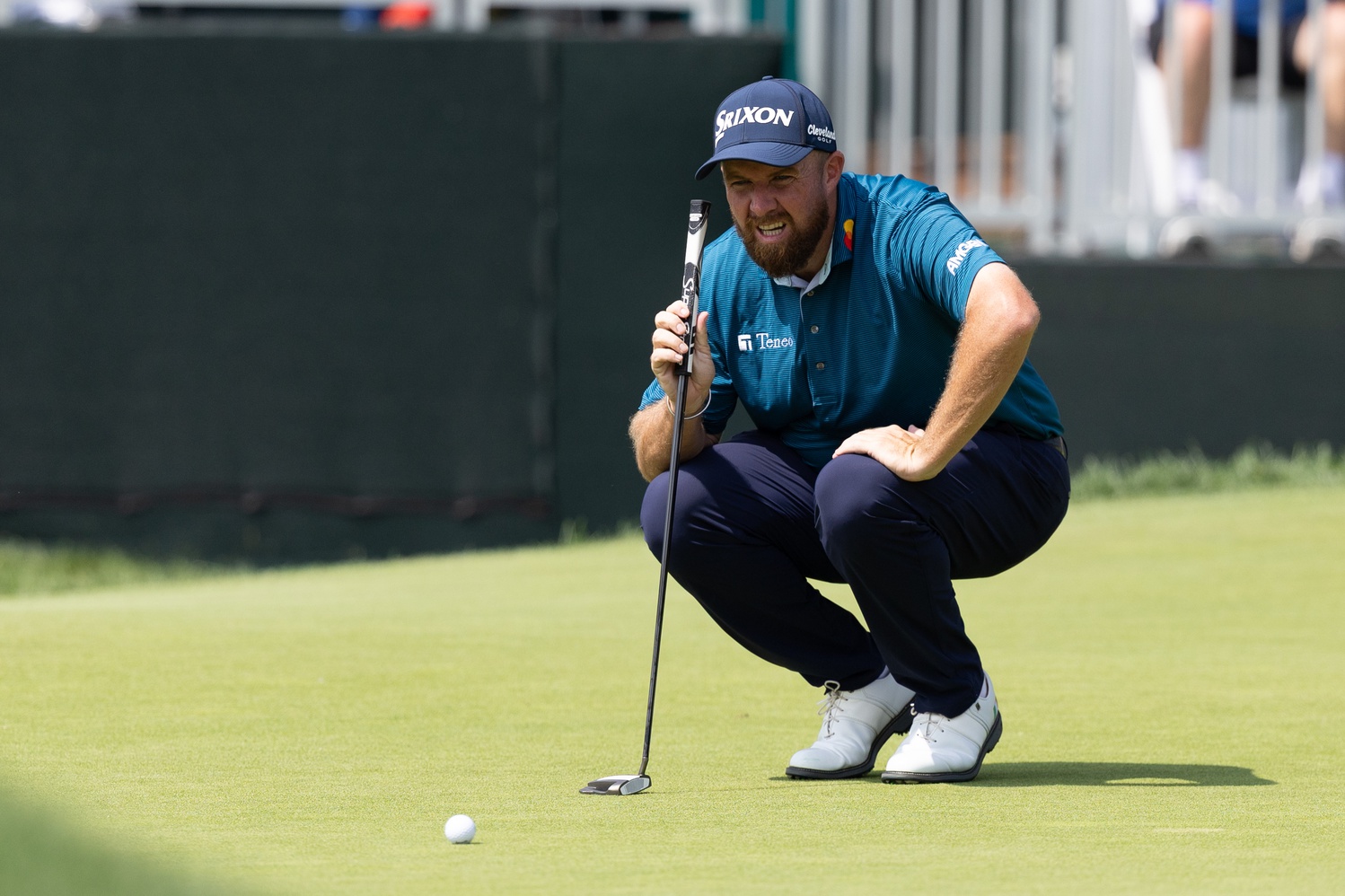
Every hole has a par, the number of strokes a good player is expected to need, almost always 3, 4, or 5. Every scoring term is just your score on that hole measured against par. One under is a birdie, one over is a bogey, and the names get stranger the further you get from par in either direction.
The table below shows each scoring term, what it means against par, and what it looks like on a par-4 or par-5 hole. Definitions are checked against at least two golf glossaries as of November 2026.
| Term | Score against par | What it looks like |
|---|---|---|
| Condor | 4 under | A hole-in-one on a par 5 |
| Albatross (double eagle) | 3 under | A 2 on a par 5, or a hole-in-one on a par 4 |
| Eagle | 2 under | A 3 on a par 5, or a 2 on a par 4 |
| Birdie | 1 under | A 3 on a par 4 |
| Par | Even | A 4 on a par 4 |
| Bogey | 1 over | A 5 on a par 4 |
| Double bogey | 2 over | A 6 on a par 4 |
| Triple bogey | 3 over | A 7 on a par 4 |
A few more scoring words you will hear on any course:
- Hole-in-one (ace). Holing your tee shot. It nearly always happens on a par 3.
- Snowman. An 8 on one hole, named for the shape of the number.
- Even par, under par, over par. Your running total against par for the round. Three birdies and one bogey through 18 holes is 2 under.
- Scratch golfer. A player with a handicap of zero, someone who shoots around par.
Why birds? The story told most often credits Atlantic City Country Club around the turn of the 20th century, where a player called a great shot “a bird of a shot.” The sources agree on the story and disagree on the year, so take the details loosely. Eagle and albatross kept the bird theme going.
How often do tour pros make each score?
Our DP World Tour scoring data covers 219 events from the 2022 season through mid-November 2026, 90,707 complete rounds and more than 1.6 million holes. It is a good reality check on the words above.
The average DP World Tour round from 2022 to November 2026 had about 3.6 birdies, 11.1 pars, 2.8 bogeys, and 0.4 double bogeys. So a pro makes par on roughly 11 of 18 holes, and the round is decided by the handful of birdies and bogeys around them.
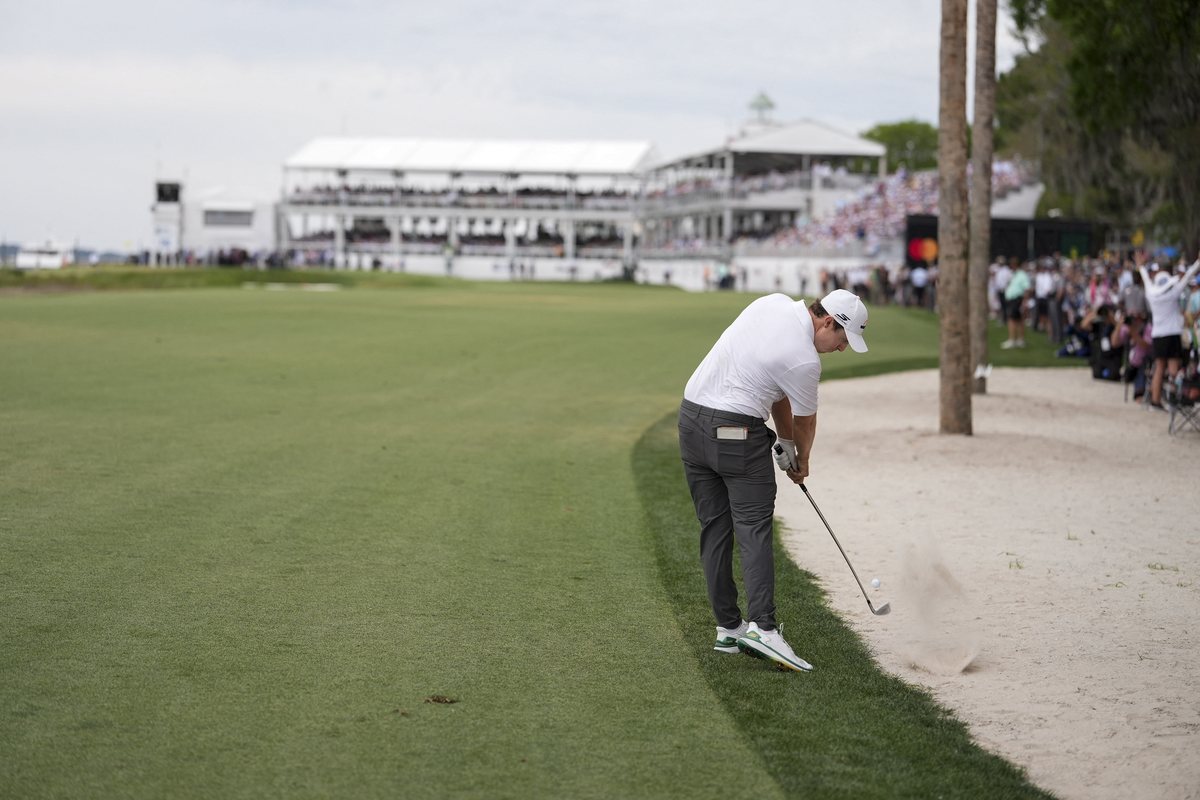
Eagles show up about once every 10 rounds per player on the DP World Tour. Almost all of that comes on par 5s, where players made birdie or better 42 percent of the time and averaged about a third of a shot under par.
Holes-in-one are rarer than most fans think. The DP World Tour logged 138 aces from 2022 to November 2026, all on par 3s, which works out to one for about every 2,670 tee shots on a par 3, or one per player every 657 rounds.
And the albatross is rarer still. Only 21 were made on the DP World Tour in that span, every one of them a 2 on a par 5, with no hole-in-one on a par 4 and no condor at all. A pro is about six and a half times as likely to make an ace as an albatross. That is the one stat in this guide worth remembering at the 19th hole.
The bad end is rarer than amateurs would guess, too. A snowman turned up once in every 64 rounds, and triple bogey or worse about once every 17. Only 4.3 percent of rounds were bogey-free, and 47 percent finished under par.

Golf shot terms
Shot words split into two groups: what kind of shot you meant to hit, and what the ball actually did. The first group is about distance and height. The second is mostly about curve and contact, and most of it describes mistakes. Directions below are for a right-handed golfer, so flip them if you play left-handed.
Shots by type
- Drive. The tee shot on a par 4 or par 5, usually with a driver.
- Approach shot. Any shot meant to land on the green.
- Layup. A shot played short on purpose, to stay out of trouble or leave a better next shot. The classic layup is a second shot on a par 5 that stays short of water.
- Pitch. A higher short shot with less than a full swing, usually from inside about 50 yards.
- Chip. A short shot from just off the green that flies a little and rolls the rest of the way.
- Bump and run. A low running shot that bounces onto the green, like a chip from farther out.
- Flop shot. A high, soft wedge shot with the clubface wide open, for when there is no green to work with.
- Punch shot. A low shot with a short swing to keep the ball under wind or tree branches.
- Lag putt. A long putt hit to stop close to the hole rather than to go in.
Shots by what went right or wrong
- Draw. A controlled curve from right to left. Overdo it and it becomes a hook.
- Fade. A controlled curve from left to right, also called a cut. Overdo it and it becomes a slice.
- Hook and slice. The big, usually unplanned versions. Nobody aims for either one.
- Shank. Contact off the hosel, the neck of the club, which sends the ball sharply right. Golfers do not like saying the word out loud.
- Fat (chunk). The club hits the ground before the ball, and the shot comes up short.
- Thin. The leading edge of the club catches the middle of the ball, and it shoots out low and runs. Hit it thin enough and golfers call it a skull.
- Worm burner. A shot that barely leaves the ground.
- Lip out. A putt that catches the edge of the hole and spins away.
Short-game results
An up and down is getting the ball in the hole in two strokes from off the green, usually a chip and a putt. Do it from a greenside bunker and it is a sand save. A tap-in is a putt so short it is almost a formality, and a three-putt is exactly what it sounds like.
The pros are not as automatic here as TV makes it look. On the DP World Tour from 2022 to November 2026, players who missed a green got up and down about 56 percent of the time, and made sand saves from bunkers around the green about 55 percent of the time. They hit about 66 percent of greens in regulation, found 57 percent of fairways, and three-putted on about 3 percent of the holes they putted on.
Golf course terms
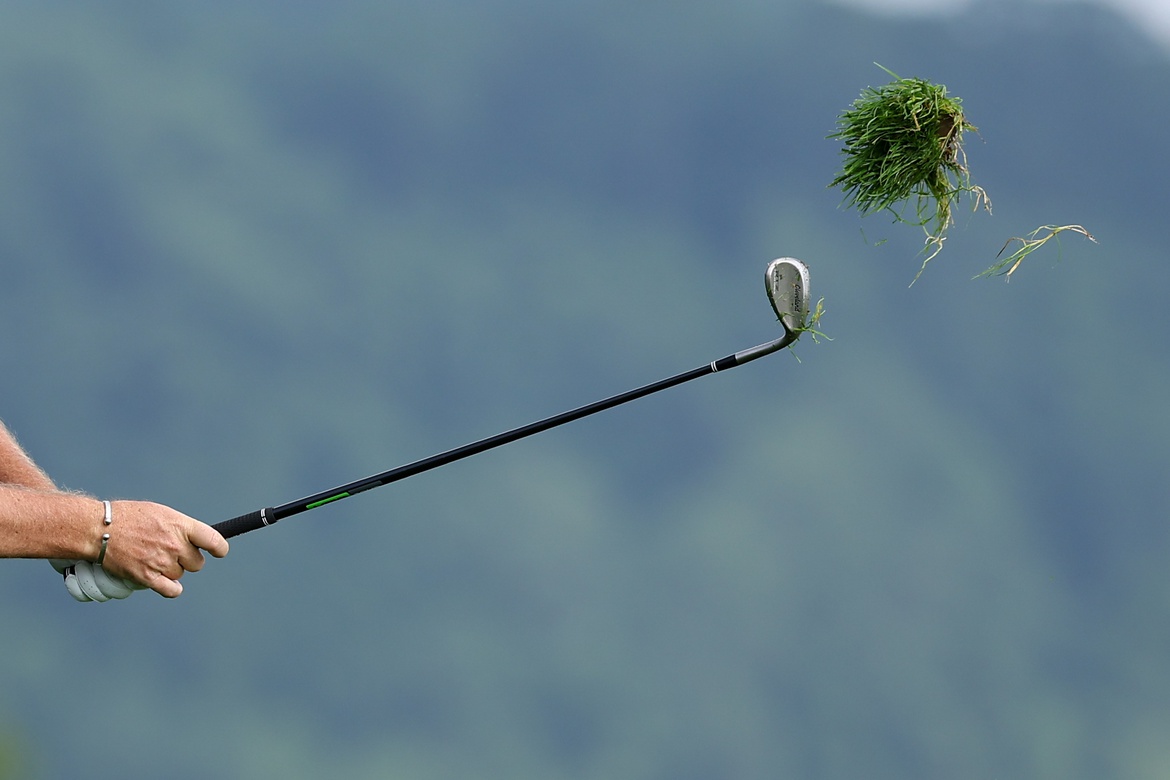
The course words follow the hole from start to finish. You tee off from the teeing area, aim for the fairway, try to stay out of the rough and the bunkers, and finish on the green.
- Tee box (teeing area). Where each hole starts, marked by two tee markers.
- The tips. The tees farthest back, the longest way to play the course.
- Fairway. The short grass between the tee and the green, where you want every tee shot to finish.
- Rough. The longer grass lining the fairway.
- Bunker. A sand-filled hollow. Most people say sand trap, and golfers will know what you mean.
- Green. The short-cut putting surface around the hole.
- Fringe (apron). The closely mown strip between the green and the rough.
- Flagstick (pin). The pole that marks where the hole is cut.
- Cup (hole). 4.25 inches across, the same size on every course.
- Dogleg. A hole whose fairway bends left or right, like a dog’s back leg.
- Front nine and back nine. Holes 1 through 9 and holes 10 through 18.
- Nineteenth hole. The clubhouse bar.
Penalty areas and out of bounds
These two are rules terms, and they cost strokes, so they are worth getting right. A penalty area is what the rules used to call a water hazard. Since the 2019 Rules of Golf it can be water or any other ground the course marks, with yellow or red stakes or lines. Red ones give you an extra option to drop to the side.
Out of bounds is off the course altogether, usually marked by white stakes or lines. Hit it there and you go back to where you played from and hit again with a one-stroke penalty, which golfers call stroke and distance.
Golf format terms
A format is how a round is scored. Almost every pro event is stroke play. Most casual and charity golf is something else, and the names trip people up because several sound alike.

- Stroke play. Count every shot. The lowest total wins.
- Match play. You play hole by hole, and whoever wins more holes wins the match. A result like 4 and 3 means four holes up with three to play, and our guide to how match play scoring and results work walks through every one.
- Scramble. Everyone on the team hits, the team picks the best shot, and everyone plays the next one from there. The standard outing format.
- Four-ball. Two-person teams, each player plays his or her own ball, and the better score on the hole counts. Best ball is the same idea for bigger teams, where the lowest score in the group counts.
- Foursomes (alternate shot). Two partners share one ball and take turns hitting it. It is one of the formats at the Ryder Cup.
- Skins. Each hole is worth a prize, and you only win it by beating everyone outright. In most games a tied hole carries its value over to the next one.
- Stableford. You score points instead of strokes. The standard scale is 0 for double bogey or worse, 1 for bogey, 2 for par, 3 for birdie, 4 for eagle, and 5 for albatross, after handicap strokes.
Golf slang every golfer hears
This is the part of golf vocabulary nobody writes on a scorecard. Some of it is friendly, and some of it is how golfers accuse each other of things.
- Fore. The warning you shout when your ball is heading at someone. Shout it early and loud.
- Mulligan. A free do-over shot. It is not allowed under the Rules of Golf, but it is common in casual rounds.
- Breakfast ball. A mulligan on the first tee, when nobody is warmed up.
- Gimme. A short putt your playing partners agree to count without you hitting it. In stroke play every putt has to be holed, so a gimme only belongs in match play or a casual game.
- Sandbagger. A golfer whose handicap is higher than his or her real ability, usually on purpose and usually to win bets. Also called a bandit. It is not a compliment.
- Yips. A nervous twitch in the stroke, almost always on short putts. Pros get them too.
- Texas wedge. Using your putter from off the green.
- Duff. A badly mishit shot. A duffer is a weak player.
Tour and tournament terms
If you follow pro golf, or bet on it, a few more words matter. These are the ones that decide who is still playing on the weekend and who gets paid.
- The cut. After 36 holes, the field is trimmed and only the top players play the last two rounds. At full-field PGA Tour events that means the top 65 and ties, a rule in place since the 2019-20 season.
- Monday qualifier. A one-day event the Monday before a tournament, where the top few finishers earn a spot in that week’s field.
- WD. Short for withdrew, a player who pulls out before or during the event. If you bet on him or her, here is how a withdrawal settles your golf bet.
- Playoff. Extra holes to break a tie for first place, usually sudden death, where the first player to win a hole wins the event.
- Wire-to-wire. Leading, or tied for the lead, after every round of the tournament. Some purists only count an outright lead.
Golf betting comes with its own vocabulary on top of all this, words like each way, dead heat, and top 20 with ties. Those live in our golf betting glossary with real odds, so this page keeps to the golf.
Once the words make sense, the next step is understanding why some golfers make more birdies than others. That comes down to stats like greens in regulation and putting, and it is what the Rabbit Hole model builder lets you weigh for any tour field.
A free Betsperts Golf subscription, all our tools and reports, and a 100 percent deposit match up to 100 dollars. Make your first 10 dollar deposit at ReBet with code BSG.
Frequently asked questions
What does green in regulation mean?
You hit a green in regulation when your ball is on the putting surface with at least two strokes left to make par. That is one shot on a par 3, two on a par 4, and three on a par 5. It is the most quoted ball-striking stat in golf, because two putts from there is a par.
Is a double eagle the same as an albatross?
Yes. Both mean three under par on one hole, and you will hear both on golf broadcasts. Neither one comes up often.
21+. Gambling problem? Call 1-800-GAMBLER. Responsible Gaming Resources

Get 25% off
Use code: BSG26
Use code: BSG26
BUILD YOUR OWN
CUSTOM STATS MODEL
FOR BETTING & DFS
CUSTOM STATS MODEL
FOR BETTING & DFS
New Users Only