2026 RBC Canadian Open at TPC Toronto – Osprey Valley (North) – Preview

Ron Klos

5 months ago
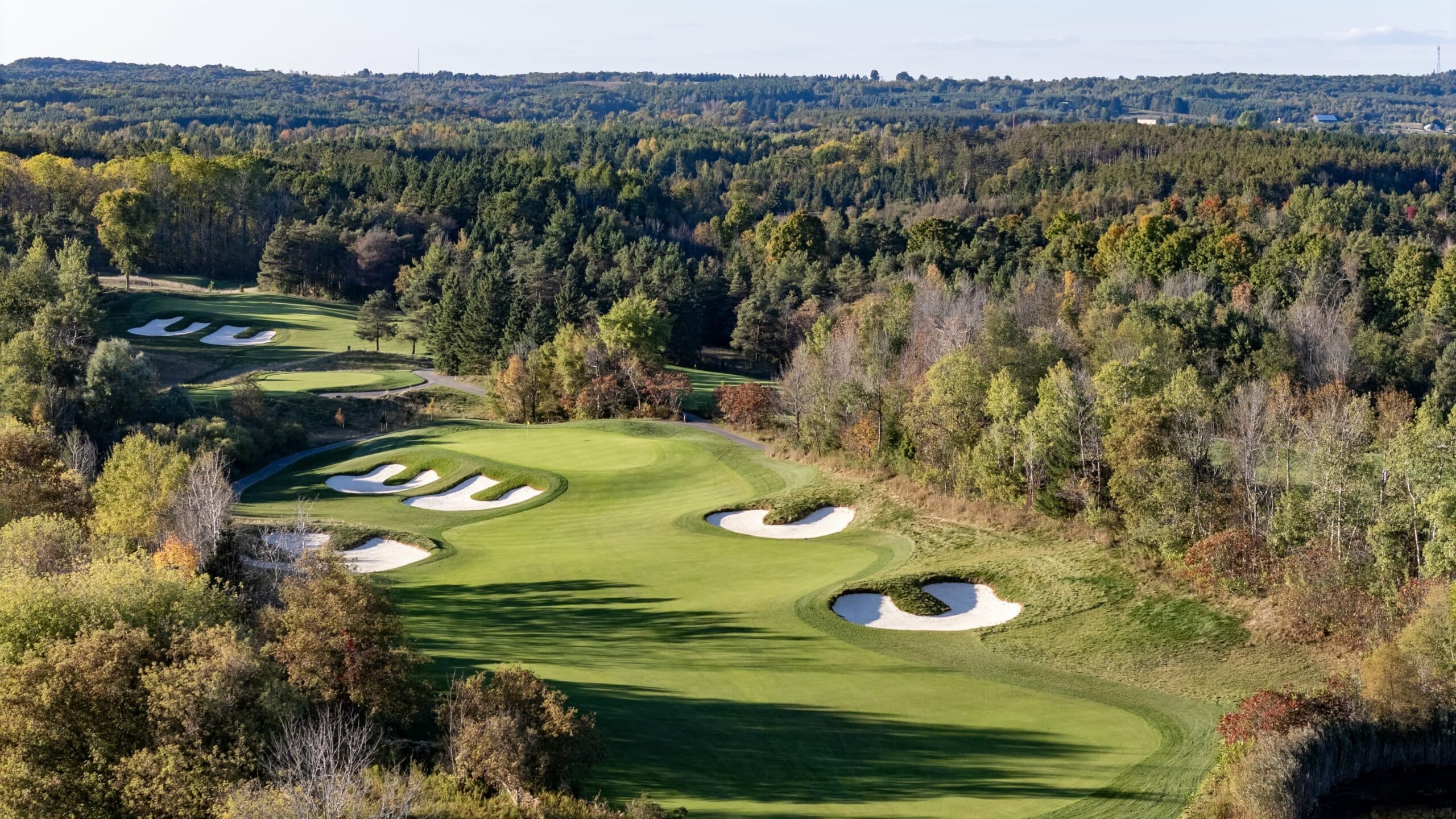
With just one week remaining before the U.S. Open at Shinnecock Hills Golf Club, the PGA Tour makes its annual trip north of the border for the RBC Canadian Open. The tournament returns for a second consecutive year to the North Course at TPC Toronto at Osprey Valley, where players will get one final opportunity to sharpen their games before the season’s third major championship.
Established in 1904, the RBC Canadian Open is Canada’s national championship and the second oldest non major on the PGA Tour schedule, trailing only the BMW Championship, which dates back to 1899. Located roughly 48 miles northwest of Toronto in Alton, Ontario, the North Course at TPC Toronto at Osprey Valley becomes the 38th venue in the tournament’s 121 year history and just the eighth since 1977 to host Canada’s national open. The course is a par 70 that will play to 7,389 yards.
The North Course is a parkland style layout set amid rolling countryside. Wide corridors, demanding par 4s, and strategically placed bunkers define the test, while the scale of the property gives several holes a rugged, almost mountainous feel as they traverse a large, secluded landscape.
Originally designed by Doug Carrick, the course underwent an extensive renovation in 2023 led by Ian Andrew in consultation with the PGA Tour. The project was undertaken to prepare the venue for championship level competition, with particular emphasis placed on enhancing the green complexes and repositioning bunkers and hazards to create a more strategic challenge for the world’s best players.
TPC Toronto proved to be one of the more scoreable venues in its inaugural year on the PGA Tour schedule in 2025. Favorable conditions, wide fairways, and receptive greens allowed players to attack throughout the week, with Ryan Fox winning at 18-under after defeating Sam Burns in a four-hole playoff.
The Field

The 2026 RBC Canadian Open has assembled one of its strongest fields in recent memory despite being played the week before the U.S. Open. The tournament will feature four of the world’s top 10 players according to the Official World Golf Ranking: Matt Fitzpatrick (No. 4), Justin Rose (No. 6), Collin Morikawa (No. 7), and Tommy Fleetwood (No. 8). Along with other big names like Viktor Hovland, Shane Lowry, and Sam Burns, the field also includes defending champion Ryan Fox, five-time major champion Brooks Koepka, reigning PGA Championship winner Aaron Rai, and former Canadian Open champion Robert MacIntyre.
While the 147-player field will be missing world No. 1 Scottie Scheffler and world No. 2 Rory McIlroy as they prioritize U.S. Open preparation, the event still boasts impressive depth. Canada’s national championship will showcase a strong international presence alongside a talented Canadian contingent led by Nick Taylor, Corey Conners, Taylor Pendrith, Mackenzie Hughes, Sudarshan Yellamaraju, and Adam Hadwin. The combination of established major champions, Ryder Cup veterans, rising stars, and Canada’s best players should provide plenty of star power at TPC Toronto despite its challenging position on the schedule immediately preceding the year’s third major championship.
Course Features

The North Course will play as a par 70 measuring 7,389 yards. Among the courses that host annual PGA Tour events, it would rank as the third longest par 70, a testament to the extensive renovation led by Ian Andrew. One of the primary objectives of the redesign was to increase the course’s overall length, stretching it from its original 7,100 yards to better challenge today’s elite players.
While the scorecard features only two par 5s, both are reachable in two shots for much of the field and represent key scoring opportunities. The remaining 16 holes include a demanding collection of long par 4s, with six measuring at least 480 yards and five stretching beyond 500 yards. Depending on setup, players may also encounter two drivable par 4s at the 6th and 12th holes, creating additional risk-reward decisions. The closing 18th, a 581-yard par 5, serves as a fitting finale. Enhanced during the renovation with a new tee box and a short grass runoff area fronting the green, it offers eagle opportunities as well as the potential for costly mistakes, ensuring plenty of drama down the stretch.

Related to the abundance of long par-4s, Ian Andrew explains, “Reducing par was something I went in with the intention of doing. I do believe we’re better off closer to 70 than we are to 72. When identifying good players, you want them to hit some mid or long clubs into the greens and take on some risk to give themselves birdie chances. Part of that was making the tee-to-green game matter. The only way to do that was to stretch some of the par fours and convert some of the par fives.”
Said Canadian golfer, Taylor Pendrith, who has played the North Course many times, “The fairways are pretty generous and some of the greens are big, so if it’s soft and no wind, there are some scores to be had out there.” This was definitely the case last year with the average round playing at -1.25, making it the 17th easiest course on TOUR.
Other than some strategic challenges off the tee, TPC Toronto, overall, is very bland. While it features plenty of elevation change and rolling terrain, it is not a venue that consistently forces players to contend with awkward lies or highly unconventional shot shapes. The fairways are generally wide and accommodating, allowing players to swing freely off the tee. Instead, the course derives much of its difficulty from its length and strategic bunkering, placing a greater emphasis on execution and positioning than on recovery shots or creative shotmaking.
The green complexes at TPC Toronto are relatively straightforward by PGA Tour standards, lacking the dramatic contours and severe internal movement found at many championship venues. While the 3.75-inch bluegrass rough can be penal, there are limited opportunities for players to incur major mistakes elsewhere on the course. Water comes into play on only three holes, and the overall design offers few additional hazards beyond strategically placed bunkers. Both the fairways and greens are composed of a bentgrass/poa annua blend, while the putting surfaces average approximately 6,500 square feet, slightly larger than the PGA Tour norm. Tournament officials are expected to maintain green speeds around 12 on the Stimpmeter
Full course flyover: https://www.ospreyvalley.com/north
Strokes Gained Analysis
Off the Tee
One of the major changes to the course from the 2023 renovation was tightening fairways in landing spots off the tee. Said Andrew, “The landing areas did not previously put a lot of pressure on players off the tee. There were very few times that your hand was forced, and even with some of the lengths for better players, they could have hit 3-wood most places. By going back the extra yards and having to hit driver, it’s a game changer. It really is a philosophical change to where the course is now, because now it’s more about pressure and being a much sterner test.”
Numerous bunkers were added to the fairway landing zones to make both off-the-tee and the approach game more difficult. They are also located at varying distances. Some can be carried at 290 yards, but others are in the 310-320 yard range and will force players to make choices on the tee box.
Said Andrew, “You don’t want everything at 320, because after a while, all it does is really fit a particular swing speed or player. It’s nice to sometimes have something that can be carried at 290, and sometimes it’s 310 or 320, and then a player’s deciding whether they want to take something on. We didn’t try to take away play from longer hitters or take away play from shorter hitters.”
“Generally, almost all the bunkering is on the inside line of holes, and most of the bunkering is where players want to be hitting their approach shots from. You could call that the ‘line of desire.’ It’s sort of, ‘we know where we want to go, we know the shortest distance, and we know the best angle.’ It becomes a question of how much you want to flirt with trouble. The big thing about that is, the bunkers have to have enough depth to be meaningful, and if there’s a consequence for hitting into them, now it becomes a question of how close do you risk playing to them?”
Golfers still have the option to play more conservatively off the tee and hit away from the bunkers because the greens are large enough with contours that are not that difficult. But they can’t do that everywhere and still score. They’re going to need to play a little more aggressively if they want birdie chances. The bunkering adds more strategy off the tee and allows players to take on more risk.
In its inaugural year, however, players were highly aggressive off the tee, hitting driver at an 81% clip with an average driving distance of 299.5 yards. The course played as one of the more driver and distance heavy setups on Tour, with its expansive fairways encouraging players to fully unleash off the tee. That width translated into a 66% fairway accuracy rate, and combined with an average “Missed Fairway Penalty”, resulted in TPC Toronto being the second easiest course to gain strokes OTT.
Approach
Similar to off-the-tee play, TPC Toronto also proved to be one of the easiest courses on TOUR for approach shots, ranking as the fourth-easiest venue to gain strokes on approach. The course was particularly forgiving from inside 150 yards, where players gained an average of 0.043 strokes per shot. A generous 72% GIR rate and an average proximity of just 33.6 feet underscore how receptive the course played in its debut. Much of that can be attributed to the relatively straightforward green complexes, which offer few severe contours or challenging pin locations capable of repelling well-struck approaches.
Wedge play should once again be a key factor this week. Approximately 45% of approach shots are expected to come from inside 150 yards, one of the highest rates on the PGA TOUR. The only other distance bucket that appears more frequently than TOUR average is the 200-250 yard range, which accounts for roughly 25% of approach shots. As a result, players who excel with wedges while also maintaining proficiency with their long irons should be well positioned to take advantage of the scoring opportunities available at TPC Toronto.
Around the Green and Putting
While the ball-striking test at TPC Toronto is one of the easiest on TOUR, things get a little tougher from a short-game perspective. Last year, it ranked as the 13th-easiest annual course in SG: Around-the-Green. It’s especially simple from short-grass chipping areas, where players gained an average of 0.05 strokes per shot, the third-easiest mark on TOUR. Another important note is that TPC Toronto had the highest rate of short-game shots played from short grass at 55%, well above the TOUR average of 41%. With limited rough around many greens and runoff areas funneling balls into tightly mown collection areas, players will frequently face bump-and-runs, putts from off the green, and straightforward chip shots rather than difficult explosions from deep rough.
Putting was the toughest aspect of the course, although it still ranked near the middle of the pack compared to other TOUR venues. Most of the difficulty came on putts from beyond 15 feet, where players lost an average of 0.011 strokes per attempt. The 3-putt rate was also slightly above average at 3.1%, suggesting that lag putting was more challenging than expected. That said, players generated plenty of birdie opportunities thanks to the high GIR rate and strong approach proximity numbers. With greens averaging roughly 6,500 square feet, moderate internal movement, and speeds around 12 on the Stimpmeter, TPC Toronto is unlikely to place a significant emphasis on putting skill. Instead, success should be driven primarily by distance off the tee and capitalizing on the abundance of wedge opportunities.