
2026 3M Open at TPC Twin Cities – Preview

Ron Klos

3 months ago
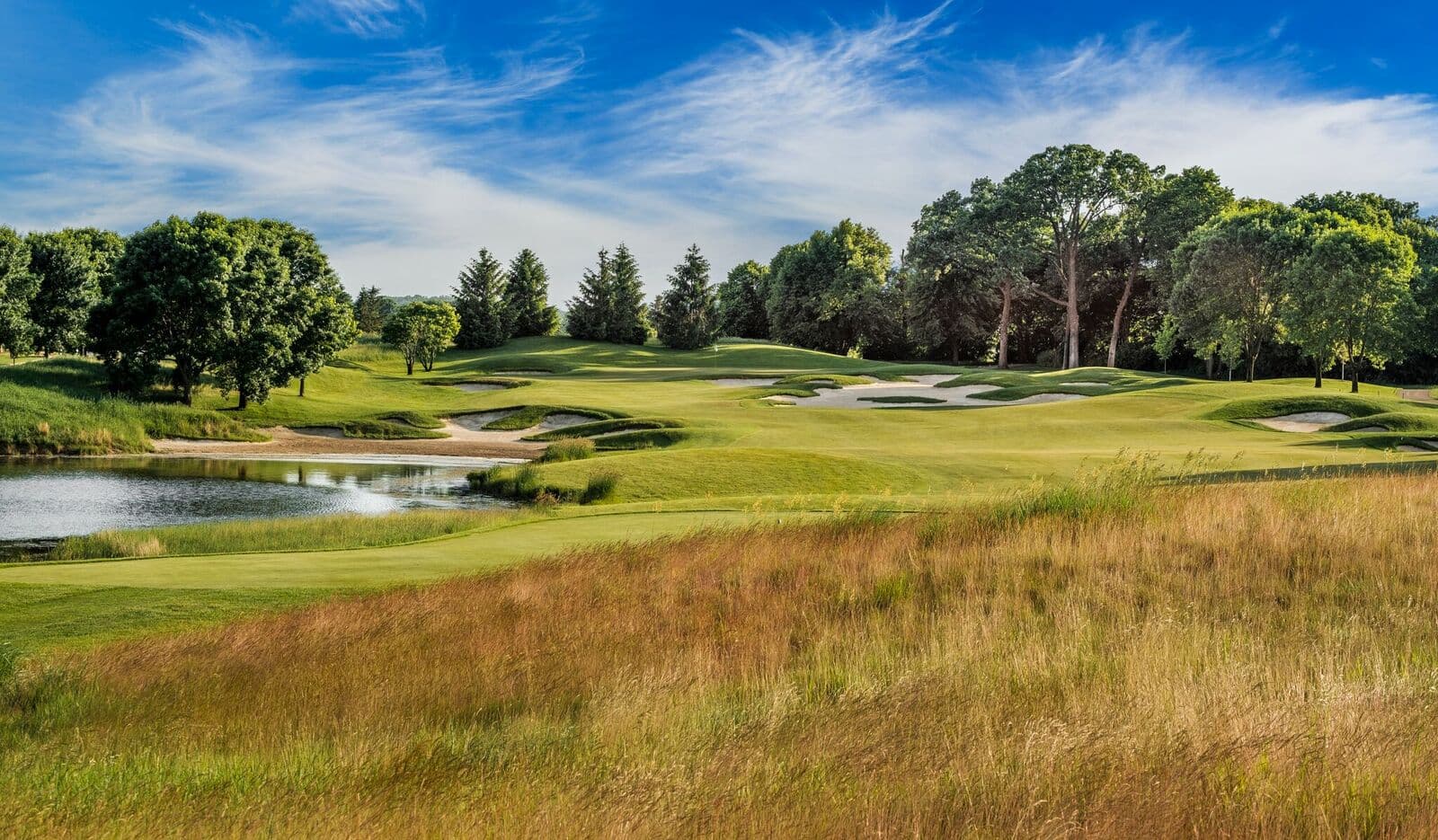
The PGA TOUR heads back stateside for the inevitable post major letdown and the 3M Open at TPC Twin Cities. Designed by the legendary Arnold Palmer, the course was built on a 235 acre former sod farm in the Minneapolis suburb of Blaine, Minnesota.
After two straight weeks on links style courses, the schedule returns to the familiar look of parkland golf. TPC Twin Cities, however, is anything but a traditional parkland layout. With 27 different bodies of water scattered across the property and homes lining much of the course, it has more of a Florida feel than one would expect in the upper Midwest.
TPC Twin Cities consistently ranks among the easiest courses on the PGA TOUR for making birdies, but it also produces one of the highest double bogey or worse rates. Water hazards lurk throughout the property, thick rough punishes errant shots, and several risk reward holes create constant opportunities for both birdies and big numbers. That volatility carries through to a demanding closing stretch where no lead feels secure on Sunday.
As the tenth longest course on TOUR, with water in play on tee shots across nine holes, TPC Twin Cities places a premium on both distance and accuracy. Golfers who excel in Total Driving have consistently thrived here, as evidenced by past champions Kurt Kitayama, Jhonattan Vegas, Tony Finau, Cameron Champ, and Matt Wolff, all of whom are among the stronger drivers on TOUR. Pair that with the importance of precise iron play, and TPC Twin Cities becomes one of the most ball striking dependent venues on the schedule. A remarkable 59% of total strokes gained comes from off the tee and approach play, underscoring just how important those two areas are to success.
2020 champion Michael Thompson summed up the mental challenge of TPC Twin Cities perfectly. “It is very much like PGA National. You know what shots you have to hit. There’s no if, and or but about it, you’ve just got to step up and hit the shot, and execute. If you’re not confident over the ball, you’re more likely to make a poor swing, which is going to result in a penalty. So you have to be really diligent with your visualizations, your commitment to each shot, pick your target, and trust it.”
The Field

Following the season’s final major championship, the PGA TOUR returns to Minnesota for one of the final three opportunities to secure FedExCup points before the Playoffs begin. With only the 3M Open, Rocket Classic, and Wyndham Championship remaining, the pressure is immense for players on the playoff bubble, those fighting to keep full PGA TOUR status, and others chasing enough points to qualify for the FedEx St. Jude Championship. That sense of urgency has consistently made the 3M Open one of the most aggressive tournaments on the schedule, with players willing to take on risk in pursuit of birdies and a career changing finish.
The tournament once again features a standard 144 player field competing for an $8.8 million purse, 500 FedExCup points to the winner, and a two year PGA TOUR exemption. The top 65 players and ties after 36 holes will advance to the weekend. While the event follows The Open Championship and naturally loses many of the world’s elite players, the 2026 edition is stronger than usual, highlighted by World No. 1 Scottie Scheffler making his tournament debut. Defending champion Kurt Kitayama also returns alongside a field featuring 53 of the top 125 players in the Official World Golf Ranking representing 21 different countries.
As always, the field is a blend of established PGA TOUR winners, rising young stars, veterans trying to extend their careers, and players simply hoping to earn enough FedExCup points to keep their cards. With the regular season winding down, every finish carries significant consequences. Those already inside the top 70 are looking to improve their playoff position, while those outside the number have little choice but to chase high finishes over the final three weeks. That urgency often produces one of the most volatile leaderboards of the year and creates opportunities for lesser known players to break through.
Finish Position and Strokes Gained History at TPC Twin Cities (2019-2025)
This includes the average finish position and Strokes Gained per round. Players are sorted by SG: Total. TPC Twin Cities is the 14th least predictive course on the PGA Tour.


Course Features

Located in the “Land of 10,000 Lakes,” TPC Twin Cities is a flat, exposed par 71 measuring 7,431 yards. Designed by Arnold Palmer with input from Minnesota native Tom Lehman, the course features bentgrass fairways and greens, native prairie grasses, and 27 bodies of water framed by mature oak, spruce, and pine trees. From an agronomy standpoint, the rough is a four inch blend of bluegrass and fescue, while the bentgrass greens average 6,500 square feet and typically run between 12 and 12.5 on the Stimpmeter. The course also features 72 bunkers and water comes into play on 13 of the 18 holes, more than almost any venue on the PGA TOUR.
Architecturally, TPC Twin Cities tends to fall flat. Many holes blend together because of the repetitive use of water hazards, giving the course more of a Florida feel than one in the upper Midwest. The abundance of homes lining the fairways also detracts from the natural beauty of the property, making the overall experience feel more manufactured than memorable. Strategically, however, the design succeeds in creating constant decision making. Players are repeatedly asked whether to challenge water for a shorter approach or play conservatively and face a longer iron into receptive greens.
Before the inaugural event in 2019, tournament founder Hollis Cavner gave a brutally honest description of how organizers envisioned the course playing. “We want birdies and train wrecks, and we don’t want to be the hardest golf course on the TOUR.” That philosophy has played out almost perfectly. While TPC Twin Cities annually ranks among the easiest stops on TOUR for birdies and eagles, it is far from a true birdie fest. Since becoming a PGA TOUR venue, the scoring average has been just 0.83 strokes under par despite multiple winning scores reaching 20 under or lower. The course rewards aggressive play, but mistakes are often costly.
TPC Twin Cities places a premium on positioning off the tee. With water threatening tee shots on numerous holes and penalty areas waiting for even slightly offline drives, players must balance aggression with restraint. Those who find the fairway are rewarded with ideal angles to attack tucked pins, while a single loose swing can quickly lead to bogey or worse. Adam Long, who owns three top 25 finishes at TPC Twin Cities, described the challenge well. “There’s a lot of intimidating shots out there. There’s room to miss, but there’s a lot of water out there. It’s kind of in your face, you can’t avoid it. You just have to kind of step up and hit a golf shot a lot of times out there. So it provides a lot of birdies, but it’s also pretty visually intimidating.”
That risk reward formula separates TPC Twin Cities from most other low scoring venues. It consistently ranks among the TOUR leaders in penalty strokes and records more balls hit into the water than any other course on the schedule. The open property also leaves the course exposed to the wind, adding another layer of difficulty when conditions firm up. If the weather remains calm, however, players should once again have plenty of birdie opportunities and a winning score in the high teens or lower 20s. Ultimately, success comes down to keeping the ball dry off the tee, capitalizing with precise ball striking, and converting enough chances on receptive bentgrass greens.
Hole Preview

TPC Twin Cities features a balanced mix of four par 3s, 11 par 4s, and three par 5s that encourages aggressive play while constantly bringing penalty areas into the equation. Nearly every scoring opportunity comes with a decision, as players are repeatedly asked to challenge water for a better angle or play conservatively and settle for a longer approach. That risk reward philosophy is especially evident over the closing stretch, where multiple holes are capable of producing both birdies and double bogeys in rapid succession.
The par 3s provide much of the course’s resistance. Three of the four measure over 200 yards and consistently rank among the eight most difficult holes on the course. The second hole, a demanding 209 yard par 3 played over water to a shallow angled green, has quietly established itself as one of the toughest tests at TPC Twin Cities. Coming so early in the round, it immediately places pressure on players, with misses often finding the water or leaving difficult up and downs from thick rough and deep bunkers. The remaining long par 3s also require precise long iron play, making this one of the more difficult sets of par 3s players will face all season.
All three par 5s measure between 590 and 600 yards and are reachable in two shots for much of the field, yet they are far from automatic scoring holes. Although they generate plenty of birdies, their eagle rate sits at only around 2.4%. A major reason is that they produce the most difficult second shots on TOUR when players choose to go for the green. Since 2019, approaches into these par 5s have finished an average of 96 feet from the hole, by far the highest figure on the PGA TOUR and more than nine feet worse than any other annual venue. Water, awkward layups, and well protected green complexes force players to carefully weigh the risk of attacking in two.
The 11 par 4s, meanwhile, are among the easiest on TOUR and collectively play under par. Six feature a birdie or better rate above 20%, including two measuring under 400 yards. The par 4 16th is particularly entertaining, as tournament officials frequently move the tees forward over the weekend to create a drivable hole that can produce everything from eagle to double bogey. In contrast, the five longest par 4s all feature water hazards and each carries a bogey or worse rate of at least 17%. Players who can navigate those demanding holes without mistakes while capitalizing on the shorter scoring opportunities typically separate themselves from the field.
The finishing stretch is one of the most volatile on the PGA TOUR. Water is in play on each of the final three holes, culminating with the par 5 18th. Players hoping to reach the green in two must first thread a tee shot between water and fairway bunkers before deciding whether to challenge the lake guarding the green. Eagles are possible, but so are late bogeys and double bogeys, making the closing hole one of the most exciting risk reward finishes on the schedule.
Strokes Gained Analysis
Off the Tee
While TPC Twin Cities places a premium on Total Driving, it does not necessarily favor one specific skill over the other. Longer hitters certainly enjoy an advantage, as they are left with shorter approaches into receptive greens and can attack the par 5s more effectively. At the same time, accuracy cannot be sacrificed. With penalty areas waiting on numerous driving holes, a single loose swing can erase multiple birdies in an instant.
Unlike many modern PGA TOUR venues where players simply hit driver as often as possible, TPC Twin Cities demands thoughtful club selection and has a driver usage rate right at the TOUR average of 70%. Several holes pinch the landing areas with water or fairway bunkers at common driver distances, forcing players to decide whether to lay back with a fairway wood or challenge the hazards for a shorter approach. Those decisions become even more difficult if the wind begins to blow across the exposed property.
Although the fairways are relatively generous by TOUR standards at 35 yards wide on average, they are designed to encourage players toward the edges in pursuit of better angles into the greens. That means many golfers will intentionally take on more risk than the width alone would suggest. Finding the short grass also becomes increasingly important because the four inch bluegrass and fescue rough makes it much more difficult to generate enough spin to attack tucked hole locations, particularly with mid and long irons.
The statistical profile of past champions reinforces the importance of driving the golf ball well. Winners such as Tony Finau, Cameron Champ, Kurt Kitayama, Jhonattan Vegas, and Matt Wolff all separated themselves with elite performance off the tee during their victories. Whether through power, accuracy, or a combination of both, consistently avoiding penalty strokes while creating shorter approach opportunities has proven to be one of the clearest paths to success at TPC Twin Cities.
Approach
Approach play remains the biggest separator at TPC Twin Cities, even though the course is one of the easiest on TOUR for finding greens. Despite the four inch bluegrass and fescue rough, players have averaged roughly 63% fairways hit while still reaching 71% of greens in regulation. Simply hitting the putting surface is rarely enough to gain an advantage. With so many players creating birdie chances, success comes from consistently stuffing iron shots inside 20 feet and converting opportunities. Since becoming a PGA TOUR venue, TPC Twin Cities has ranked as the eighth easiest course on TOUR to gain strokes on approach.
The course also places a greater emphasis on long iron play than many of the TOUR’s other birdie friendly stops. Last year, 53% of all approach shots came from beyond 175 yards, largely because of the three lengthy par 5s and several demanding par 4s that require mid and long irons into the greens. While wedge play still matters on the shorter par 4s, players who consistently excel from 175 to 225 yards tend to separate themselves over four rounds.
Fortunately for the field, the green complexes themselves are relatively straightforward. The bentgrass surfaces feature modest internal movement with few severe tiers or dramatic runoffs, allowing tournament officials to use a variety of hole locations without creating overly defensive setups. Well struck iron shots are generally rewarded, and proximity to the hole is consistently better than the TOUR average. The challenge is rarely deciphering difficult greens. Instead, it is controlling distance while carrying water hazards, avoiding the handful of false fronts, and giving yourself enough realistic birdie looks to keep pace with the winning score.
Around the Green
With greens in regulation hovering around 71% each year, there are simply fewer opportunities for players to separate themselves around the greens than at most PGA TOUR venues. As a result, strokes gained around the green has historically carried very little predictive value at TPC Twin Cities. In fact, three of the last six champions, Jhonattan Vegas, Cameron Champ, and Michael Thompson, all lost strokes around the green during their victories.
When players do miss the putting surface, however, recovery shots are not automatic. The tightly mown collection areas around many greens demand precise contact, particularly on bump and run chips from short grass. Both scrambling and sand save percentages have consistently been 2% to 3% below the PGA TOUR average, suggesting that while missed greens are relatively uncommon, they are slightly more difficult to recover from than the course’s overall scoring average would indicate. The greenside bunkers also tend to be deep with flashed faces, placing a premium on quality distance control rather than simply getting the ball onto the green.
Putting
The bentgrass greens at TPC Twin Cities are widely regarded by players as some of the purest rolling surfaces on the PGA TOUR. Running at approximately 12 to 12.5 on the Stimpmeter, they are fast enough to reward confident putting without becoming overly defensive. Their relatively subtle contours and limited internal movement allow players to stay aggressive, particularly from the critical 5 to 15 foot range where tournaments are often decided.
The statistics reflect that reputation. TPC Twin Cities consistently ranks among the easiest putting venues on TOUR, outperforming the TOUR average in virtually every major putting category. Three putt avoidance is better than average, conversion rates from both short and mid range are elevated, and players make a higher percentage of putts across nearly every distance bucket. With so many competitors generating birdie opportunities through strong ball striking, the eventual winner almost always complements that with an above average putting week on these smooth, receptive bentgrass greens.
Most Important Stats For Success at TPC Twin Cities
*In order of importance
- Distance From Edge of Fairway (DFEF)
- SG: Approach
- SG: Ball Striking (high water danger)
- Bogey/Double-Bogey Avoidance
- Good Drive %
- Proximity 175+
- Birdie or Better %
- SG: Par 4
- Total Driving
- Putting 5-15 feet
Key Rabbit Hole Filters
- Course Region: Midwest
- Scoring Conditions: Easy/Average
- Field Strength: Weak
- Field Size: Full Field
- Event Season: Summer
- Water Danger: High
- Greens Surface: Bent
- Rough Length: Long
- Rough Surface: Bluegrass
- Architect: Arnold Palmer
- OTT Club Type: Mixed
- Gain Approach: Easy
- Gain ARG: Easy
- GIR Accuracy: Easy
- Gain Putting: Very Easy