2025 Ryder Cup at Bethpage Black – Preview

Ron Klos

a year ago
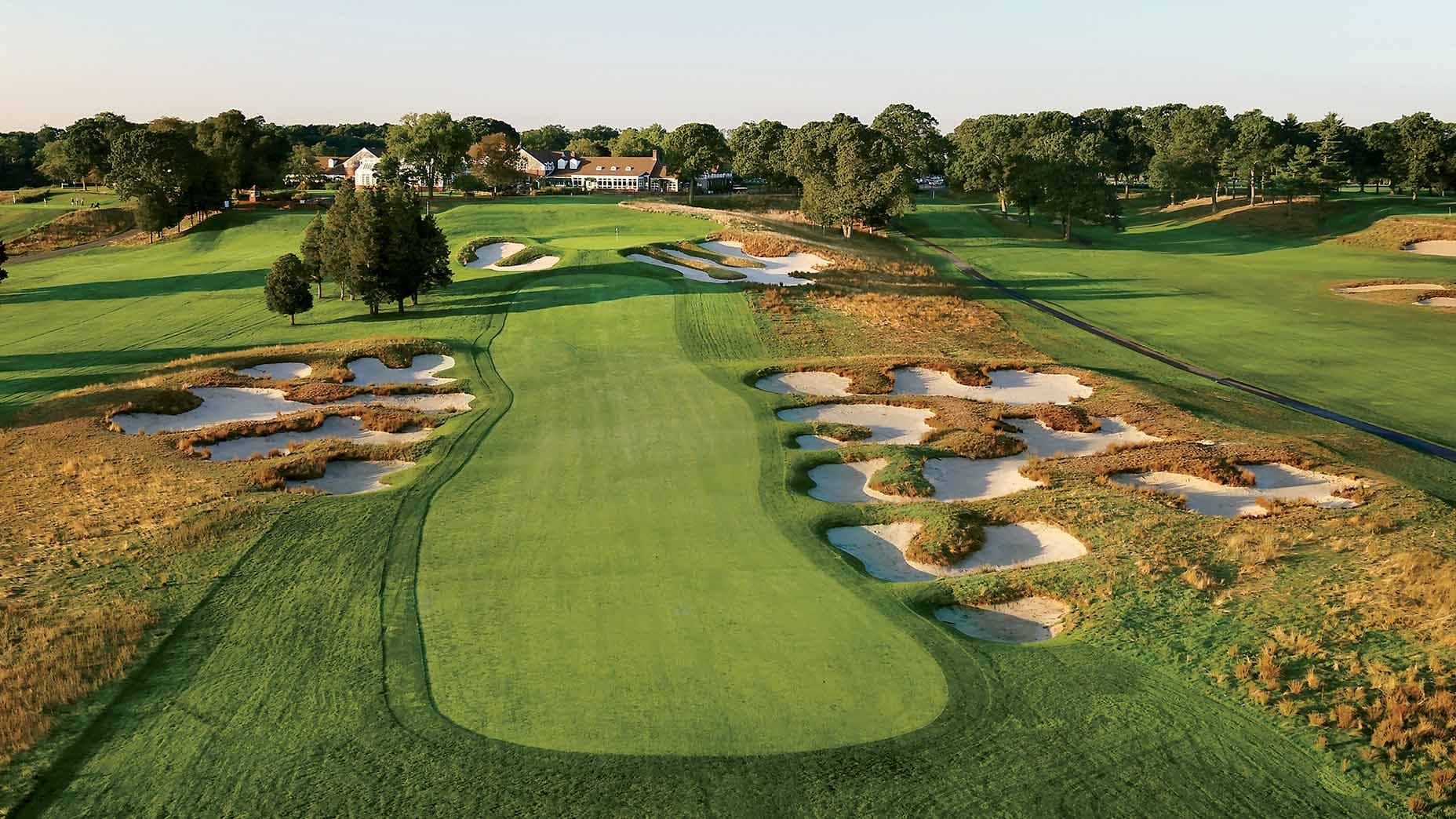
24 of the world’s best players will tee it up this week in New York at the famed Bethpage Black course for the 45th playing of the Ryder Cup. Named after the British businessman Samuel Ryder, who donated the first trophy after the initial tournament in 1927, the Ryder Cup has become one of the world’s greatest sporting events.
Every two years, the top players from Europe and the United States compete in a match play format, with the venue alternating between courses in the United States and Europe. The 2025 Ryder Cup promises to be one of the most electrifying and competitive editions in recent times. As one of the sport’s most storied team events, the Ryder Cup combines national pride, high-stakes match play, and a passionate fan atmosphere unlike any other tournament.
With its proximity to New York City, the setting on Long Island ensures a boisterous and energetic crowd that will add to the already high-pressure environment. Coming off another road defeat in 2023, the U.S. team will be under immense pressure to defend its home turf.
Bethpage Black is well known for its lengthy, demanding layout, dense rough, and fast greens surrounded by treacherous bunkers. Having hosted multiple major championships, Bethpage Black has already built a reputation as one of the toughest public courses in the United States, and its first Ryder Cup will showcase those qualities on golf’s grandest team stage.
In the all-time standings, Team USA leads the series 27-15 with two ties. At the 2023 Ryder Cup, held at Marco Simone Golf & Country Club in Rome, Italy, Team Europe defeated Team USA 16.5-11.5.
The Teams
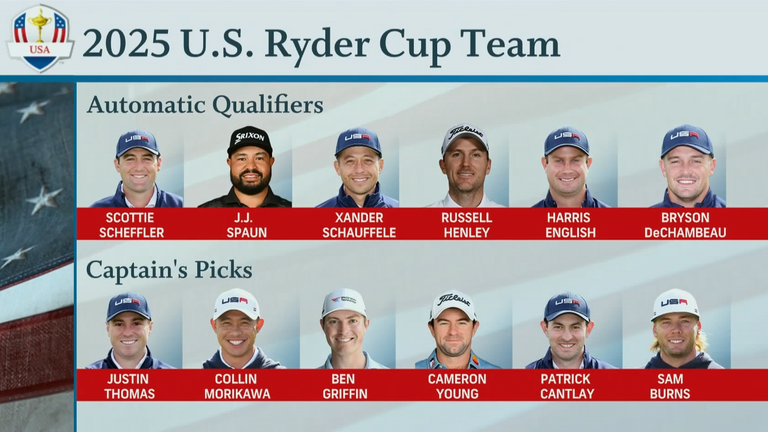
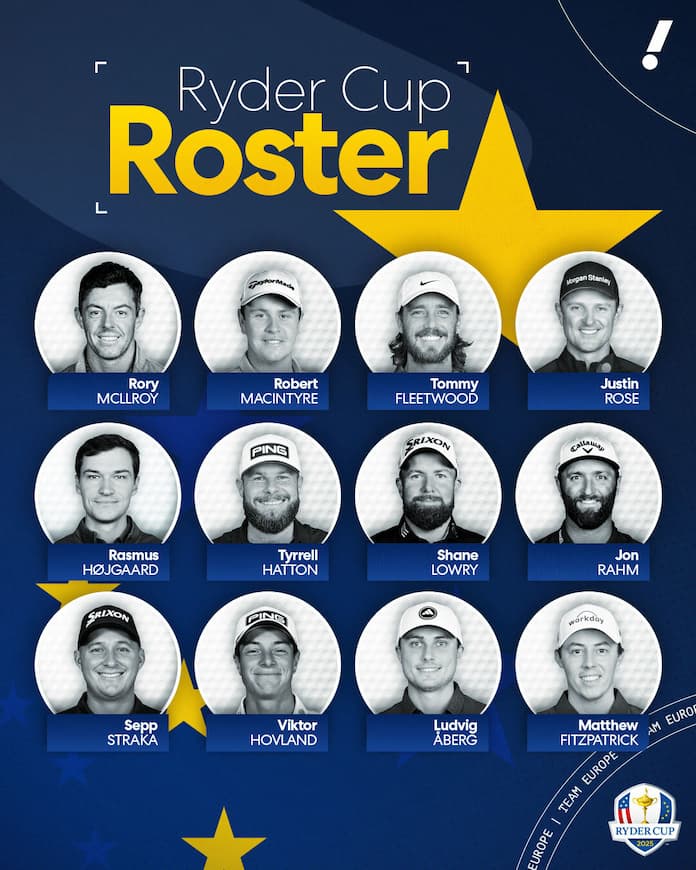
The qualifying criteria for each team are different. For the U.S., a points system has been in place since the 2019 season, with players collecting points up until the completion of the 2025 BMW Championship. Automatic qualifiers include Scottie Scheffler, Xander Schauffele, Harris English, J.J. Spaun, Russell Henley, and Bryson DeChambeau, each bringing a combination of experience and recent form to the roster. The remaining six spots were filled by captain Keegan Bradley following the conclusion of the 2025 PGA TOUR season. Bradley’s selections were Sam Burns, Patrick Cantlay, Ben Griffin, Collin Morikawa, JustinThomas, and Cameron Young.
Qualification for Team Europe began at the 2024 BMW PGA Championship, the fourth Rolex Series event of the 2024 season. It concluded on August 24, 2025, when the six players (Rory McIlroy, Robert MacIntyre, Tommy Fleetwood, Justin Rose, Tyrrell Hatton, and Rasmus Hojgaard) who qualified automatically were confirmed. These six automatic qualifiers comprised the three leading players on the European Points List, followed by the three leading players on the World Points List. European Captain Luke Donald selected Jon Rahm, Shane Lowry, Viktor Hovland, Ludvig Aberg, Matt Fitzpatrick, and Sepp Straka as his six “Captain’s Picks” to complete the European roster.
Ryder Cup Format and Scoring
The Ryder Cup employs a match play format, unlike the typical stroke play format used each week on the PGA Tour. Match play is a form of competition where a player (or players) plays directly against an opponent (or opponents) in a head-to-head match. You win a hole by completing it in the fewest number of strokes, and you win a match when you are winning by more holes than remain to be played. Since 1979, the Ryder Cup has consisted of two days of four-ball and foursome matches, along with one day of singles matches.
FOUR-BALL Each member of a two-man team plays his own ball, so four balls are in play on every hole. Each team counts the lowest of its two scores on each hole, and the team whose player has the lowest score wins the hole. If the low scores are tied, the hole is halved.
FOURSOMES Each two-man team plays one ball per hole, with the players taking turns until each hole is complete. Players alternate hitting tee shots, with one leading off on odd-numbered holes, and the other hitting first on even-numbered holes. The team with the low score on each hole wins that hole. If their scores are tied, the hole is halved.
SINGLES Each match features one player from each team. The player with the lower score on each hole wins that hole. If their scores are tied, the hole is halved. Players can concede a hole to their opponent if they have no chance of halving the hole.
Scoring: Each match is worth one point, with matches ending in a tie worth ½ point to each side. There are no extra holes in Ryder Cup matches. The first team to reach 14 ½ points wins the Ryder Cup. If the matches end in a 14-14 tie, the team holding the Ryder Cup retains it.
Tale of the Tape
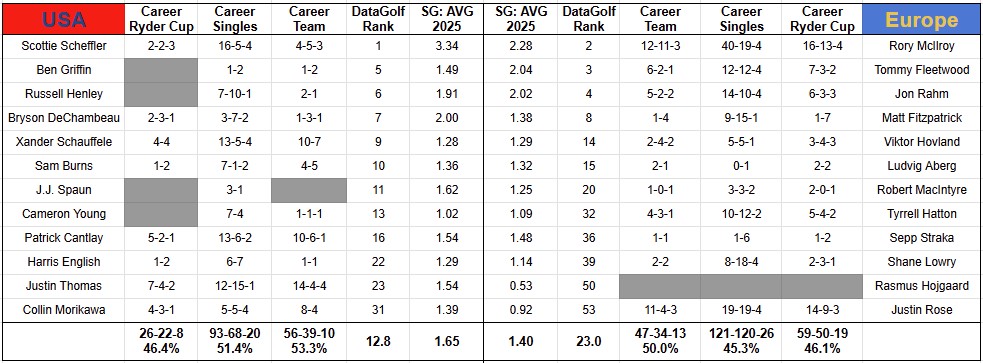
Here is a look at how the teams stack up from a rank, form, and match play history perspective. Players are shown with their DataGolf ranking. Form is measured using DataGolf’s adjusted strokes gained per round over the last 12 months. Three data points are used for match play history. The first is their overall Ryder Cup record. The second is career singles record in match play competition, which, along with the Ryder Cup, also includes the Dell Match Play event and the Presidents Cup. Finally, each player’s career team record in both foursomes and four-ball competitions in those same events is also included.
Hole Preview
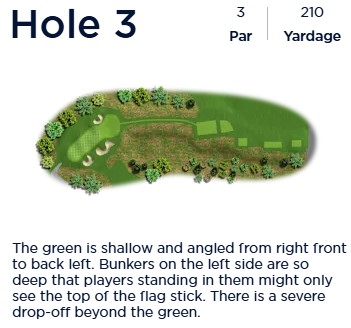
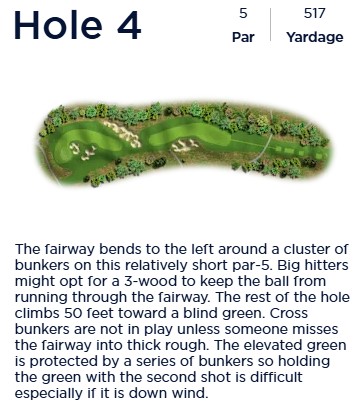
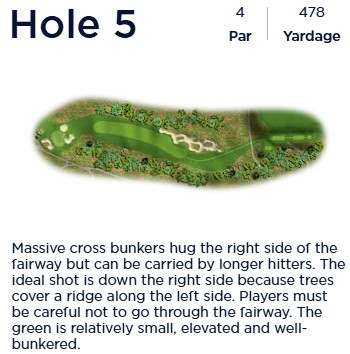
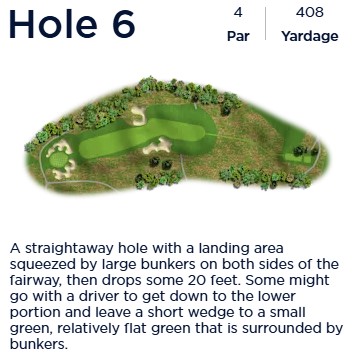
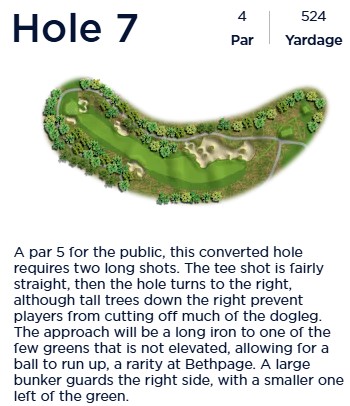
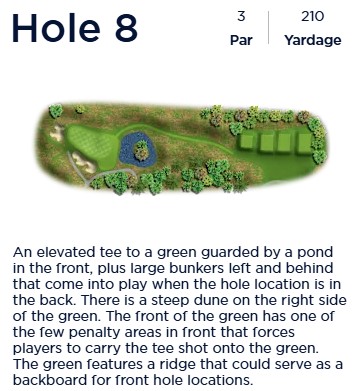
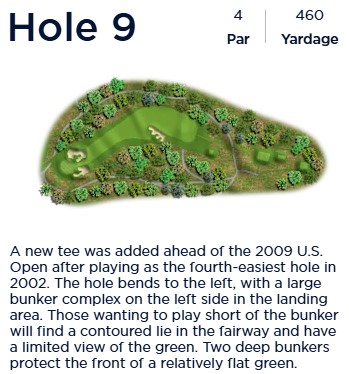
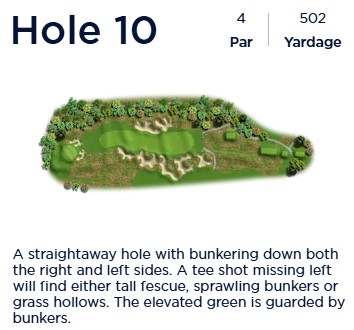
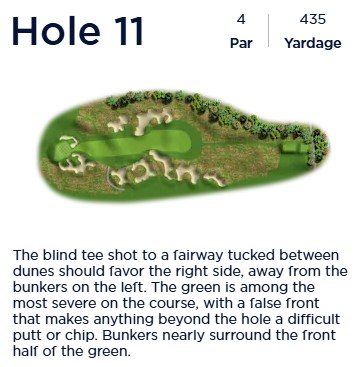
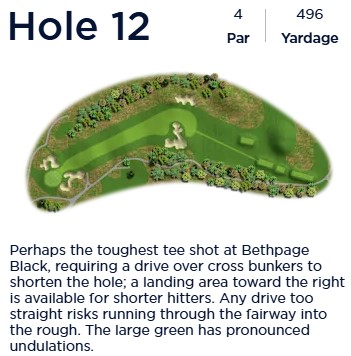
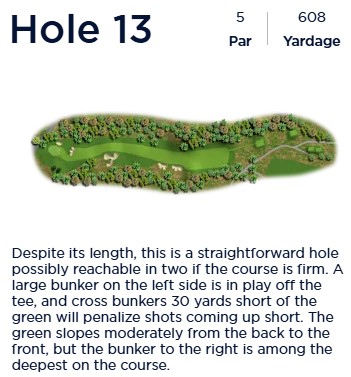
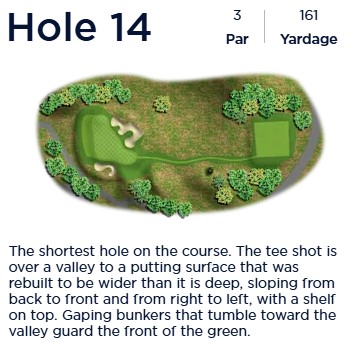
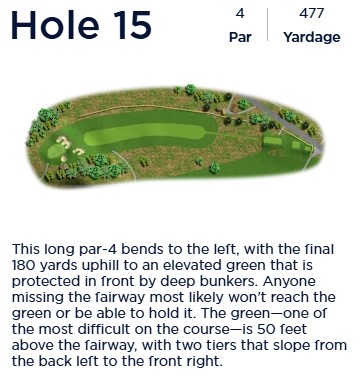
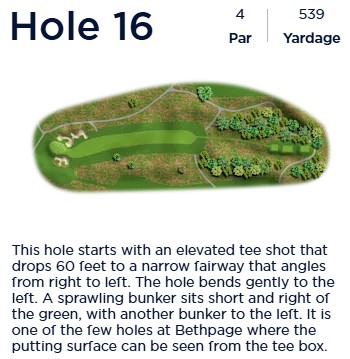
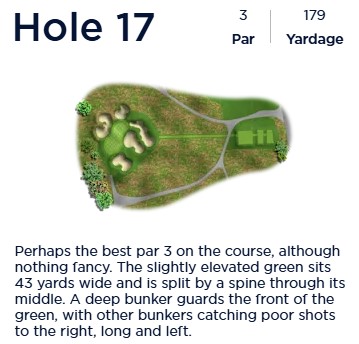
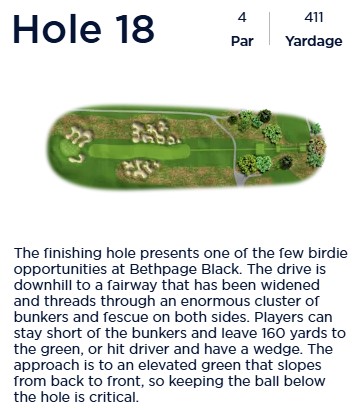
Course Features
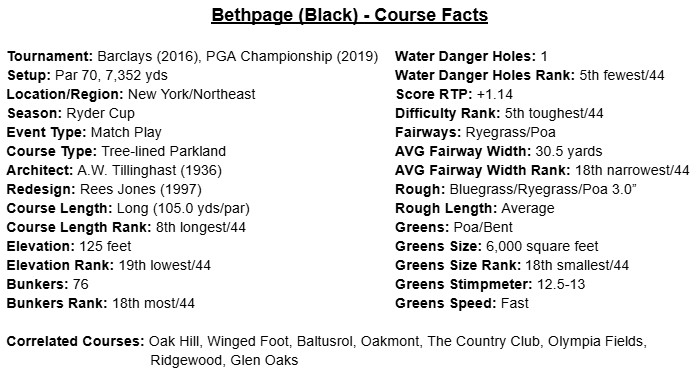
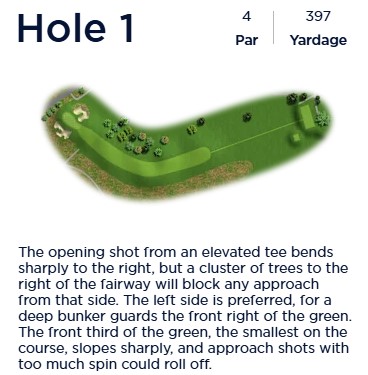
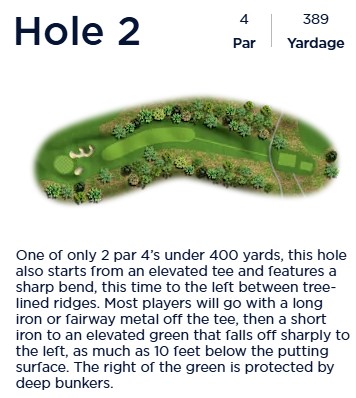
Bethpage Black is a municipal course, one of five that are part of Bethpage State Park in New York. It opened in 1936 and was designed by A. W. Tillinghast with the idea of creating a “public Pine Valley.” With a reputation as one of the most challenging courses in the world, it proved a daunting task for participants when hosting the U.S. Open in 2002 and 2009, as well as the PGA Championship in 2019. For the Ryder Cup, Bethpage will play as a par 70 at 7,352 yards, which measures as one of the longest courses played on the PGA schedule.
The Bethpage Black course features expansive routing over hilly and forested Long Island terrain. From the low point of the first fairway to the high ground near the ninth green and across holes 10 through 12, Bethpage Black features 77 feet of elevation change. This isn’t a gradual climb but rather a defining characteristic of the course’s topography—a recurring rise and fall that players feel throughout their rounds. The shifts are most noticeable midway through the front nine and again during the demanding stretch on the back, where uphill and downhill lies complicate club selection, shot trajectory, and distance control.
One of the unique advantages granted to the home Ryder Cup team is the ability to influence how the golf course is set up. This often plays a pivotal role in shaping the style of competition, as each side seeks to tailor conditions to its strengths. Historically, the European side has favored narrowing the fairways and allowing the rough to grow thick, placing a premium on accuracy and course management while neutralizing the Americans’ typical edge in power off the tee. This approach forces players into more conservative strategies and rewards precision over sheer distance.
By contrast, the U.S. has traditionally leaned into its reputation for aggressive play when hosting. American captains have often chosen to widen the fairways and avoid overly penal setups, reducing the emphasis on accuracy and increasing the likelihood of birdies. This style encourages aggressive play, producing more birdie chances, and aligning with the strengths of American golfers who thrive on length and offensive shot-making. In match play, where momentum can swing dramatically with a single hole, such setups create more volatility and excitement while giving the home team a better chance to maximize its skill advantages.
One of the defining characteristics of Bethpage Black, and the primary reason it has earned a reputation as one of the most demanding tests in golf, is its long, dense rough. Traditionally, this feature punishes wayward drives and places a premium on accuracy, turning even routine holes into grueling challenges. However, early reports from both camps indicate that U.S. captain Keegan Bradley has opted for the traditional American formula in course setup. Wide fairways and benign rough are expected to be the order of the week, softening Bethpage’s usual bite (especially on its gauntlet of long par 4s) and creating an environment more conducive to aggressive golf where players with length off the tee can attack with driver.
Said former Ryder Cup player and captain Paul McGinley, who has recently walked the course, “The rough is not as it would be in a U.S. PGA or a U.S. Open that has been played there before. The fairways are pretty generous at the moment because they’re soft.
By removing some of the course’s most penal elements, Bradley’s setup strategy effectively transforms Bethpage Black from a war of attrition into a stage that rewards length and fearless play off the tee. This approach aligns with the strengths of the American roster, many of whom thrive on overpowering courses rather than grinding through thick rough. Long iron play will also be key as 11 holes will require an approach shot from 175+ yards.
While Bethpage will still present a formidable challenge with its sheer length, bunkering, and demanding green complexes, the softened rough and added width will shift the balance toward shot-making freedom rather than survival. In doing so, Bradley hopes to unlock the firepower of his team and ensure that momentum swings are decided by aggressive play rather than defensive scrambling.
The greens at Bethpage are relatively small and well-guarded, demanding sharp iron play and creativity around the putting surfaces. While they lack huge undulations, these greens do slope, but steadily, like a plain built on a continuous slope that blends into the surrounding terrain. Run-off areas and deep bunkers will challenge short games, while putting surfaces are expected to be fast and firm. Said McGinley, “Green speeds at the moment are probably running around 12, and they’ll probably move them up to about 13.”
“So all in all, it’s what we expected. It’s right out of the American playbook of what they do when they play at home. And they’ve been very successful doing it, so why change, which is generally rough, not too thick, greens quite fast, and trying to encourage a fast pace of low scoring. It’s proved to be a very successful tournament in the past when they’ve played at home.”
Speaking about the stats that will matter the most at Bethpage, European Ryder Cup captain Luke Donald said, “Long driving is a benefit. Good putting is a benefit. Iron shots outside of 150 yards. Again, all kinds of information that we have, and again, that’s part of the process of how we put the team together and the pairings.”
Most Important Stats For Success at Bethpage Black
*In order of importance
- SG: Approach
- Driving Distance
- Putting 5-10 feet
- Proximity: 175+
- Par 4 Birdie or Better %
- Scrambling
- SG: Putting (Poa/Bent)
- Birdie or Better %
- Distance From Edge of Fairway (Driving Accuracy)
- SG: Long and Difficult courses
Ryder Cup – Key Rabbit Hole Filters
- Course Region: Northeast
- Scoring Conditions: Difficult/Very Difficult
- Course Length: Very Long
- Par: 70
- Course Architect: Albert Tillinghast
- Greens Surface: Poa/Bent
- Greens Speed: Fast
- Rough Surface: Ryegrass/Bluegrass
- OTT Club Type: Driver Heavy
- Gain Approach: Difficult
- Gain Putting: Very Difficult
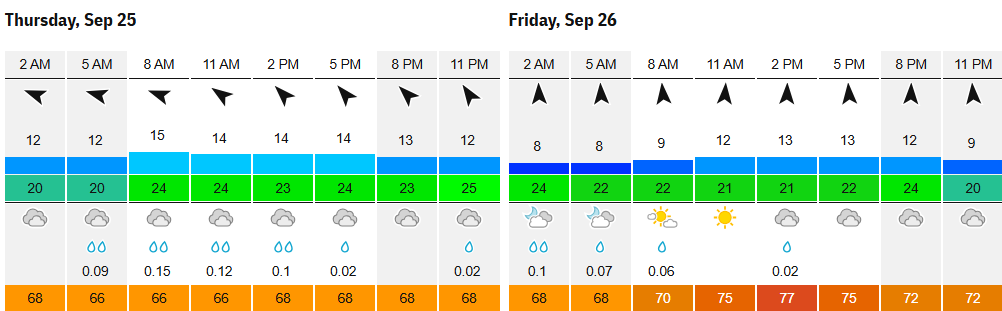
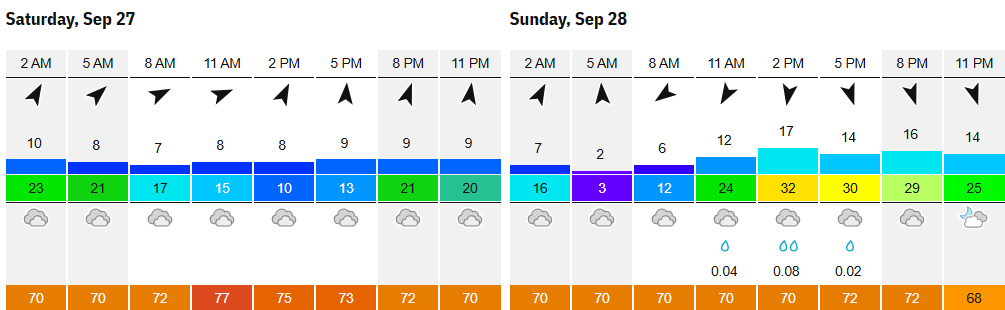
Weather Forecast – Farmingdale, NY