2026 John Deere Classic at TPC Deere Run – Preview

Ron Klos

3 months ago
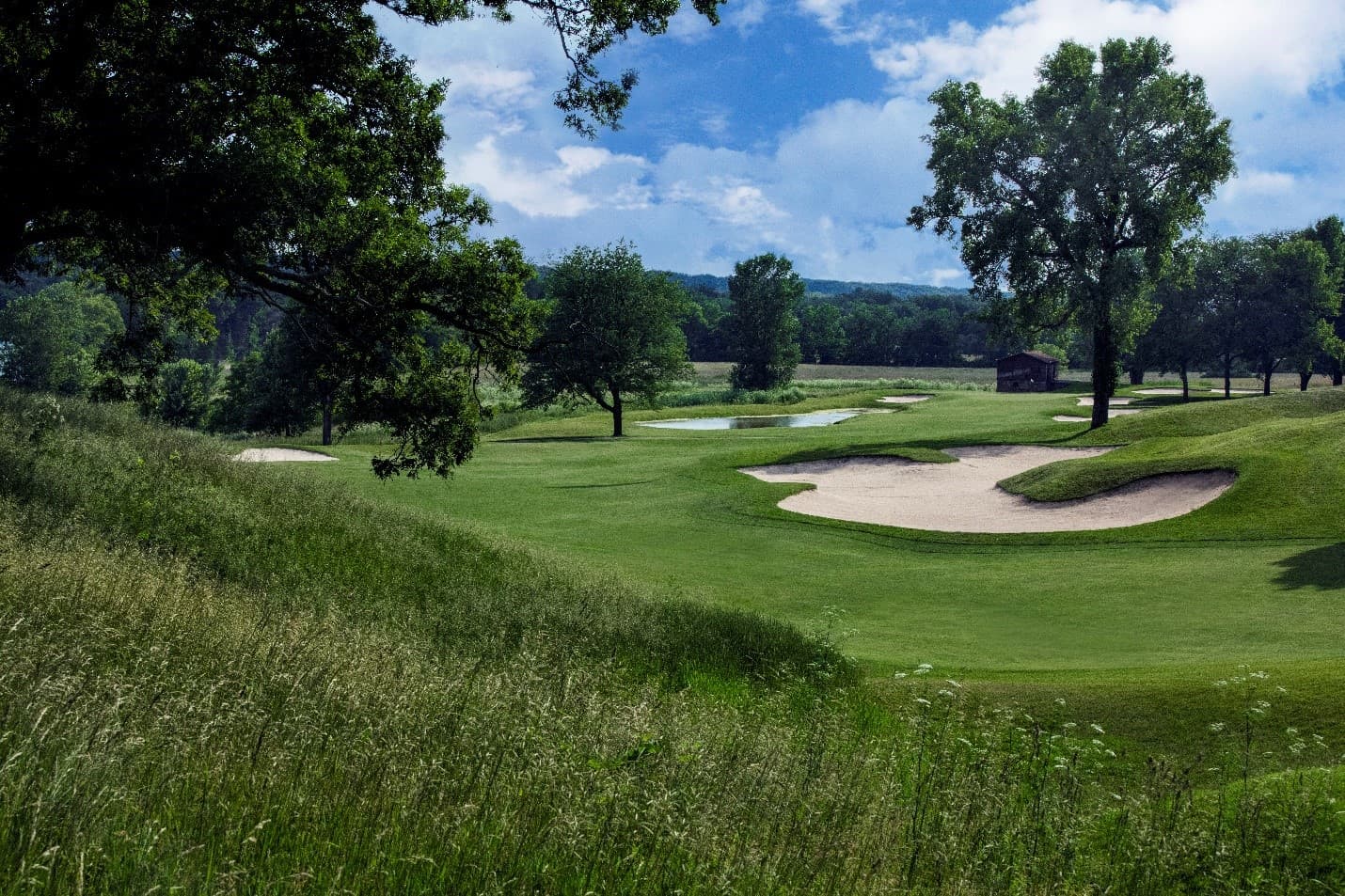
The PGA Tour heads to the Midwest this week for the John Deere Classic at TPC Deere Run in Silvis, Illinois. Originally known as the Quad Cities Open when it debuted in 1971, the tournament found its permanent home at TPC Deere Run in 2000 and has become one of the Tour’s premier birdie-fests. It provides one of the final full-field opportunities of the summer before the schedule shifts overseas and into the heart of the FedExCup race. It has also developed a reputation as a launching pad for future stars, producing 25 first-time PGA Tour winners since its inception while remaining one of the longest-running title sponsorships on the PGA Tour.
Designed by former PGA Tour winner D.A. Weibring on the site of a former Arabian horse farm overlooking the Rock River, TPC Deere Run blends rolling terrain, dramatic elevation changes, hardwood forests, and scenic ravines into one of the most picturesque courses on the schedule. Despite measuring over 7,300 yards, the course is far from a bomber’s paradise. Wide fairways, receptive Bentgrass greens, and numerous wedge approaches create one of the lowest-scoring weeks of the season, with each of the last 16 champions finishing at 18-under par or better.
TPC Deere Run rewards players who manage their way around the course rather than simply overpower it. While all playing styles have found success here, accurate drivers, elite wedge players, and strong putters have enjoyed the greatest long-term success. Past champions such as Brian Campbell, J.T. Poston, Steve Stricker, Jordan Spieth, Brian Harman, and Zach Johnson all fit that mold. The course consistently creates birdie opportunities, but converting those chances is what separates contenders from the rest of the field.
The Field

Unlike the Signature Events and major championships, the John Deere Classic annually features a more balanced field where virtually every player arrives believing he has a realistic chance to win. This year’s 144-player field includes two of the top 20 players in the Official World Golf Ranking along with eight players ranked inside the world’s top 50, making it one of the more wide-open tournaments of the season. While the field lacks the star power of recent weeks, it is deeper than many John Deere Classics of the past and includes several players carrying strong recent form.
Ben Griffin, Chris Gotterup, and Keegan Bradley are among the main headliners in the field and are joined by other notables, including J.T. Poston, Keith Mitchell, Jordan Spieth, Jason Day, Rickie Fowler, Sungjae Im, Max Homa, Tom Kim, Daniel Berger, Jacob Bridgeman, and Tony Finau. They will be joined by past winners David Thompson, Michael Kim, Lucas Glover, Zach Johnson, Dylan Frittelli, and defending champion Brian Campbell.
One of the more interesting storylines this week is the continued emergence of the PGA Tour’s next generation. Jackson Koivun makes his professional debut after one of the most decorated collegiate careers in recent memory, while Michael Thorbjornsen, Blades Brown, Luke Clanton, and several other young players continue searching for their first PGA Tour victory. TPC Deere Run has long been known as a venue where future stars announce themselves, with Jordan Spieth, Bryson DeChambeau, and numerous first-time winners using this tournament as a springboard early in their careers.
TPC Deere Run – History
When descendants of the John Deere family donated the land to serve as the annual host of the John Deere Classic, course designer D.A. Weibring was the perfect architect for building the course. As an Illinois native and three-time PGA Tour champion of the Quad Cities Open, Weibring left the natural environment undisturbed as much as possible and at the same time incorporated a great mix of challenge and playability to all 18 holes. Looking back on the course he created, Weibring remarked, “It has all the things I think you’d like to have in a golf course. There are elevation changes, great views and scenery, and hardwood trees. You have the Rock River complemented with small ponds and deep ravines… and best of all, there’s no real estate.”
It wasn’t until 2020’s small renovation that any changes were made to TPC Deere Run. The course underwent a comprehensive bunker renovation and competitive enhancement project. Bunkers were completely rebuilt with new grass surrounds, drainage, liners, and sand, including reducing overall square footage by 30% and repositioning as needed to increase course strategy.
“We moved some of the bunkers into a more competitive aspect as to where we wanted them,” said Mark Peterson, the PGA Tour advance man who has been helping in preparing the course over the past month. “They made changes using statistics from recent tournaments as a guide to what needed to be adapted. They also tightened up some fairways.”
Additional changes completed in 2021 included tightening several fairways near key landing zones, adding difficulty for longer hitters. Greenside areas also saw numerous updates, including significant bunker renovations. “We recaptured a couple of greens in order to have some different hole locations,” noted Peterson.
Finish Position and Strokes Gained History at TPC Deere Run (2016-2025)
This includes the average finish position and Strokes Gained per round. Players are sorted by SG: Total. TPC Deere Run is the 13th least predictive course on the PGA Tour.


Course Features

Located in the Quad Cities region of Silvis, Illinois, TPC Deere Run is a par-71 layout measuring 7,327 yards. Designed by former PGA Tour winner D.A. Weibring, the course sits on a 385-acre property overlooking the Rock River that was once home to an Arabian horse farm. Long before that, the land was occupied by Native American settlements and later used for coal mining, cattle grazing, and farming. Today, it is one of the most scenic venues on the PGA Tour schedule, with dramatic elevation changes, mature oak trees, winding ravines, ponds, and rolling terrain that are uncommon for this part of the Midwest.
TPC Deere Run has quietly become one of the most well-liked courses among PGA Tour players despite receiving relatively little national attention. It lacks the prestige of some of the Tour’s marquee venues and rarely appears on national course rankings, yet year after year it earns praise for its conditioning, fairness, and variety. The routing continually changes direction across the property, asking players to hit a wide variety of shots while preventing any one ball flight from gaining a consistent advantage. Like every TPC property, conditioning is exceptional with Bentgrass fairways and greens complemented by Kentucky Bluegrass/Fescue rough.
Although TPC Deere Run consistently ranks among the easiest courses on Tour, it is far from a one-dimensional birdie fest. Over the last five editions, the field has averaged 1.58 strokes under par per round, making it the eighth-easiest course in the PGA Tour rotation. The generous scoring is largely the result of receptive greens, wide landing areas, and numerous wedge approaches, but players are still required to think their way around the golf course. Sloping fairways, elevation changes, and several positional doglegs force players to use nearly every club in the bag rather than relying solely on driver.
Course designer D.A. Weibring described the ideal player this way:
“The course rewards a guy who shapes the ball well into the greens and hits a lot of quality shots. It’s not a place where you can fool anyone. It’s a good, straightforward golf course, no tricks. It’s a shot-maker’s course.”
That philosophy has been reflected on the leaderboard over the years. Players of every style have won at TPC Deere Run, but the common thread is elite approach play and a putter capable of converting the abundance of birdie opportunities.
Two-time champion Steve Stricker echoed that sentiment:
“Guys enjoy coming and playing. It’s there in front of you. It’s not tricked up. It’s fair. If conditions are favorable, then good scores are going to be shot.”
Those favorable scoring conditions are aided by the agronomy. During the hot Midwest summers, the greens receive significant irrigation to keep them healthy, leaving them soft and receptive for much of the week. Players can attack flagsticks with confidence, making approach play one of the biggest separators.

The course’s primary defense is its 4-inch Kentucky Bluegrass/Fescue rough. While the fairways are relatively generous, subtle contours frequently kick drives into the rough, and approach shots from the thick grass become significantly more difficult. TPC Deere Run has consistently ranked among the toughest courses on Tour for approach play from the rough. The challenge is compounded by elevated green complexes and tightly mown runoff areas that place a premium on distance control and precision whenever a green is missed.
Hole Preview

The course has three par-5s, four par-3s, and 11 par-4s. The par-3s are longer and more difficult, with three of the four averaging over par. Eight of the par-4s are under 445 yards. All three of the par-5s are in the 550-600 yard range and should be reachable in two shots. The Birdie or Better rate is almost 44% on just those three holes. This is one of the reasons that shorter hitters love this course.
While TPC Deere Run doesn’t feature a signature three-hole stretch, each hole offers its own distinct character. Take the par-4 fourth, for example, where a massive oak tree stands prominently in the center of the fairway, forcing players to carefully strategize their tee shot placement.
The par-3 16th hole is known as the signature hole at TPC Deere Run. Measuring 158 yards from the back, the green is situated next to a cliff that leads down to the Rock River. The 17th hole is a reachable par-5 with a unique green that has a 3% eagle rate. The finishing 18th hole is a daunting par-4 with a tough tee shot and water guarding the left side of the green.
Strokes Gained Analysis
Off the Tee

Off the tee, TPC Deere Run places a greater emphasis on positioning than power. The fairways average more than 36 yards wide, making them some of the most generous on the PGA Tour, but that does not mean players can swing driver without consequence. Many holes feature subtle doglegs, fairway bunkers, and sloping landing areas that reward players who choose the proper line and distance. On several tee shots, laying back with a fairway wood or long iron provides a better angle into the green than hitting driver.
The course is one of the easier venues on Tour for gaining strokes off the tee, largely because of its forgiving landing areas. Over the last three years, players have used driver on roughly 71% of tee shots while hitting nearly 66% of fairways, both well above the Tour average. The ability to shape tee shots is an advantage, but simply keeping the ball in position is usually enough to set up quality scoring opportunities.
The rough is what keeps players honest. At approximately four inches, the Kentucky Bluegrass/Fescue mix is among the more penal roughs on the PGA Tour. TPC Deere Run consistently ranks near the top of the non-major venues in rough penalty, and the numbers reflect it. Greens in regulation fall from roughly 80% when playing from the fairway to just 55% from the rough. Players who miss the short grass also lose much of their ability to control spin into the soft greens, making it considerably harder to attack tucked pins.
While distance certainly helps on the par 5s, history shows that it is far from a requirement. Accurate drivers such as Steve Stricker, Zach Johnson, Brian Harman, Michael Kim, and J.T. Poston have all won here by consistently playing from the fairway and taking advantage of their wedge opportunities. More recently, off-the-tee play has been a common trait among the contenders. Eighteen of the top 20 finishers in 2024 gained strokes off the tee, and every player inside the top five in 2023 gained at least three strokes in the category, including two of the Tour’s more accurate drivers, J.T. Poston and Christiaan Bezuidenhout.
The formula off the tee is straightforward. Find the fairway, avoid the rough, and give yourself as many clean wedge approaches as possible.
Approach

Approach play is the biggest separator at TPC Deere Run. Approximately 42% of all approach shots come from inside 150 yards, making wedges and short irons the most important clubs in the bag. Players who consistently dial in their distance control from 75-150 yards will create far more realistic birdie opportunities than those relying on mid-range putts.
Although the greens are hit at a rate of roughly 71%, well above the PGA Tour average, they are far from automatic targets. Many of the putting surfaces are long and narrow, with five stretching nearly 40 yards from front to back. Their size makes them relatively easy to hit, but finding the correct section is another matter. Distance control is critical, particularly with the soft Bentgrass greens encouraging players to fire directly at tucked pins.

The importance of playing from the fairway cannot be overstated. From the short grass, approach shots finish an average of just 29 feet from the hole. From the rough, that number jumps to roughly 45 feet, one of the largest rough penalties on the PGA Tour. The thick Kentucky Bluegrass/Fescue rough makes it difficult to generate spin, forcing players to play more conservatively into many hole locations.
That combination of receptive greens and short approach distances explains why elite wedge players have consistently dominated this event. Nearly every champion at TPC Deere Run has separated himself by stuffing approaches inside 15 feet and converting those opportunities with the putter.
Around the Green and Putting

Around the greens, TPC Deere Run is considerably more difficult than its scoring average would suggest. Despite one of the highest greens-in-regulation rates on Tour, the course consistently ranks among the toughest in Strokes Gained: Around the Green. The primary reason is D.A. Weibring’s use of tightly mown collection areas surrounding many of the putting surfaces, leaving players with a variety of delicate chips and pitches rather than straightforward bunker shots.
Several greens are elevated, causing slightly missed approaches to feed down shaved slopes into runoff areas well below the putting surface. The challenge is compounded by deep greenside bunkers and thick rough, making recovery shots anything but routine. In a tournament where the winning score routinely approaches 20-under par, avoiding bogeys is just as important as making birdies. Players who can consistently save par after the occasional missed green are able to maintain momentum throughout the week.
The Bentgrass greens are among the truest and easiest to read on the PGA Tour. While they feature subtle slopes and gentle movement, there are very few severe tiers or dramatic ridges. Many players also note that putts tend to drift toward the nearby Rock River, a subtle characteristic that becomes more noticeable as the week progresses. The relatively simple green complexes contribute to one of the lowest three-putt rates on Tour at just 2.53%.
With soft greens, a high GIR%, and so many wedge approaches, the John Deere Classic has historically become a putting contest. The players who separate themselves are the ones who consistently convert birdie opportunities from 5 to 15 feet. The last seven champions have gained an average of roughly seven strokes putting for the week, underscoring just how important a hot putter becomes.
That trend has held true regardless of a player’s long-term putting ability. Elite putters such as Steve Stricker, Jordan Spieth, J.T. Poston, and Zach Johnson have all won here, while players better known for their ball striking, including Lucas Glover, Ryan Moore, and Dylan Frittelli, also captured titles by enjoying exceptional weeks on the greens. Frittelli holed 60 of 62 putts from inside 10 feet during his 2019 victory, while Emiliano Grillo converted 66 of 68 putts from inside 10 feet during his runner-up finish in 2022. At TPC Deere Run, making putts is often the difference between finishing 20th and lifting the trophy.

Most Important Stats For Success at TPC Deere Run
*In order of importance
- Birdie or Better% (Easy Scoring)
- SG: Approach
- SG: Putting (Bent)
- SG: Easy/Very Easy Scoring
- Proximity: 75-150 yds
- Distance From Edge of Fairway (DFEF)
- SG: Par 4
- SG: ARG (Difficult to gain ARG)
- SG: Par 5 (550-600 yds)
- Putting %: 5-15 feet
Key Rabbit Hole Filters
- Course Region: Midwest
- Course Type: TPC
- Scoring Conditions: Very Easy
- Course Length: Short
- Field Strength: Weak/Very Weak
- Field Size: Full Field
- Greens Surface: Bent
- Green Size: Small
- Rough Surface: Bluegrass
- Rough Length: Long
- Rough Penalty: High
- Gain OTT: Easy/Very Easy
- Gain APP: Easy
- Fairway Accuracy: Easy
- GIR Accuracy: Easy
- Scrambling – Short Grass: Difficult
- Gain Putting: Very Easy